Student success initiatives are much more than just a collection of programs. They’re a complete, data-driven game plan designed to help students not only stay in school but also finish strong and land on their feet after graduation.
Think of it as a cultural shift for an institution. Instead of having siloed departments, everyone works together with a single mission: helping students thrive from their first day on campus right through to commencement and beyond.
What Are Student Success Initiatives?
Imagine a university acting as a supportive ecosystem. Every department—from admissions and academic advising to the wellness center and career services—is aligned. The collective goal is to systematically identify and tear down the barriers that get in a student's way. This isn't about just offering services; it's about actively making sure students connect with them to reach their goals. This kind of proactive support isn't just a "nice-to-have" anymore. It's a core requirement for a modern university. Accreditation bodies are paying close attention, with a growing focus on real, measurable student outcomes. For example, the Higher Learning Commission (HLC) has updated its Criteria for Accreditation to put a bigger spotlight on student success, giving schools more flexibility to focus on these efforts starting in 2025.
The Core Philosophy Behind the Strategy
At its heart, a student success strategy is built on a powerful, yet simple, idea: the university is responsible for creating an environment where every single student has the chance to succeed. This means getting out ahead of problems instead of just reacting to them.
Rather than waiting for a student to fail a class, a proactive system flags students who might be struggling early on. It then connects them directly with resources like tutoring or supplemental instruction before things get worse.
This entire philosophy rests on a few key pillars:
- Shared Responsibility: A student's success isn't solely on their shoulders. It's a shared mission for faculty, staff, and the administration.
- Data-Informed Action: Decisions are made based on hard data about student performance and engagement, not guesswork or old assumptions.
- Equity and Inclusion: A major goal is to close achievement gaps for underrepresented, first-generation, and low-income students by providing support that actually meets their needs.
- Holistic Development: Success isn't just about grades. It's about personal growth, financial well-being, and being ready for a career.
When institutions truly embrace this mindset, they can build a powerful framework that supports the entire student journey. To see what this looks like in practice, you can explore our guide on different types of student success programs that deliver real results. To truly understand how these pieces fit together, it helps to visualize the foundational pillars of a successful strategy.
Key Pillars of a Student Success Strategy
This table breaks down the essential components that create a holistic and effective student success framework, showing how each pillar contributes to the overall mission.
| Pillar | Primary Goal | Example Program |
|---|---|---|
| Academic Support | Boost academic performance and close skill gaps. | Peer-led tutoring, writing centers, supplemental instruction. |
| Advising & Mentorship | Provide personalized guidance and build connections. | Proactive advising models, first-year experience (FYE) mentors. |
| Financial Well-being | Reduce financial stress as a barrier to completion. | Financial literacy workshops, emergency aid grants, scholarship support. |
| Health & Wellness | Support students' mental and physical health. | On-campus counseling services, stress-management programs. |
| Career Readiness | Prepare students for post-graduation employment. | Internship placement programs, resume-building workshops, alumni networking. |
By building on these pillars, an institution doesn't just help students survive college—it empowers them to thrive.
An effective student success initiative is like a GPS for a student's college career. It doesn't just show them the final destination—graduation—it gives them real-time alerts for roadblocks, suggests alternate routes when they hit a snag, and makes sure they have enough fuel (resources and support) to finish the journey. It turns what could be a lonely, confusing trek into a guided expedition.
The Most Impactful Types of Student Programs
Truly effective student success initiatives aren't a one-size-fits-all solution. They are targeted, specific programs built to solve the real-world challenges students face every single day. The best ones act like specialized tools in a toolbox, each designed for a particular job.
Instead of taking a scattered, hope-for-the-best approach, a strong strategy layers different programs to build a comprehensive support network. This way, whether a student is wrestling with a difficult class, feeling disconnected, or dealing with financial stress, a clear and accessible solution is already in place.
Proactive Academic Advising and Support
For years, academic advising has been a passive process, putting the responsibility squarely on students to ask for help. The most effective modern advising programs flip this model on its head. They use data to get ahead of problems and reach out before a small issue spirals into a major roadblock.
Think of it as an early warning system for a student’s academic health. An advisor gets an alert when a student's grades in a foundational course start to slip, prompting them to reach out with support. This simple shift from reactive to proactive can be the very thing that keeps a student on the path to graduation.
Another game-changer for academic support is supplemental instruction (SI). This model zeroes in on those historically tough "gateway" courses—the ones notorious for high failure rates.
- What it is: SI offers peer-led study sessions for students enrolled in these challenging classes.
- How it works: A student who has already aced the course is trained to facilitate collaborative group sessions.
- Why it's so effective: This isn't just another lecture or a tutoring session. It’s about teaching students how to learn by working together to tackle complex material. It’s a skill that pays dividends long after the class is over.
Fostering Community and a Sense of Belonging
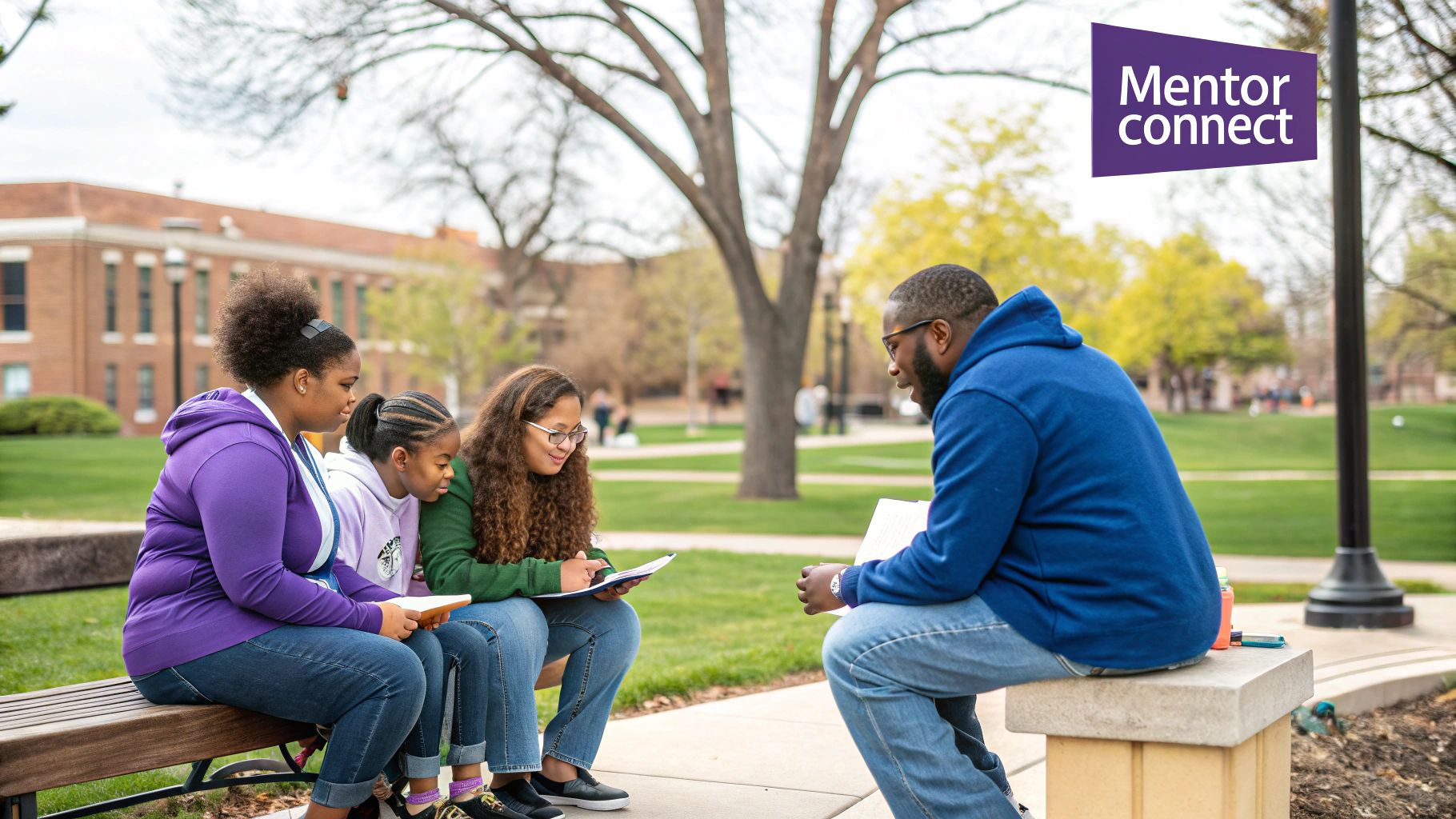
How connected a student feels to their campus is a powerful predictor of whether they'll stick around. When students feel like they belong, they show up more, stay motivated, and are far more likely to ask for help when they need it. This is where mentorship and community-building programs are absolutely critical. Peer mentorship programs are a real cornerstone of this effort. Pairing new students with experienced upperclassmen gives them a guide, a resource, and a friendly face on campus. This relationship helps demystify the entire college experience and builds an instant sense of community from day one.
A well-structured peer mentorship program can significantly reduce first-year attrition by creating a vital social and academic safety net. For a first-generation student, a mentor isn't just a guide; they're proof that success is achievable.
Integrated Wellness and Financial Literacy
A student's academic success is directly linked to their overall well-being. You simply can't separate them. Stress, anxiety, and money worries are huge barriers to learning and completion. The most forward-thinking institutions recognize this and are weaving wellness services directly into their student success strategy. This goes far beyond just having a counseling center tucked away on campus. It means making support an integral part of the student experience.
- Accessible Mental Health Services: This includes things like drop-in counseling, virtual appointments, and practical workshops on managing stress.
- Financial Literacy Education: Giving students the tools they need to manage their money, make sense of financial aid, and avoid crippling debt.
- Emergency Aid Programs: Setting up small grants or loans to help students navigate unexpected financial crises—the kind of emergencies that might otherwise force them to drop out.
When exploring how to fund these programs, don't forget that specific grants are often available. For example, you can find information on the top special education grants for teachers to help support some of our most vulnerable student populations. By addressing these foundational human needs, institutions free up students to focus on what they came to do: learn and succeed.
Why Investing in Students Is a Strategic Imperative

It’s easy to look at student success initiatives and see only a line item on a budget. But that’s a fundamental misread of their purpose. These programs are actually powerful economic engines for the entire institution. They aren't just about "helping students"—they are a core strategic investment with a clear and compelling return.
Think about it from a purely financial perspective. Every student who walks away before graduating represents a significant loss in tuition revenue. So, when an institution manages to retain even a small percentage of students who were at risk of dropping out, the financial impact is both immediate and substantial. This isn't just a theory; it's a direct connection between student support and the institution's financial health.
The Direct Link Between Retention and Revenue
The most obvious win from these programs is improved student retention. It’s a simple formula: when students feel supported, engaged, and capable of succeeding, they’re far more likely to push through challenges and finish their degrees. This creates a stable, predictable revenue stream, which is the bedrock of any sustainable institution. And the effect compounds over time. A first-year student you retain is likely to stay for their second, third, and fourth years, multiplying the return on that initial investment. Research shows that financial struggles are a major hurdle, with 30% of students citing money as the primary reason they drop out. Initiatives like emergency aid grants or financial literacy workshops directly tackle this problem and, in turn, protect tuition revenue.
Investing in student success isn't a cost center; it's a revenue-generating strategy. Every student you keep is a testament to your institution's commitment and a direct contributor to its bottom line. This shift in mindset is crucial for long-term growth.
This stability gives institutions the breathing room to plan for the future, invest in academic programs, and maintain top-notch facilities. Stronger retention rates also send a powerful signal of institutional health to accrediting bodies and potential donors, further securing the university's standing. To explore this further, check out these evidence-based student retention strategies that can shore up your institution's financial future.
Building Brand Reputation and Alumni Engagement
The payoff from student success initiatives goes well beyond the immediate financial gains. A university's reputation is one of its most precious assets, and nothing builds a strong brand more effectively than successful, happy graduates. When students have a positive and supportive experience, they become your most authentic and powerful ambassadors. This creates a virtuous cycle with a few key outcomes:
- A Stronger Reputation: High graduation and satisfaction rates are fantastic marketing tools. They attract better-qualified applicants and broadcast to the world that your institution delivers on its promises.
- A More Engaged Alumni Network: Graduates who felt the institution had their back are far more likely to become active and generous alumni. They’ll be more willing to donate, mentor current students, and open up their professional networks to recent grads.
- Better Post-Graduation Outcomes: Initiatives focused on career readiness ensure students don’t just graduate—they land meaningful jobs. High job placement rates are a critical metric for prospective students and their families, directly influencing their decision to enroll.
At the end of the day, investing in your students is the surest path to building a prestigious and resilient institution. It changes the student-university relationship from a simple transaction into a lifelong partnership, creating a powerful ripple effect that benefits everyone involved. When students win, the institution wins—financially, reputationally, and in its core mission.
Proven Initiatives That Get Real Results
It’s one thing to talk about student success initiatives in theory, but the real measure of their worth is how they perform in the real world. The best programs aren't just well-intentioned ideas; they are built on solid evidence, tested in the field, and proven to deliver life-changing results—especially for students who face the biggest hurdles.
These successful programs offer a practical blueprint for other institutions. By looking at what they do and the results they get, we can learn how to turn strategic goals into concrete support systems that actually boost enrollment, persistence, and graduation rates. They show us what works.
High-Impact Advising Models That Deliver
Some of the most effective student success initiatives revolve around high-impact advising. These programs go way beyond the old model of just helping with course registration. Instead, they create a genuine partnership with students, guiding them through academic, financial, and even personal challenges. Think of it as a dedicated support team, making sure no one falls through the cracks.
The data from evidence-based programs is pretty compelling. For example, the One Million Degrees program has shown that its participants are 70% more likely to enroll in college and 94% more likely to persist to the next term. Another standout, the Bottom Line advising program, helps students from low-income backgrounds become 23% more likely to graduate with a bachelor's degree within five years of high school.
These aren't just minor improvements. These numbers represent thousands of students whose lives have been put on a completely different path. It's proof that with the right structure in place, we can dramatically improve student outcomes and foster true economic mobility.
The core idea behind these high-impact models is simple but powerful: treat student support as an essential service, not an optional extra. It’s like a hospital assigning a dedicated care team to each patient. These programs provide a dedicated support network for each student, ensuring consistent, personalized guidance from their first day all the way to graduation.
Deconstructing Successful Program Frameworks
So, what’s the secret sauce? How do these programs achieve such great results? While the specific tactics might differ, the most successful initiatives share a common set of core components that any institution can adapt and implement.
Their success isn't an accident. It comes from a carefully designed framework that weaves multiple layers of support into a single, cohesive experience. This integrated approach ensures students don't just get help with their classes, but receive the full range of support they need to truly thrive.
Let's break down the key elements you'll almost always find in these top-performing programs:
- One-on-One Personalized Coaching: Every student gets paired with a dedicated advisor or coach for regular meetings. This relationship becomes the foundation of the program, giving the student a single, trusted person to turn to for any question or concern.
- Targeted Financial Support: These initiatives don't just point students toward the financial aid office. They actively help them navigate the confusing world of aid and scholarships, and often provide small stipends or emergency funds to cover unexpected costs that could otherwise force a student to drop out.
- Structured Career Development: Right from the start, students are guided through career exploration, resume writing, and interview practice. This focus on life after graduation keeps students motivated and helps them see how their degree connects to a meaningful career.
- Building a Peer Community: The programs intentionally create a sense of belonging by connecting students with a cohort of their peers. This community becomes an incredible source of encouragement, accountability, and friendship.
These elements work together to create a powerful safety net, but they also act as a launchpad for success. As you plan your own program, it’s also smart to explore a range of student retention strategies to make sure your efforts have a lasting impact. By putting these proven components into practice, institutions can move beyond good intentions and start building programs that deliver real, measurable results for their students.
How to Design Your First Student Success Program
So, you're sold on the idea of a student success initiative, but moving from concept to a real, working program can feel like a huge leap. Where do you even begin? The good news is you can build something with a major impact by following a clear, structured roadmap. The secret is to start by understanding the real-world challenges your students are facing. Think of yourself as a doctor for your institution. You wouldn't just start handing out medicine without running some tests to diagnose the actual problem. In the same way, the first step is always to diagnose the specific pain points holding your students back.
Use Institutional Data to Diagnose Needs
Data is the foundation of any program that actually works. Before a single idea gets brainstormed, you have to dig into the information your institution already has. This is where you’ll find the real story of where students are struggling the most. This isn’t about guesswork; it’s about evidence. Your mission is to spot patterns and zero in on the exact areas where a well-placed intervention could make the biggest splash.
- Analyze Retention Rates: Where are students dropping off the map? Is there a big exodus between the first and second years? Are students from certain demographic groups leaving at a higher clip?
- Examine Course Performance: Hunt for those "gateway" courses with notoriously high failure or withdrawal rates. These are often the biggest roadblocks on the path to a degree.
- Review Financial Aid Data: How many of your students are dealing with unmet financial needs? Are sudden financial emergencies a common reason for them to withdraw?
This initial deep dive gives you a solid, data-backed starting point. Instead of launching a generic, one-size-fits-all program, you can design an initiative that tackles the most urgent issues at your school. This ensures your time and resources are focused where they’ll do the most good.
Building a program without data is like trying to navigate a ship without a compass. You might be moving, but you have no idea if you're heading in the right direction. Data provides the direction, ensuring your efforts are targeted, effective, and truly responsive to student needs.
Build a Coalition and Secure Buy-In
A powerful program can't be built in a vacuum. To really move the needle, you need allies and supporters from all corners of campus. Your next move is to build a coalition of champions—people who get the "why" behind your initiative and are ready to help make it happen. This means getting out there and talking to key departments and individuals:
- Faculty: They’re on the front lines with students every single day. Their insights into academic hurdles are pure gold.
- Admissions and Financial Aid: These teams hold crucial data and can help flag at-risk students right from the get-go.
- Student Affairs: They are the experts on student life and can help weave your program into the fabric of the campus experience.
- Institutional Leadership: Getting buy-in from deans, provosts, and presidents is non-negotiable. You’ll need their backing to get the resources and authority to make things happen.
Present your data-driven case to these groups. Show them the specific problems you've uncovered and how you plan to solve them. When you make them partners in the process, you create a sense of shared ownership and lay the groundwork for a program that can last.
This infographic shows a simple but powerful flow for putting your data into action.
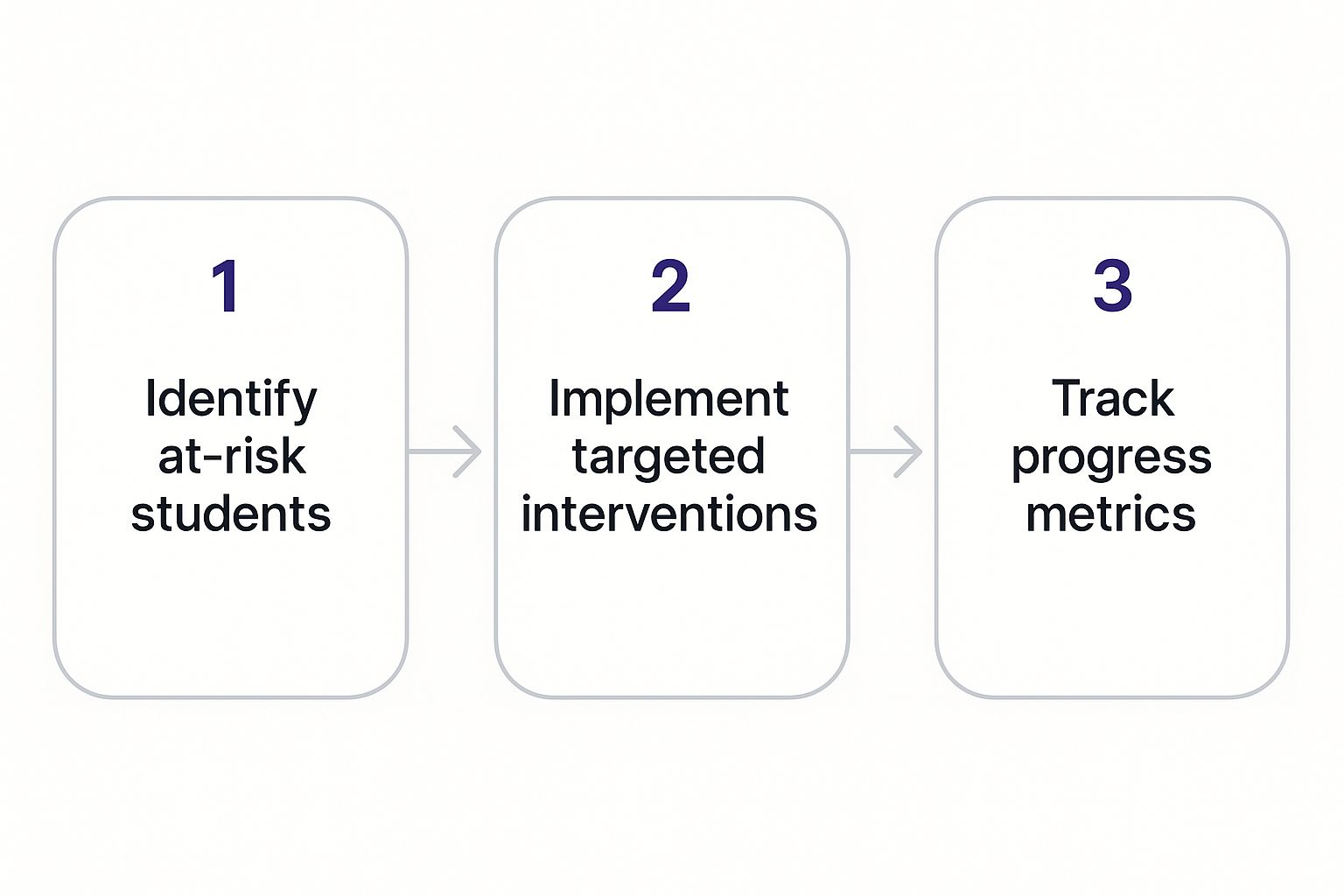
As you can see, it’s a core loop: use data to identify students who need help, implement focused interventions to support them, and then track the results to see what’s working and what isn’t.
Design and Launch a Pilot Program
Don't feel like you have to boil the ocean and launch a massive, campus-wide program right away. In fact, it's much smarter to start small. A focused pilot program lets you test your assumptions, iron out the wrinkles, and gather solid proof that your idea works before you try to scale it. A good pilot program is designed with precision.
- Define a Specific Goal: What’s the one key metric you’re trying to move? Make it concrete, like, "Increase the pass rate in Biology 101 by 15% for at-risk students."
- Select a Target Group: Pick a small, manageable group of students to start with. This could be students in a particular major or those flagged by an early-alert system.
- Establish Clear Metrics: How will you know if you've succeeded? Define your key performance indicators (KPIs) upfront. Think attendance records, grades, and student satisfaction surveys.
- Plan a Phased Rollout: Start with your small group, collect data, make adjustments, and then—once you’ve got it right—gradually expand the program to a wider audience.
This methodical approach keeps risk low and helps you build momentum. A successful pilot gives you powerful data and compelling success stories, which makes it infinitely easier to get the funding and support you need for a full-scale rollout. It's the final, crucial step in turning a great idea into a proven, effective student success program.
Supporting the Unique Needs of International Students
https://www.youtube.com/embed/9vcw7iihZHs
In our interconnected world, no student success strategy is complete without a dedicated plan for international students. These students bring a wealth of diverse perspectives to campus and make significant contributions to the local economy. But they also face a distinct set of hurdles—navigating visa rules, overcoming language barriers, and dealing with the immense challenge of adapting to a new culture so far from home.
It's a missed opportunity to see international students as just another enrollment statistic. A truly effective student success initiative acknowledges their unique journey and builds a support system just for them. This goes far beyond standard services; it's about offering specialized support that directly addresses their specific circumstances.
Cultivating a Welcoming and Supportive Environment
The first step is recognizing that the one-size-fits-all support model simply doesn't work. International students need more than just academic advising. They often require guidance on cultural norms, help navigating unfamiliar administrative processes, and, crucially, a way to build a real community with both domestic and other international students. To create an environment where these students don't just survive but genuinely thrive, specialized programs are key.
- Culturally Competent Advising: Advisors who are trained to understand the specific academic and social pressures international students face can offer guidance that actually hits the mark.
- Targeted Community Building: Events and organizations designed specifically to connect international students can be a powerful antidote to loneliness, creating an essential support network.
- Enhanced Career Services: Practical workshops on things like CPT/OPT work authorization, networking in the U.S. market, and writing American-style resumes are incredibly valuable.
Supporting international students isn’t just about retention—it’s about reputation. A university known for being a welcoming, supportive place for global talent will naturally attract the best students from all over the world.
The Economic and Cultural Imperative
During the 2023-2024 academic year alone, the U.S. was home to a record 1.1 million international students. They contributed $43.8 billion to the economy and supported over 378,000 jobs. However, a 5% drop in new international student enrollment for the following year is a warning sign that institutions must actively prove their value. You can dig deeper into this by reading the full report on international student recruitment trends from Interstride.
Frequently Asked Questions
Even when everyone agrees on the importance of student success, the practical questions can feel overwhelming. Let's tackle some of the most common ones that come up for administrators and faculty before they dive in.
How Can We Fund New Initiatives with a Limited Budget?
This is almost always the first question, and for good reason. The answer isn't about finding a magic pot of money, but about being strategic and creative. First, take a hard look at what you’re already doing. Auditing existing programs often reveals funds tied up in less effective activities that can be reallocated to get a new project off the ground. At the same time, keep an eye out for external grants. Many educational foundations and equity-focused organizations are actively looking to fund the very work you want to do.
A fantastic strategy is to start small with a focused pilot program. When you can show a clear, positive return on investment (ROI) with a specific group of students, you build an undeniable case for securing a bigger slice of the budget later on.
And don't forget your local community. Partnering with businesses or non-profits can be a great way to share resources, split costs, and make a more ambitious program a reality.
What Are the Best Metrics for Measuring Success?
To get a real sense of whether an initiative is working, you need to look at both short-term progress and long-term results. Think of it as tracking both leading and lagging indicators. Leading indicators are your early warning system, showing you what’s happening right now. Lagging indicators tell you if you ultimately achieved your goal.
- Leading Indicators: Think course completion rates (especially for those tough gateway courses), student engagement scores, and how often students are using campus services like tutoring or the writing center.
- Lagging Indicators: These are the big ones—first-year retention rates, and your 4-year and 6-year graduation rates.
Here's the most important part: you absolutely must disaggregate all of this data by demographic groups (first-generation, low-income, race, ethnicity, etc.). It’s the only way to know for sure if your student success initiatives are actually closing equity gaps instead of accidentally making them wider.
Which Type of Initiative Should We Implement First?
Let your data be your guide. Dig into your institution’s numbers to see where students are struggling the most. That’s your starting point.
That said, many schools find they get the biggest initial bang for their buck by focusing on one of two areas.
An enhanced first-year experience (FYE) program or a shift to proactive academic advising are both powerful places to start. They catch students at a critical moment and can set a positive tone for their entire college career. A well-run peer mentorship program is another excellent, and often very cost-effective, choice that immediately helps build that crucial sense of belonging.
Motimatic is committed to helping colleges and universities improve student outcomes at scale. We use behavioral science to deliver research-backed messages that nudge students toward success, all the way from enrollment to graduation. Learn how we can help you turn your strategic goals into measurable results.
See it on your own listOne list, one goal, and a randomized holdout to show the lift. Start a pilot