When we talk about university student retention, we're looking at a pretty simple question on the surface: How many of our students stick around from one year to the next until they toss their caps at graduation? But beneath that simple question lies something much deeper. It’s really about building an entire campus environment where students feel seen, supported, and genuinely motivated to finish what they started.
What Does University Student Retention Actually Look Like?
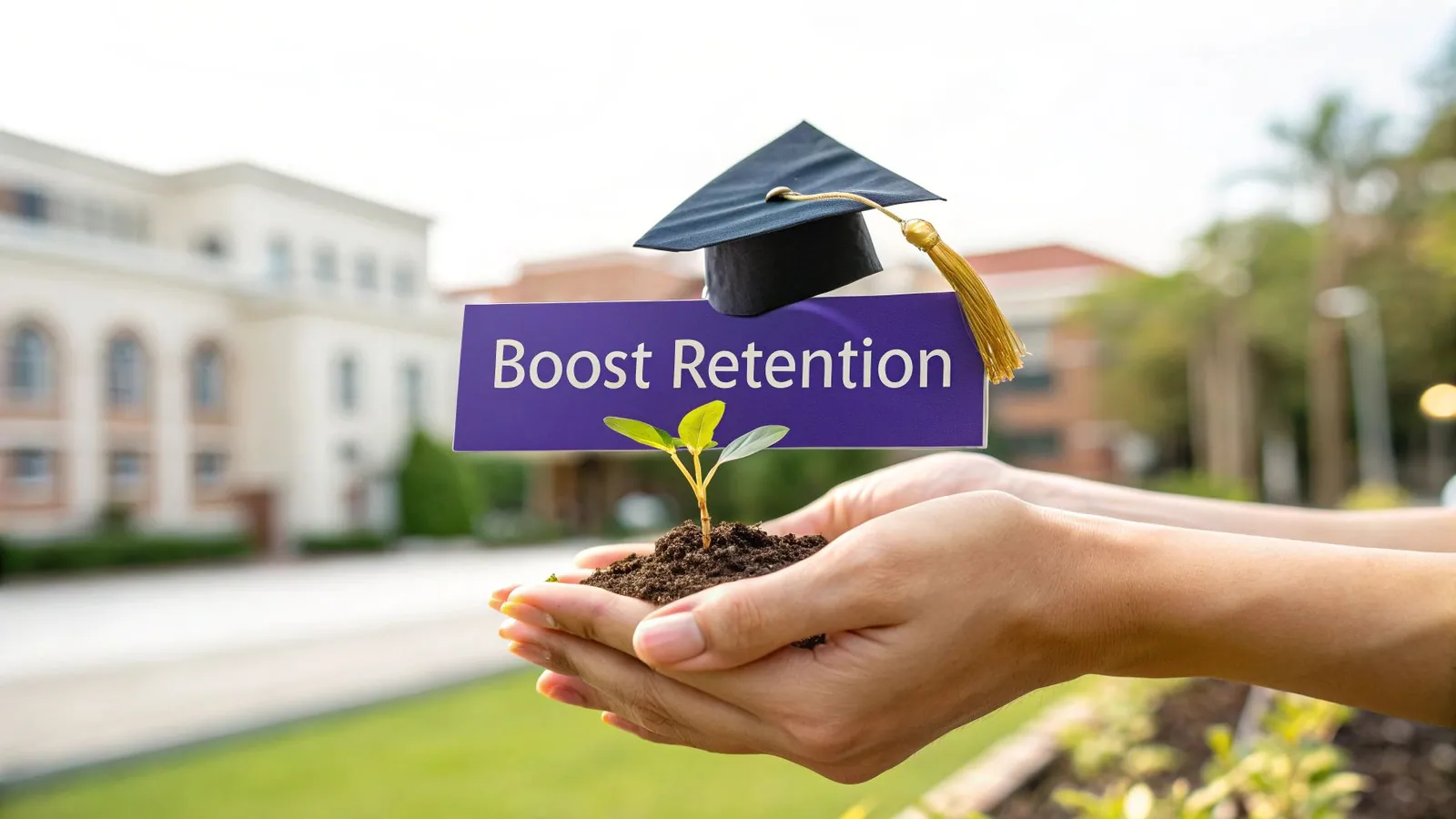
Imagine a university isn't just a place of learning, but a skilled gardener tending a diverse garden. Every student arrives like a unique seedling, each with its own set of strengths, needs, and potential vulnerabilities. A good gardener doesn't just stick them in the ground and cross their fingers. They actively provide the right amount of water (support), sunlight (opportunity), and nutrients (resources) to help each plant develop strong roots and ultimately flourish. In that light, university student retention is the measure of that gardener's success. It answers the question: How many of these students thrived and reached their full potential under our care? It's a critical indicator that reflects how well a university is nurturing students from their very first day to the moment they proudly walk across the graduation stage.
More Than Just a Number
While we often boil it down to a percentage, retention is the sum of countless interactions, policies, and cultural touchpoints that make up the student experience. A high retention rate is a powerful signal that an institution is doing things right. It shows they're not just delivering academic quality but are also fostering a true sense of community and offering the support systems students need to navigate the bumps in the road. On the flip side, a low retention rate is a major warning sign. It points to underlying problems—maybe in academic advising, financial aid accessibility, or campus culture—that are pushing students away before they can achieve their goals. This isn't just about lost tuition revenue; it's a blow to the institution's reputation and, most critically, a failure for the very students who put their trust in it.
Retention is the institutional report card. It covers every effort a university makes to keep students from leaving, whether they transfer to another school or drop out of higher education altogether. It’s about creating an environment that actively champions persistence.
Persistence Rate vs. Retention Rate
It’s easy to mix up two key terms here, but the distinction is important: retention rate and persistence rate.
- Retention Rate: This is all about the institution. It specifically tracks the percentage of first-time, full-time students who come back to the very same school for their second year.
- Persistence Rate: This is all about the student. It measures the percentage of students who continue their studies at any institution the following year.
Think of it this way: if a student leaves University A to enroll at University B, then University A has a retention problem. But from a broader perspective, that student has shown persistence in their educational journey. Both numbers give us a fuller picture of student success. You can explore a deeper comparison of these concepts and learn more about retention rates. Ultimately, improving university student retention means creating a place where students don't just feel the need to persist somewhere, but actively choose to thrive right where they are.
The Real Reasons Students Stay or Leave
Why do some students thrive in college while others quietly pack their bags and head home? The answer is rarely as straightforward as good or bad grades. A student’s decision to stick with their degree is a deeply personal one, influenced by a complex web of factors that extend far beyond the lecture hall. If you want to improve university student retention, you have to start by understanding the whole student.
Think of it this way: their academic life is just one piece of the puzzle. Their sense of community, financial stability, and personal health are all equally important pieces. They're all connected, and a problem in one area can easily spill over and cause stress in the others.
The Academic Connection
Academic integration is much more than just showing up for class. It's about a student feeling like their courses have purpose, their professors are genuinely invested in their success, and they have what it takes to handle the workload.
When a student feels like just another face in a crowded lecture hall or starts to doubt their choice of major, their motivation can plummet. This feeling of being academically adrift is a huge reason students leave, especially during that critical first year when they're still trying to find their place.
On the flip side, a student who connects with a supportive faculty mentor or gets fired up about their field of study develops strong academic roots. That connection acts as a powerful anchor, keeping them grounded even when other parts of college life get stormy.
Finding a Social Anchor
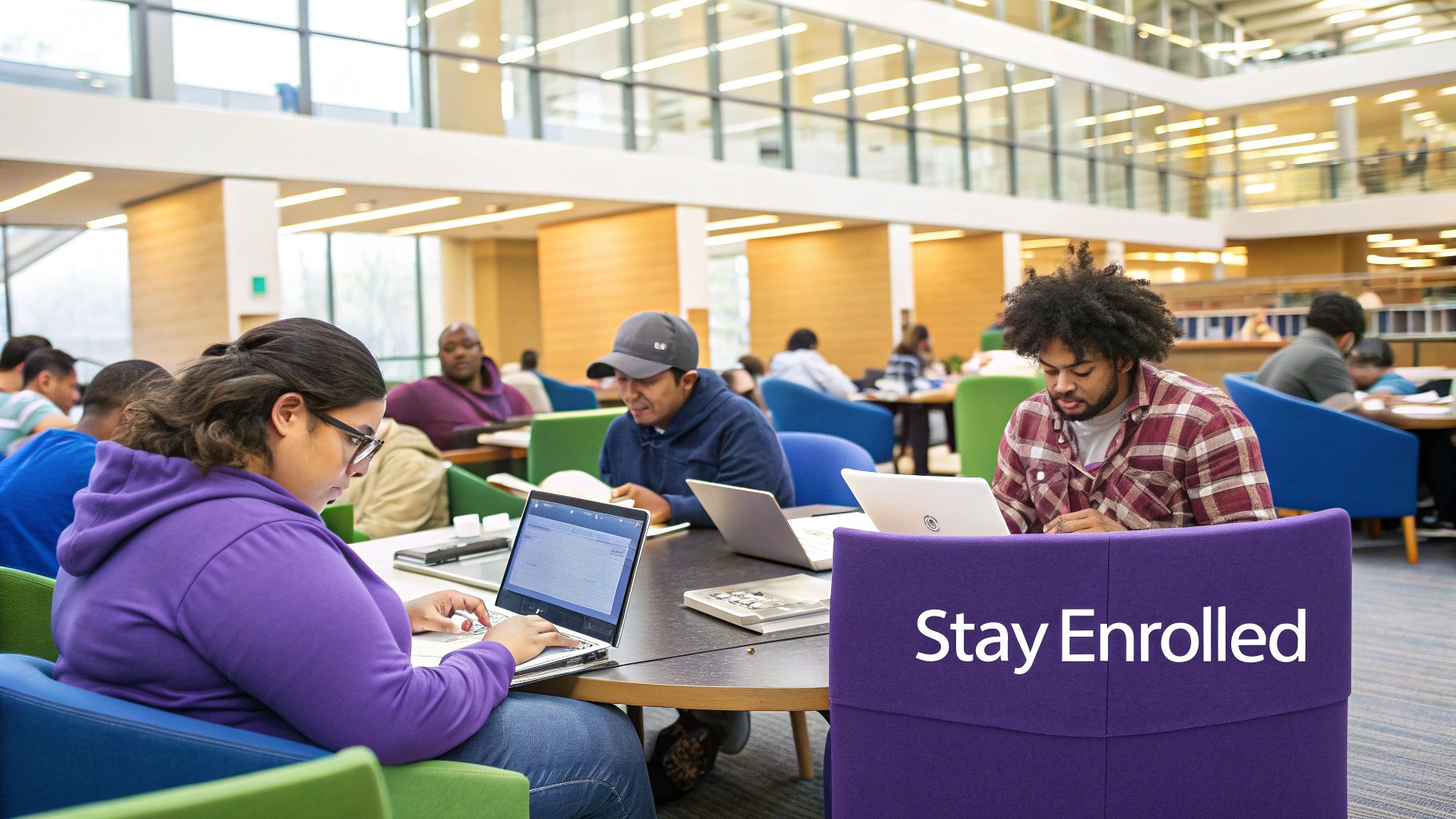
Just as crucial is social belonging. Imagine a university campus as a brand-new city. A student who finds their people—whether in a club, on a sports team, or in a late-night study group—starts to feel like they're home. This sense of community is an incredibly important shield against the loneliness that so many new students face. Without those social ties, a campus can feel huge and impersonal. A student who always eats alone, struggles to make friends, and just feels like an outsider is far more likely to wonder if they made the right choice. The research is clear: students who feel they belong are dramatically more likely to stay.
“The feeling of being ‘invisible’ on campus can be just as impactful as academic performance. Students who don’t feel they belong are significantly more likely to leave, particularly during their first year.”
The Weight of Financial Pressures
Financial stress is a quiet but immense force that can push even the brightest students off course. The constant worry about paying for tuition, housing, and food creates a heavy mental burden, making it incredibly difficult to focus on coursework. Many students are juggling their studies with part-time or even full-time jobs, which often leads to pure exhaustion. When a financial emergency strikes—an unexpected car repair or a sudden medical bill—it can be the final straw that makes staying in school feel completely out of reach. Institutions that offer accessible emergency aid and straightforward financial guidance can relieve some of this pressure, making a direct and immediate impact on university student retention.
The Foundation of Personal Well-being
Finally, we can't overlook personal well-being. A student's mental and physical health is the foundation for everything else. Challenges like anxiety, depression, and chronic stress can make even simple academic tasks feel like climbing a mountain.
A student grappling with their mental health may struggle to get to class, finish assignments, or connect with their peers. Recognizing this, forward-thinking universities are investing in more robust wellness resources. These aren't just "nice-to-have" perks; they are an essential part of any serious retention strategy.
To get to the bottom of why students are leaving, universities can take a page from the business world and adopt the best practices for learning from churn. Truly understanding the why behind student departures is the first and most important step toward building a campus where they want to stay and succeed.
Mapping the National Retention Landscape
To get a real handle on the university student retention challenge, we have to zoom out from our own campuses and look at the bigger picture. The national data tells a powerful story, showing us where we're making progress and, just as importantly, where the stubborn gaps remain. Understanding these trends is the first step for any administrator hoping to move the needle on student persistence. The good news? We're seeing slow but steady movement in the right direction. For the 2023 cohort, the national second fall persistence rate was 77.6%, and the retention rate hit 69.5%. First spring retention even reached a record high of 83.7%. While these numbers signal a general recovery, the gains aren't being felt by everyone equally. If you want to dive deeper, you can read more about national persistence and retention rates from the source.
The Full-Time vs. Part-Time Divide
One of the most glaring disparities in the data emerges when you compare students based on their enrollment status. Full-time and part-time students are on completely different journeys, and the statistics make that crystal clear.
- Full-Time Students: These learners are typically more embedded in the traditional campus experience. They persist into their first spring at a rate of 92.1% and into their second fall at 84.4%, showing much stronger continuation patterns.
- Part-Time Students: Juggling jobs, families, and other responsibilities, these students face a tougher road. Their persistence rate into the first spring is only 67.4%, and it plummets to just 53.2% by the second fall.
This isn't just a small difference; it's a chasm. It shows how much the traditional university model is still built around the full-time student, often leaving part-time learners without the same level of support or connection.
The data is clear: a student’s enrollment status is one of the strongest predictors of their likelihood to continue their studies. Institutions must rethink how they engage and support the growing population of part-time learners to make a meaningful impact on national retention figures.
Actionable Strategies to Boost Retention
Knowing why students leave is one thing, but actually improving university student retention means shifting from analysis to action. It’s about building an environment that doesn't just hope for persistence but actively engineers it. This isn't a matter of launching a few one-off programs; it's a deep, holistic commitment to the student journey, from their first nervous day on campus to their proud walk across the graduation stage.

The most effective strategies directly tackle the big hurdles: academic struggles, feeling disconnected, financial pressure, and personal well-being. By weaving together a strong support structure, institutions can create multiple safety nets, catching students before they fall too far and helping them find their way back.
Design an Impactful First-Year Experience
The first year is make-or-break for so many students. A thoughtfully designed First-Year Experience (FYE) program is one of the single most powerful tools in an institution's arsenal. Think of it less as a one-time orientation week and more as a comprehensive onboarding process for college life itself.
A great FYE program artfully blends academic and social support. It front-loads the resources students need most, helping them build foundational skills and a sense of community right from the start.
Some of the best components I've seen include:
- Integrated Learning Cohorts: Grouping new students into small learning communities for one or two core classes. This creates an instant network of peers navigating the same academic challenges together.
- Essential Skill-Building Workshops: Practical sessions on time management, effective study habits, and financial literacy give students the real-world tools they need to handle the demands of higher education.
- Early and Informal Faculty Interaction: Creating low-stakes opportunities for first-year students to chat with professors outside the lecture hall. This demystifies faculty and helps build truly supportive relationships.
The goal of an FYE program is to make a large university feel small and manageable. By creating structured points of connection, you directly combat the feelings of isolation and overwhelm that push so many students away early on.
Implement Proactive Advising with Analytics
The old model of academic advising—where the student has to recognize they're in trouble and book an appointment—is broken. A proactive approach completely flips this script. It uses data to spot students who are struggling, often before they even realize it themselves. This turns advising from a reactive, box-ticking exercise into a strategic, early-warning intervention. Modern student information systems can track engagement signals like class attendance, activity on the learning management system (LMS), or even library usage. When you analyze this data, patterns emerge that show a student is starting to disengage. An advisor can then send a simple, supportive message like, "Hey, I noticed you've missed a couple of classes. Is everything okay?" That small act makes a student feel seen, not just like a number, and can open the door for a critical conversation. There are many ways to do this, and you can explore several 5 strategies to improve student retention to find what fits your campus culture.
Strengthen Mental Health and Financial Support
You simply can't separate academic success from personal well-being and financial stability. If a student is consumed by anxiety or worried about where their next meal is coming from, focusing on organic chemistry is nearly impossible. This is why robust support in these areas is non-negotiable for modern university student retention. This means investing in accessible, low-stigma mental health services, from counseling centers to peer support groups. It also requires a more responsive and empathetic financial aid system. A critical, often overlooked piece of this puzzle is emergency aid. A single car repair or unexpected medical bill shouldn't derail an entire academic career. Forward-thinking institutions are now reimagining emergency aid for students with new models that deliver help quickly and without shame.
Foster Powerful Mentorship Programs
At the end of the day, human connection is everything. Mentorship programs, whether they connect students with peers or with faculty, create powerful support networks that are invaluable. A peer mentor can offer relatable advice on navigating campus life, while a faculty mentor can ignite academic passion and open doors to future careers.
These relationships give students a trusted person to turn to—someone they can ask the "silly" questions they might be too intimidated to ask in an official capacity. Mentorship fosters a genuine sense of belonging and loyalty to the institution, which are the foundational pillars of student persistence and long-term success.
Alright, let's move from the abstract "what" and "why" of student retention to the practical "how." When you see an institution with truly exceptional retention rates, it’s never by accident. It's the product of deliberate strategies and a culture that’s laser-focused on helping students cross the finish line.
So, what does this look like in the real world?
Cultivating a True Community
Beyond the lab or the library, the single most important non-academic factor is a student's sense of belonging. The institutions that win at retention are experts at building a tight-knit, supportive community that genuinely feels like a "home away from home." This creates a powerful safety net.
This isn’t just about campus clubs and social events, though those help. It’s about a holistic support system that sees and serves the whole student—proactive advising, easily accessible mental health services, and a campus life that encourages deep social roots.
When students know there are people and systems they can count on, they are infinitely more resilient when they hit a personal or academic speed bump. Making sure students see this clear connection between the support they receive and their future goals is paramount, which is why so many schools are now focused on improving retention through better career alignment.
Ultimately, boosting university student retention isn't about a single silver bullet. It's about weaving together academic challenge, strong community bonds, and robust support systems to create an ecosystem where every single student is set up to succeed.
The Unique Hurdles for International Student Retention
While every institution wants to improve university student retention, the journey for international students is in a class of its own. It’s not just about finding their way around campus or succeeding in their courses. They're also wrestling with complex visa rules, navigating profound cultural shifts, and managing the emotional weight of being thousands of miles from their families and support systems. These pressures stack up, creating a unique set of obstacles that can make staying the course feel incredibly tough.

It’s like playing the university experience on "hard mode." A domestic student might be stressed about a final exam. An international student is stressed about that same exam, but they're also figuring out a new social world, communicating in a non-native language, and worrying about whether their legal status will allow them to even stay in the country.
The Post-Graduation "Brain Drain"
The challenges don't just disappear once a student has their diploma in hand. In fact, one of the biggest problems is the "brain drain"—when highly skilled graduates can't stay in the country where they earned their degree. This is a huge loss of talent and potential innovation for the host country and a major missed opportunity for universities to cultivate strong, global alumni networks. The numbers from the United States really bring this issue to life. Looking at graduates from 2012 to 2020, research found that only 41% of international students were still in the U.S. long-term by 2021. That means over 1.1 million international graduates had left by that year. When you consider the U.S. graduates around 250,000 international students every single year, the scale of this talent exodus becomes clear. Much of this is driven by tight visa policies for skilled workers, essentially forcing talented people to take their skills and knowledge somewhere else. You can discover more insights about international graduate trends to see the full picture.
How Retention Rates Differ by Degree and Location
Interestingly, an international student's odds of staying after graduation change a lot depending on their degree level. The same study revealed that while fewer than 20% of those with a bachelor's degree stayed, that number shot up to around 50% for master's graduates. For PhDs, it was an impressive 75%. This tells us that the more specialized the education and the deeper the professional roots, the greater the pull to remain.
The stark difference in retention between undergraduate and doctoral students highlights a critical point: advanced research and specialized skills create pathways to employment that are often less accessible to those with bachelor's degrees, making specialized support for all levels crucial.
Geography matters, too. For example, the U.S. West Coast tends to have the highest retention rates for international graduates, whereas the Northeast has the lowest. This data paints a very clear picture. Retaining international students goes far beyond offering a great education. It requires dedicated support systems that help with cultural integration, career services that understand immigration pathways, and a genuine commitment to their long-term success. By investing here, institutions don't just improve their university student retention numbers—they foster a richer campus community and contribute invaluable talent to the national workforce.
Answering Your Top Questions About Student Retention
When you start digging into student retention, the same core questions tend to pop up again and again. It makes sense—everyone wants to know what actually works and where to focus their energy. Getting clear, practical answers is the first step toward making a real difference. Let's break down some of the most common questions we hear from campus leaders.
What Is the Most Effective Student Retention Strategy?
If I had to pick just one thing, it would be a robust first-year experience (FYE) program. There's really no magic wand for retention, but a well-designed FYE comes pretty close. These programs are all about tackling that make-or-break transition from high school to college head-on. Think of it as a support system that kicks in from day one. A great FYE combines orientation, practical workshops on things like time management, peer mentoring, and early, meaningful interactions with faculty. It’s about creating a community and a sense of belonging before a student has the chance to feel lost or isolated.
How Can Technology Improve Student Retention?
This is where things get really interesting. Technology, particularly predictive analytics, has fundamentally changed how we can approach retention. Modern systems can pull in all sorts of engagement data—are students logging into the learning management system (LMS)? Are they showing up for class? Are they using campus resources like the library?
AI-powered tools can sift through all this data to spot patterns that we humans might miss. They can flag a student who is starting to disengage long before their GPA takes a nosedive. This allows advisors to step in with the right support at the right time, shifting the entire campus from a reactive, "wait-for-the-bad-grade" model to one that's proactive and genuinely supportive.
What Is the Financial Cost of Low Student Retention?
The financial hit from poor retention is huge, and it goes far beyond just lost tuition. For every student who walks away before graduation, you're looking at a direct loss of tuition and fee revenue, which adds up fast.
But the ripple effects are just as damaging. A high attrition rate can seriously ding your institution's reputation, making it tougher and more expensive to attract the next class of students. It can also sour relationships with alumni, affecting donations, and in some states, it can even impact how much government funding you receive. Boosting university student retention isn't just a "nice to have"; it's a direct investment in your institution's financial stability and its core mission.
Ready to transform your retention strategy with data-driven insights and scalable communication? Motimatic uses behavioral science to engage students at every stage of their journey, from enrollment to completion. Learn how Motimatic can help you guide more students to graduation.
See it on your own listOne list, one goal, and a randomized holdout to show the lift. Start a pilot