The landscape of higher education is evolving, with adult learners representing a significant and growing demographic. However, their unique life circumstances, often juggling careers, families, and finances, can lead to disengagement and program withdrawal. Successful adult learner reengagement isn't just about sending a few outreach emails; it requires a fundamental shift in institutional strategy. This article moves beyond generic advice to provide seven concrete, actionable strategies that colleges and universities can implement at scale to bring these valuable students back and guide them toward completion.
We will explore proven models, from flexible learning pathways to comprehensive support systems, offering practical implementation details and real-world examples. For institutions looking to boost enrollment and improve outcomes, understanding these reengagement frameworks is essential for future growth and student success. Many returning students also seek to enhance their focus and productivity. For adult learners aiming for greater academic and professional achievement, resources like specialized coaching can be invaluable, such as insights on how to leverage and improve executive function coaching for adults. Read on to discover the new playbook for reengaging this critical student population.
1. Flexible Scheduling and Modular Learning
Adult learners are not traditional students; they are often employees, parents, and caregivers first. A rigid, semester-long course structure simply doesn’t fit into their complex lives. The first key to successful adult learner reengagement is to dismantle these traditional barriers by offering flexible scheduling and modular learning pathways. This approach breaks down cumbersome degree programs into smaller, more manageable modules or courses that can be completed at the learner’s own pace. Instead of a one-size-fits-all timeline, this model empowers learners to make progress whenever and wherever they can, whether during a lunch break, after their children are asleep, or on a weekend. This adaptability is not just a convenience; it's a fundamental requirement for their success.
How It Works in Practice
Institutions like Western Governors University have pioneered this model with competency-based programs where students advance by demonstrating mastery of a subject, not by logging seat time. This means an experienced professional can accelerate through familiar topics and spend more time on new material. Similarly, Arizona State University's digital immersion programs and partnerships like the Starbucks College Achievement Plan provide flexible, high-quality education that fits around an employee's work schedule.
The following infographic illustrates the profound impact that a self-paced, modular learning environment can have on student completion rates compared to more traditional program structures.
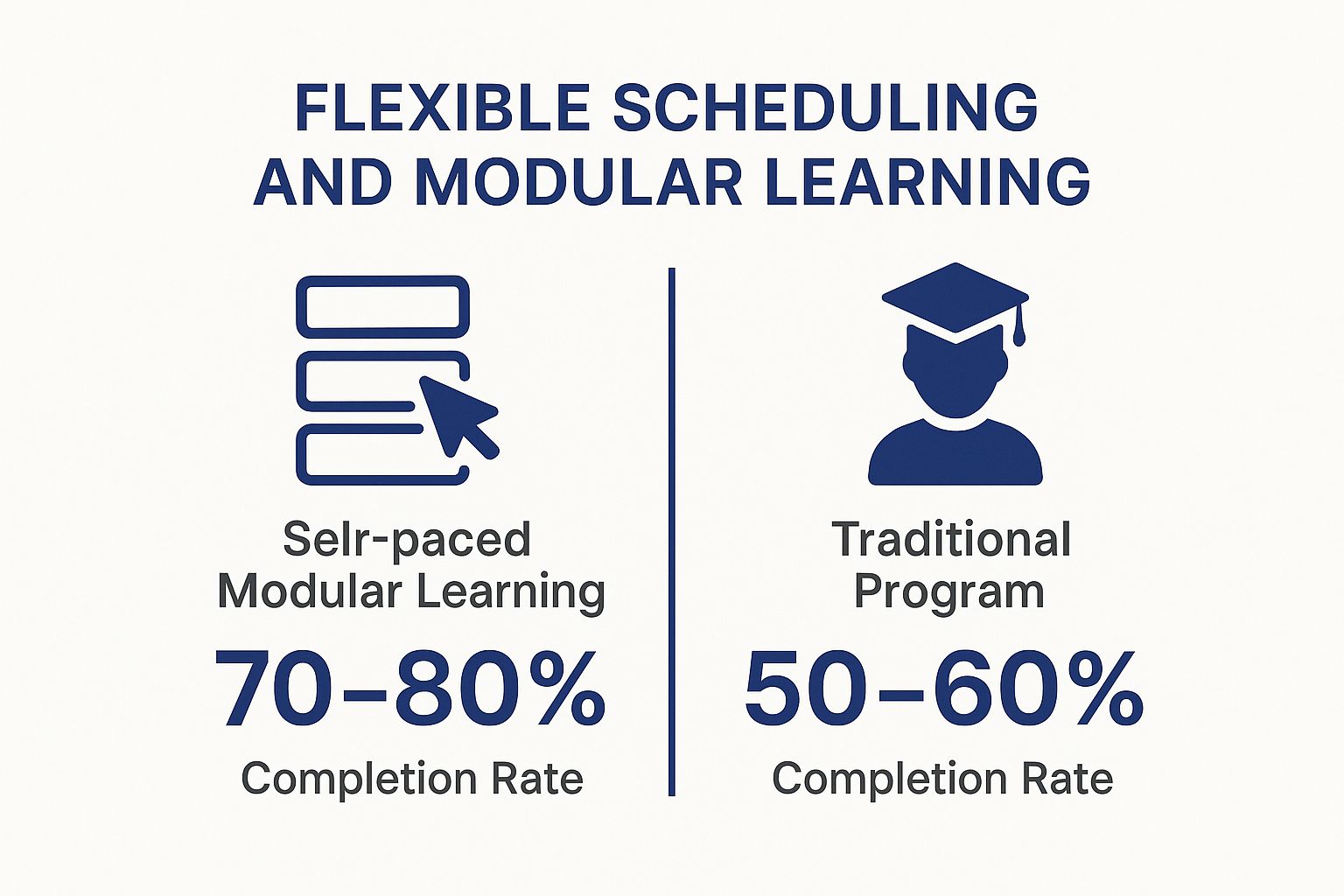
This data highlights a critical insight: flexibility directly correlates with higher completion rates, making it a powerful strategy for retaining adult learners.
Actionable Tips for Implementation
To effectively implement this strategy, focus on building a supportive and clear infrastructure.
- Design Clear Pathways: Create visual roadmaps that show learners exactly what modules they need to complete and in what order. Milestones and clear endpoints for each module help maintain momentum.
- Offer Robust Support: Flexible learning should not mean learning alone. Implement proactive academic advising and regular check-ins to keep students on track and engaged.
- Prioritize Mobile-First Access: Ensure your learning management system (LMS) and all course content are fully accessible and functional on mobile devices, allowing for true "on-the-go" learning.
- Gamify Progress: Use digital badges, progress bars, and other gamification elements to celebrate small wins and motivate learners to continue to the next module. You can learn more about how community colleges are applying similar innovative tactics to re-enroll adult learners on motimatic.com/.
2. Prior Learning Assessment and Recognition (PLAR)
Adult learners bring a wealth of knowledge from their professional and personal lives that traditional academic systems often overlook. Recognizing and valuing this experience is a cornerstone of effective adult learner reengagement. Prior Learning Assessment and Recognition (PLAR) offers a formal pathway to translate this real-world learning, gained through work, military service, or volunteering, into academic credit. This approach validates their existing competencies and can significantly shorten the time and reduce the cost of completing a degree. This strategy sends a powerful message: we respect the experience you already have. For an adult returning to education, seeing their hard-earned knowledge acknowledged and converted into tangible academic progress can be a massive motivator, bridging the gap between their past accomplishments and future academic goals.
How It Works in Practice
Institutions renowned for serving adult learners have long championed this model. Thomas Edison State University (TESU) and Empire State College, for example, have built robust systems that allow students to demonstrate college-level knowledge through portfolios, standardized exams, or certifications. The Council for Adult and Experiential Learning (CAEL) has been a key advocate, helping colleges develop fair and effective PLAR programs. Similarly, military-friendly institutions like University of Maryland Global Campus (UMGC) excel at translating military training and occupational specialties into academic credits. This process honors their service and creates a more efficient path to a degree, making higher education a more attainable and attractive option. A key part of this is helping students understand and articulate their existing capabilities, which starts with identifying transferable skills from their past roles.
Actionable Tips for Implementation
To build a PLAR program that is both rigorous and accessible, institutions should focus on clarity and support.
- Provide Clear Portfolio Guidelines: Offer detailed instructions, templates, and examples for how learners can build a portfolio that effectively documents their experiential learning.
- Offer Documentation Workshops: Host workshops, either in-person or virtual, to guide learners through the process of articulating and evidencing their skills and knowledge.
- Develop Standardized Rubrics: Create and publish clear, standardized rubrics for assessment to ensure fairness, consistency, and transparency in how credit is awarded.
- Partner with Industry Organizations: Collaborate with professional associations and employers to pre-approve industry-recognized credentials and certifications for academic credit, streamlining the process for learners.
3. Cohort-Based Learning Communities
Returning to education can be an isolating experience, especially for adults who may feel disconnected from the traditional campus community. Cohort-based learning directly addresses this challenge by grouping learners into small, consistent teams that progress through a program together. This strategy is a cornerstone of effective adult learner reengagement because it fosters a powerful sense of belonging and mutual accountability.
Instead of navigating their studies alone, learners build strong peer relationships, creating a built-in support system that enhances collaboration and significantly boosts persistence. This shared journey transforms the educational experience from a solitary pursuit into a collective, supportive endeavor.
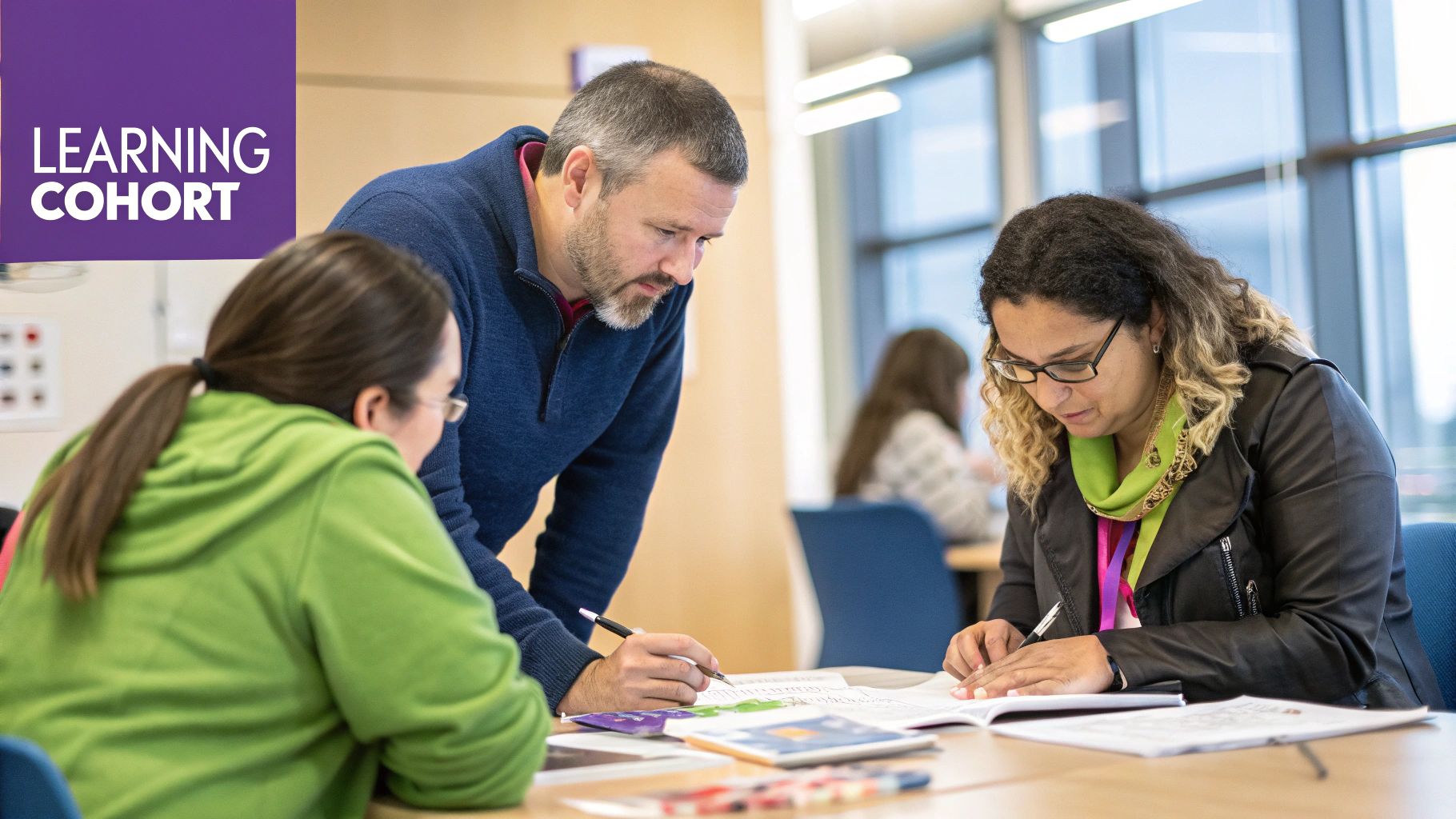
This model proves that for many adult learners, the community they learn with is just as important as the content they learn. The shared experience builds confidence and resilience, helping students overcome obstacles that might otherwise lead them to drop out.
How It Works in Practice
Executive MBA programs have long perfected this model, such as the Wharton School at the University of Pennsylvania, where cohorts are essential for networking and collaborative problem-solving. On a broader scale, institutions like DePaul University's School for New Learning and Alverno College have successfully used cohorts for their adult undergraduate programs for decades, recognizing their power to build community and drive completion. Even corporate universities, like McDonald's Hamburger University, leverage the cohort model to train managers, understanding that learning alongside peers creates a stronger, more cohesive leadership team. These examples show that the cohort model is adaptable across different educational contexts, from executive training to undergraduate degrees.
Actionable Tips for Implementation
To successfully build a cohort-based program, a deliberate and structured approach is necessary.
- Curate Cohorts Carefully: Assemble groups with a diversity of backgrounds and experiences, but also with compatible goals. Thoughtful selection is the foundation of a dynamic and supportive learning environment.
- Provide Group Dynamics Training: Don't assume collaboration comes naturally. Offer initial workshops on team-building, effective communication, and conflict resolution to set the cohort up for success.
- Assign Skilled Facilitators: Each cohort should have a dedicated facilitator or advisor who can guide group dynamics, mediate issues, and connect the cohort to institutional resources.
- Foster Hybrid Interaction: Create a blend of structured and unstructured opportunities for connection. Combine formal group projects with informal virtual coffee chats or in-person meetups to deepen relationships. You can discover more strategies for keeping students motivated on motimatic.com/.
4. Technology-Enhanced Blended Learning
The modern adult learner exists in a digital world, yet still values the impact of human connection and hands-on instruction. A purely online or purely in-person model may not serve their needs completely. This is where a technology-enhanced blended learning approach becomes a cornerstone for successful adult learner reengagement, strategically combining the best of both worlds: the flexibility of digital tools and the personal engagement of face-to-face interaction. This model moves beyond simply putting lectures online. It thoughtfully integrates technology to enhance the learning experience, allowing students to cover foundational material at their own pace online while using precious in-person time for collaborative projects, in-depth discussions, and direct mentorship. This balance respects their time while maximizing educational impact, a critical factor for learners juggling multiple life commitments.
How It Works in Practice
Leading institutions have demonstrated the power of this hybrid model. Arizona State University's digital immersion programs, for instance, offer robust online coursework supplemented by immersive, in-person experiences that deepen understanding. Similarly, Penn State World Campus provides hybrid offerings that allow students to complete most of their coursework online but come to campus for key labs or residencies, fostering a sense of community and providing access to specialized equipment.
Actionable Tips for Implementation
To build a successful blended learning environment, your focus should be on seamless integration and robust support.
- Provide Comprehensive Digital Literacy Orientation: Don’t assume all learners are tech-savvy. Start with a mandatory orientation that covers the learning management system (LMS), communication tools, and other required software to build confidence.
- Ensure Strong Technical Support: Offer accessible and responsive help desk services. When technology fails, adult learners need immediate solutions to avoid falling behind in their already tight schedules.
- Design Intuitive, User-Friendly Interfaces: The technology should be almost invisible. Invest in a clean, easy-to-navigate LMS and ensure all digital resources are organized logically and consistently across all courses.
- Regularly Gather Feedback: Use short surveys and informal check-ins to gather student feedback on the technology and the course structure. Use this data to iterate and continuously improve the blended learning experience. You can find more insights on leveraging student data on platforms like Coursera for Business.
5. Competency-Based Education (CBE)
Competency-Based Education (CBE) shifts the focus from time spent in a classroom to the mastery of specific skills and knowledge. For adult learners who often possess years of professional experience, this model is a game-changer. It allows them to leverage what they already know, demonstrate their existing skills, and accelerate through familiar material, making their educational journey more efficient and relevant. This approach is a powerful tool for adult learner reengagement because it directly validates their prior experience. Instead of re-learning concepts they have already mastered in the workplace, adults can prove their competency and dedicate their time to acquiring new, valuable skills. This respect for their professional background is not just empowering; it creates a direct and highly motivating path toward degree completion by eliminating redundant coursework and reducing overall costs.
How It Works in Practice
Pioneers like Western Governors University have built their entire model on CBE, allowing students to advance as soon as they can prove mastery. The University of Wisconsin Flexible Option and Northern Arizona University's Personalized Learning programs offer similar pathways, tailoring education to the individual's pace and existing knowledge. Even tech giants have adopted this model; programs like Google Career Certificates and Amazon's Career Choice focus on developing and certifying specific, job-ready competencies. For adult learners seeking to demonstrate specific skills and prepare for modern employment, exploring the best certifications for remote jobs can be a direct path to showcasing these competencies. This alignment between education and career outcomes is a core strength of the CBE model.
Actionable Tips for Implementation
To successfully launch a CBE program, institutions must build a clear and supportive framework.
- Map Competencies to Industry Standards: Work directly with industry leaders and employers to define the exact skills needed for high-demand jobs. This ensures your curriculum is relevant and that graduates are prepared for the workforce.
- Provide Multiple Assessment Pathways: Allow learners to demonstrate mastery in various ways, such as through portfolios, project-based assessments, simulations, or proctored exams. This accommodates different learning styles and professional backgrounds.
- Offer Scaffolded Support: While CBE is self-paced, learners still need guidance. Implement a system of faculty mentors and success coaches who can provide targeted support and help students overcome challenges as they develop new skills.
- Partner to Validate Frameworks: Collaborate with employers to co-create and endorse your competency frameworks. This validation adds immense value to the credential and builds trust with both students and the industries they aim to enter.
6. Wraparound Support Services
Academic challenges are often just one piece of the puzzle for adult learners. The real obstacles that derail their educational journeys are frequently found outside the classroom: financial instability, childcare needs, transportation issues, and mental health struggles. A powerful strategy for adult learner reengagement is to implement wraparound support services, a holistic model that addresses these non-academic barriers head-on. This approach acknowledges that a student's life circumstances are inseparable from their academic success. Instead of siloing support services, this model integrates them into a cohesive, easily accessible network. It proactively identifies and addresses learners' needs, providing a safety net that empowers them to persist through personal and financial difficulties. By treating the whole student, institutions can dramatically improve retention and create an environment where learners feel seen, supported, and capable of achieving their goals.
How It Works in Practice
The City University of New York's (CUNY) Accelerated Study in Associate Programs (ASAP) is a prime example of this model's success. ASAP provides students with a range of integrated financial, academic, and personal supports, including tuition waivers, textbook assistance, and dedicated advisors. This comprehensive approach has been shown to double graduation rates. Similarly, Valencia College's LifeMap program offers students personalized guidance on academic planning, career exploration, and financial wellness from their first day on campus. These programs demonstrate that when institutions invest in comprehensive support systems, they don't just help students navigate crises; they build a foundation for long-term success.
Actionable Tips for Implementation
Building an effective wraparound support system requires a shift from a reactive to a proactive mindset.
- Conduct Comprehensive Needs Assessments: Regularly survey your adult learner population to understand their most pressing non-academic challenges. Use this data to prioritize and design your support services.
- Partner with Community Organizations: You don’t have to do it all alone. Forge strong partnerships with local social service agencies, food banks, childcare providers, and employers to create a robust referral network.
- Integrate Services Seamlessly: Create a single point of contact or a centralized hub where learners can access all support services. This "no wrong door" approach reduces confusion and makes it easier for students to get the help they need.
- Track Holistic Outcomes: Measure the impact of support services not just on academic metrics like GPA and completion, but also on factors like financial stability and overall well-being. These data points can reveal the true value of your investment. To understand more about the specific challenges adult learners face, you can explore further reading about how to help students overcome financial barriers on motimatic.com/.
7. Work-Integrated Learning and Employer Partnerships
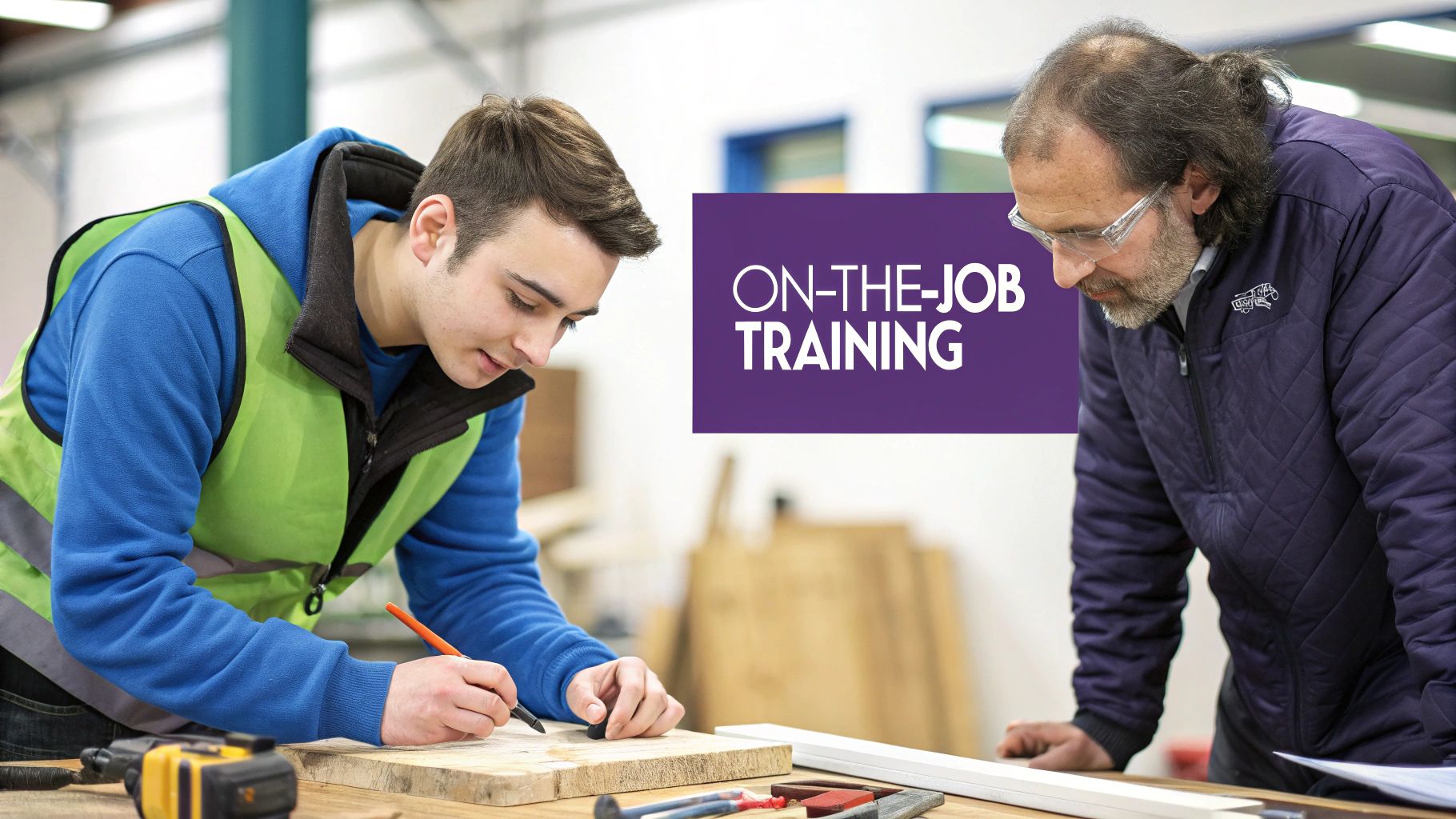
For adult learners, the value of education is often measured by its immediate career impact. A powerful strategy for adult learner reengagement is to create direct, tangible links between learning and employment. Work-integrated learning does this by embedding education directly into the workplace through apprenticeships, employer-sponsored tuition programs, and projects based on real-world business challenges. This approach makes education instantly relevant and often removes the financial burden, a major barrier for returning students.
When employers and educational institutions collaborate, they create a powerful ecosystem where academic theory meets practical application. This synergy not only enhances the learning experience but also provides a clear return on investment for both the student and the sponsoring company, making continued education a logical next step rather than an abstract goal.
How It Works in Practice
High-profile partnerships have demonstrated the immense potential of this model. The Starbucks College Achievement Plan, offered in partnership with Arizona State University, allows eligible employees to earn a bachelor's degree with full tuition coverage. Similarly, Amazon's Career Choice program prepays tuition for employees to learn new skills for high-demand careers, even if those careers are outside of Amazon. These programs, often facilitated by intermediaries like Guild Education, prove that when education is positioned as a direct pathway to career advancement and is supported by an employer, engagement and completion rates soar. They effectively merge professional development with academic achievement.
Actionable Tips for Implementation
Building successful employer partnerships requires strategic alignment and clear communication to ensure mutual benefits.
- Align Curriculum with Industry Needs: Work closely with employer partners to ensure your programs teach the specific skills and competencies they need. Regularly review and update curricula based on industry feedback and labor market data.
- Establish Clear Agreements: Create formal agreements that clearly define roles, time commitments, academic expectations, and performance metrics for students, faculty, and workplace mentors.
- Provide Integrated Support: Offer dedicated academic support that understands the unique pressures of balancing work and study. Advisors should be equipped to help students navigate both their academic and professional responsibilities.
- Diversify Your Partnerships: Cultivate relationships with a variety of employers across different industries. This reduces dependency on a single partner and provides a wider range of opportunities for your adult learners.
7 Adult Learner Reengagement Strategies Compared
| Strategy | Implementation Complexity 🔄 | Resource Requirements ⚡ | Expected Outcomes 📊 | Ideal Use Cases 💡 | Key Advantages ⭐ |
|---|---|---|---|---|---|
| Flexible Scheduling and Modular Learning | Medium – Requires modular content design and self-paced infrastructure | Moderate – Needs online platforms and advising support | Higher completion rates (70-80%) and student satisfaction | Adult learners with busy schedules needing flexibility | Accommodates diverse schedules; competency-based progression |
| Prior Learning Assessment and Recognition (PLAR) | High – Time-intensive assessments and portfolio reviews | Moderate – Staff for evaluations and quality assurance | Reduced time to degree (6-18 months faster); increased motivation | Learners with significant prior experience seeking credit | Validates existing knowledge; reduces cost and time |
| Cohort-Based Learning Communities | High – Coordination of cohorts and synchronized curriculum | High – Facilitators and support services | Increased retention (+15-25%) and stronger peer networks | Learners valuing peer support and structured pacing | Builds accountability and collaboration; combats isolation |
| Technology-Enhanced Blended Learning | High – Integration of digital and face-to-face tools | High – Technology platforms and support infrastructure | Improved learning outcomes (+40%); high learner preference (85%) | Learners needing blend of flexibility and engagement | Combines flexibility and interaction; leverages advanced tech |
| Competency-Based Education (CBE) | High – Curriculum and assessment development | Moderate to high – Robust tracking and assessment systems | 30% faster completion; 90% employment within 6 months | Learners focused on skills mastery and job relevance | Personalized pacing; cost-effective; job-aligned competencies |
| Wraparound Support Services | Very High – Multi-service coordination and institutional investment | Very High – Financial aid, counseling, childcare, etc. | Graduation rates significantly higher (53% vs 25%) | Learners facing non-academic barriers to success | Addresses root causes of attrition; holistic support |
| Work-Integrated Learning and Employer Partnerships | High – Requires strong employer collaborations | Moderate to high – Employer partnerships and coordination | High completion (85%); direct employment pathways | Learners seeking practical, job-related experience | Immediate work application; employer financial support |
The Future of Learning: Integrating Strategies for Lasting Impact
Successfully revitalizing your institution's approach to adult learner reengagement is not about implementing a single, silver-bullet solution. As we have explored, the path to bringing stopped-out students back into the fold is paved with a multifaceted, integrated strategy. The most effective institutions understand that the modern adult learner requires a dynamic ecosystem built on flexibility, recognition, community, and support. The strategies detailed in this article, from flexible scheduling and modular learning to robust wraparound services, are not standalone options to be chosen from a menu. Instead, they represent interconnected pillars that reinforce one another. For example, a powerful Competency-Based Education (CBE) program becomes even more effective when combined with a strong Prior Learning Assessment and Recognition (PLAR) process, allowing learners to accelerate their progress by demonstrating existing knowledge. Similarly, cohort-based communities create the peer support necessary for learners to navigate challenging work-integrated learning experiences.
Key Takeaways for Your Institution
To move from theory to action, focus on these core principles:
- Integration Over Isolation: View these strategies as a cohesive whole. How can your PLAR process feed into your CBE pathways? How can employer partnerships inform the skills taught in your modular courses? A truly successful adult learner reengagement plan connects these dots.
- Learner-Centric Design: Every initiative, from the technology you adopt to the support services you offer, must be designed with the unique needs of adult learners in mind. This means prioritizing convenience, acknowledging their experience, and understanding their complex lives outside the classroom.
- Scalability is Essential: One-off programs are valuable, but true institutional change requires scalable solutions. Technology-enhanced blended learning and strategic employer partnerships are prime examples of how to expand your reach and impact without a linear increase in resources.
Your Actionable Next Steps
The journey toward mastering adult learner reengagement begins with a commitment to institutional evolution. It requires breaking down silos between admissions, student success, and academic departments to create a unified front. Start by auditing your current offerings against the strategies discussed. Identify the low-hanging fruit, a pilot program for a cohort-based community or a streamlined PLAR application, and build momentum from there.
The ultimate goal is to create an environment where returning to education feels not like a daunting challenge, but a natural and supported next step. By thoughtfully combining flexibility, advanced learning models, and holistic support, you are not just re-enrolling students; you are building a resilient, adaptable framework for lifelong learning. This investment will pay dividends in increased enrollment, improved retention rates, and a stronger, more skilled workforce for your community. It is a fundamental shift that positions your institution as a leader in serving the needs of today's dynamic student population.
Ready to supercharge your adult learner reengagement efforts with data-driven, personalized communication? Motimatic uses behavioral science and AI-powered messaging to connect with students at scale, providing the precise motivation they need to persist and succeed. Discover how to re-enroll stopped-out students and improve retention by visiting Motimatic today.
See it on your own listOne list, one goal, and a randomized holdout to show the lift. Start a pilot