In the hyper-competitive landscape of higher education, the old playbook of college recruitment no longer guarantees a full class. Today's prospective students, a digitally-native and purpose-driven generation, expect more than just glossy brochures and generic emails. They seek authentic connections, personalized guidance, and proof that your institution understands their unique aspirations and challenges.
To thrive in 2025 and beyond, admissions teams must adopt a more dynamic, data-informed, and student-centric approach. This means moving beyond simple outreach to create a cohesive enrollment experience that engages students from their first Google search to their first day on campus. The fundamental principles behind future-proofing your enrollment funnel are closely related to building any effective sales pipeline; for additional insights on this topic, explore this guide on how to create a sales funnel for driving more conversions.
The key is not just to find students, but to build relationships that convert interest into enrollment. This comprehensive guide moves beyond the surface to provide actionable frameworks for the most effective college recruitment strategies today. We will cover nine forward-thinking approaches designed to meet the demands of the modern student journey and secure your institution's future, including:
- Data-Driven Personalization
- High School Partnership Programs
- Virtual and Augmented Reality Experiences
- Community-Based Recruitment Tactics
- Leveraging Influencer and Alumni Networks
- Holistic Admissions and Applicant Storytelling
From leveraging behavioral science to building community partnerships, these tactics will help you attract, engage, and enroll your ideal student body.
1. Social Media Engagement Strategy
A robust social media presence is no longer optional in higher education; it's a foundational component of modern college recruitment strategies. This approach involves more than just broadcasting announcements. It’s about building a dynamic, two-way conversation with prospective students and their families on the platforms where they spend their time, such as TikTok, Instagram, and even LinkedIn for graduate programs. The goal is to create an authentic window into your institution, showcasing everything from vibrant campus life and innovative academic programs to unique student experiences.

This strategy moves beyond traditional marketing by fostering a sense of community before a student ever steps on campus. By consistently sharing engaging content, you can demystify the college experience and make your institution feel more accessible and relatable. For instance, Arizona State University has mastered this with TikTok campaigns that garner millions of views, while the University of Alabama uses Instagram Stories to immerse followers in its famous game day atmosphere. These efforts succeed because they prioritize authenticity over a polished, corporate feel.
How to Implement This Strategy:
- Platform-Specific Content: Avoid the pitfall of cross-posting the same message everywhere. A visually stunning photo that works on Instagram may need to be a behind-the-scenes video on TikTok or a professional announcement on LinkedIn.
- Student-Led Takeovers: Empower current students or brand ambassadors to take over your social media accounts for a day. Their unfiltered perspective on classes, clubs, and campus life is far more credible and engaging for prospective students. Northeastern University’s student ambassador program is a prime example of this in action.
- Interactive Live Sessions: Use Instagram Live or TikTok LIVE to host virtual campus tours, Q&A sessions with admissions counselors, or interviews with faculty. This direct interaction allows you to answer questions in real-time and build personal connections at scale.
- Monitor and Engage: The "social" aspect is key. Respond to comments, answer direct messages promptly, and participate in relevant conversations. This shows you're listening and value your audience's input. For more detailed approaches, exploring effective social media engagement strategies can provide valuable insights for college recruitment.
This approach is highly effective because it meets Gen Z where they are, using a communication style they trust. It humanizes your institution, building an emotional connection that can be a deciding factor for applicants. Further explore how this fits into a larger plan with these enrollment marketing strategies from Motimatic.
2. Data-Driven Personalization
Moving beyond generic mass emails, data-driven personalization is one of the most powerful college recruitment strategies available today. This approach leverages advanced analytics, Customer Relationship Management (CRM) systems like Slate, and behavioral data to craft unique experiences for each prospective student. The core idea is to tailor communications, program recommendations, and engagement opportunities based on an individual’s specific interests, academic background, and interaction history with your institution.
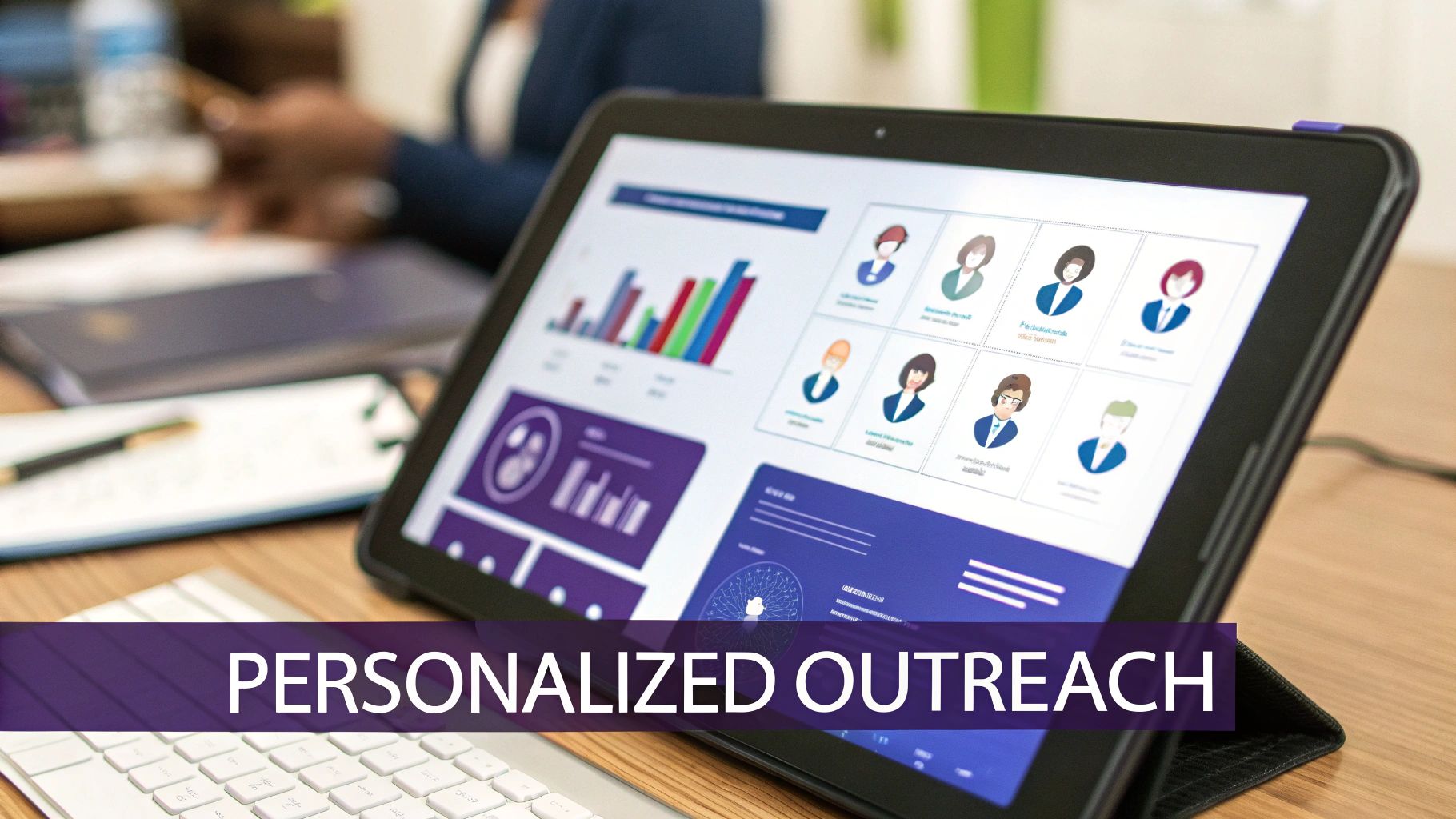
This strategy transforms recruitment from a broadcast model into a targeted conversation. Instead of sending every student a viewbook, you can send a biology prospect an invitation to a webinar with a star professor from that department. Georgia State University famously uses predictive analytics to identify and support at-risk students, significantly improving retention rates, a principle that can be applied to recruitment to pinpoint high-fit applicants. Similarly, the University of Arizona's personalized email campaigns have been shown to increase yield rates by making students feel seen and understood.
How to Implement This Strategy:
- Establish Clean Data Collection: The foundation of personalization is high-quality data. Implement clear and consistent processes for collecting information across all touchpoints, from website forms and campus visits to virtual event attendance. Ensure your CRM is organized and data is regularly cleansed.
- Segment and Target Audiences: Use your data to segment prospective students into meaningful groups. This can be based on academic interest, geographic location, engagement level, or predicted likelihood to enroll. This allows for highly relevant messaging that speaks directly to each group's unique needs.
- Automate with a Human Touch: Leverage marketing automation to send triggered communications based on student actions, like downloading a program guide or visiting a financial aid page. However, it's crucial to maintain human oversight to ensure messages are appropriate, timely, and retain a personal feel.
- Test and Optimize: A/B test different personalization elements, such as subject lines, content, and calls to action, to determine what resonates most effectively with your audience. Continuously analyze the results and refine your approach based on what the data tells you. Educational consulting firms like Ruffalo Noel Levitz offer deep expertise in optimizing these data-centric campaigns.
This method is highly effective because it demonstrates to prospective students that your institution is genuinely interested in them as individuals, not just as numbers. By providing relevant information at the right time, you build trust and significantly increase the likelihood of both application and enrollment.
3. Virtual Reality Campus Tours
Virtual Reality (VR) campus tours transcend traditional video by offering immersive, 360-degree experiences that transport prospective students directly onto your campus. This powerful college recruitment strategy allows them to explore facilities, residence halls, classrooms, and laboratories from anywhere in the world. The goal is to provide a realistic sense of the physical environment and campus atmosphere, breaking down geographical and financial barriers that might prevent a physical visit.
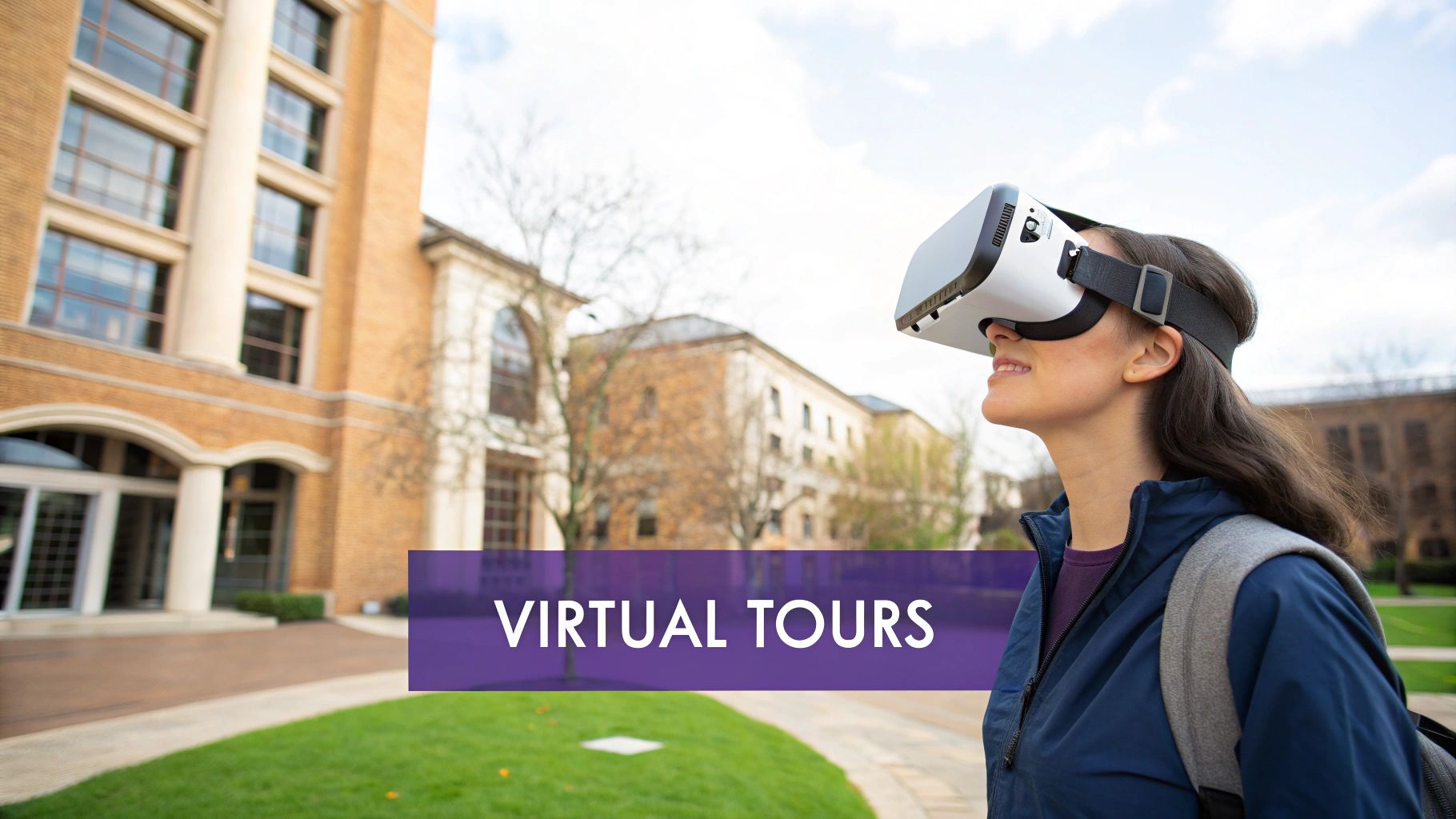
This approach goes beyond a simple photo gallery by creating a memorable, interactive journey. By giving students the freedom to look around and engage with their potential future surroundings, you forge a deeper, more personal connection. Institutions have pioneered this by creating comprehensive VR tours that showcase not only historic buildings but also cutting-edge research labs, giving applicants an unparalleled preview of the student experience.
How to Implement This Strategy:
- Prioritize High-Quality Production: A professional, high-resolution tour is crucial. Invest in quality videography and production to ensure the experience is seamless and impressive, accurately reflecting the caliber of your institution.
- Incorporate Diverse Student Voices: Use current students as virtual tour guides. Their authentic narration and personal anecdotes about different campus locations add a layer of credibility and relatability that resonates with prospective students.
- Ensure Multi-Platform Accessibility: While VR headsets offer the most immersive experience, your tour must be accessible on standard devices like desktops and smartphones. This ensures anyone can participate, regardless of their available technology. For institutions considering advanced virtual campus tours, understanding how Pixel Streaming technology explained can reveal new possibilities for delivering immersive experiences directly via web browsers.
- Integrate Live Interaction: Combine pre-recorded VR tours with live virtual Q&A sessions. After students have "walked" through the campus, give them a chance to connect directly with admissions counselors or faculty to ask questions and deepen their engagement.
https://www.youtube.com/embed/7YVIz2RMXCg
This strategy is highly effective because it provides an engaging, sensory-rich experience that helps students visualize themselves at your university. It demonstrates a commitment to innovation and accessibility, making your institution stand out in a competitive landscape and helping to convert interest into applications.
4. High School Partnership Programs
Building strategic, long-term partnerships with high schools is one of the most effective college recruitment strategies for creating a predictable and qualified applicant pipeline. This goes beyond standard college fair visits; it involves establishing deep, symbiotic relationships through dual enrollment, early college programs, and guaranteed admission agreements. These collaborations create a direct, supported pathway from high school to your institution, familiarizing students with college-level academics and your campus culture long before they submit an application.
The core goal is to embed your institution into the high school's ecosystem, making the transition to higher education feel like a natural next step. By offering college credits or tailored support, you provide tangible value to students, parents, and high school staff. For instance, the University of Connecticut's Early College Experience (ECE) program allows high school students to take UConn courses at their own schools, while Arizona State University has developed extensive dual enrollment partnerships that serve thousands of students. These programs succeed by fostering genuine collaboration and mutual benefit.
How to Implement This Strategy:
- Build Genuine Relationships: Move beyond transactional interactions. Invest time in connecting with guidance counselors, principals, and influential teachers. Understand their students' needs and position your institution as a reliable partner in their success.
- Provide Tangible Resources: Offer valuable support that eases the burden on high school staff. This could include professional development workshops for teachers, financial aid information sessions for families, or application workshops for students.
- Create Clear Pathways: Develop formal agreements like dual credit or guaranteed admission programs. Ensure the terms, benefits, and student requirements are clearly communicated to all parties involved, creating a seamless and transparent process.
- Track and Share Success Stories: Collect data on the success of students who come from partner high schools. Share these testimonials and statistics with the schools to demonstrate the partnership's positive impact and reinforce its value. The National Alliance of Concurrent Enrollment Partnerships (NACEP) provides standards and best practices for creating high-quality programs.
This approach is highly effective because it builds trust and familiarity over time, making your institution a top-of-mind choice for students and counselors. It's a proactive recruitment method that cultivates a steady stream of well-prepared applicants who are already engaged with your academic community.
5. Influencer and Alumni Networks
Mobilizing your most passionate advocates, including alumni, current students, and faculty, is one of the most authentic and effective college recruitment strategies available. This approach leverages personal stories and peer-to-peer recommendations to build credibility and trust. When a successful alumnus in the tech industry or a current student thriving in a research program shares their positive experiences, it provides powerful social proof that resonates deeply with prospective students and their families. This strategy transforms your community members into a network of micro-influencers. Their genuine enthusiasm and firsthand accounts offer a more compelling narrative than traditional marketing materials. For instance, the University of Southern California's powerful connections in the entertainment industry are consistently highlighted by its alumni, while MIT's reputation is amplified by its network of successful tech entrepreneurs. These endorsements feel less like a sales pitch and more like a genuine recommendation from a trusted source.
How to Implement This Strategy:
- Identify and Empower Advocates: Actively seek out alumni, students, and faculty who are passionate about your institution. Create a formal ambassador or advocacy program, providing them with shareable content, key talking points, and clear but flexible guidelines that allow their authentic voice to shine through.
- Create Structured Sharing Opportunities: Don't just hope for organic mentions. Facilitate engagement by featuring alumni in webinar panels, inviting them to write blog posts, or creating short video testimonials. Make it easy for them to participate by providing a clear structure and recognizing their valuable contributions.
- Segment Your Influencers: Match your advocates to specific audiences. A recent graduate might be perfect for an Instagram takeover aimed at high school seniors, while a high-profile C-suite executive alumnus could be a keynote speaker for an event targeting business school applicants.
- Track and Measure Impact: Use unique tracking links (UTMs), special hashtags, or dedicated landing pages for your influencer campaigns. This allows you to measure which stories and advocates are driving the most applications, inquiries, or virtual tour sign-ups, helping you refine your approach over time.
This strategy is highly effective because it harnesses the power of storytelling and third-party validation. It’s a human-centric approach that builds a strong emotional connection, making your institution feel like a community that prospective students want to join. When executed thoughtfully, it can significantly enhance your brand's reputation and appeal.
6. Yield Protection and Demonstrated Interest Tracking
Yield protection and demonstrated interest tracking are advanced college recruitment strategies used by many selective institutions to manage their enrollment goals effectively. Yield rate, the percentage of accepted students who enroll, is a critical metric for admissions offices. By tracking a prospective student's level of engagement, or "demonstrated interest," institutions can better predict their likelihood of enrolling if offered admission. This data-driven approach helps schools protect their yield rates by waitlisting or denying highly qualified applicants who they believe are using the institution as a "safety school" and are unlikely to attend. This strategy involves systematically monitoring various touchpoints, including campus visits, email open rates, attendance at virtual info sessions, and social media interactions. For example, Washington University in St. Louis and Tufts University have been known for considering demonstrated interest as a significant factor in their holistic review process. These institutions understand that an engaged applicant is often a more serious one, which allows them to build a class of students who are genuinely enthusiastic about attending. The goal isn't to penalize students but to prioritize those who have shown a clear and consistent passion for the institution.
How to Implement This Strategy:
- Define and Track Engagement Metrics: Use your CRM to log key interactions. Track activities such as campus tours (virtual or in-person), conversations with regional admissions reps, opening and clicking through on recruitment emails, and early application submission (Early Decision/Action).
- Offer Multiple Engagement Channels: Ensure students have diverse ways to show their interest. This could range from attending a college fair presentation to following and interacting with specific academic departments on social media. Case Western Reserve University, for instance, provides numerous opportunities for interaction that its system tracks.
- Maintain Transparency and Equity: If demonstrated interest is a factor, be transparent about it on your admissions website. Crucially, consider the socioeconomic factors that may prevent some students from visiting campus or participating in costly programs, and weigh digital engagement just as heavily.
- Use Data as One Piece of the Puzzle: Demonstrated interest should never be the sole reason for an admissions decision. Instead, it should be one component within a comprehensive, holistic review that evaluates academic merit, personal essays, and extracurricular achievements.
This approach is highly effective for shaping an incoming class that is enthusiastic and committed, which positively impacts campus culture and retention rates. As institutions face demographic shifts, understanding applicant intent becomes even more critical. Exploring how to navigate the enrollment cliff with a focus on quality can provide a broader context for why yield management is so important today.
7. Community-Based Recruitment
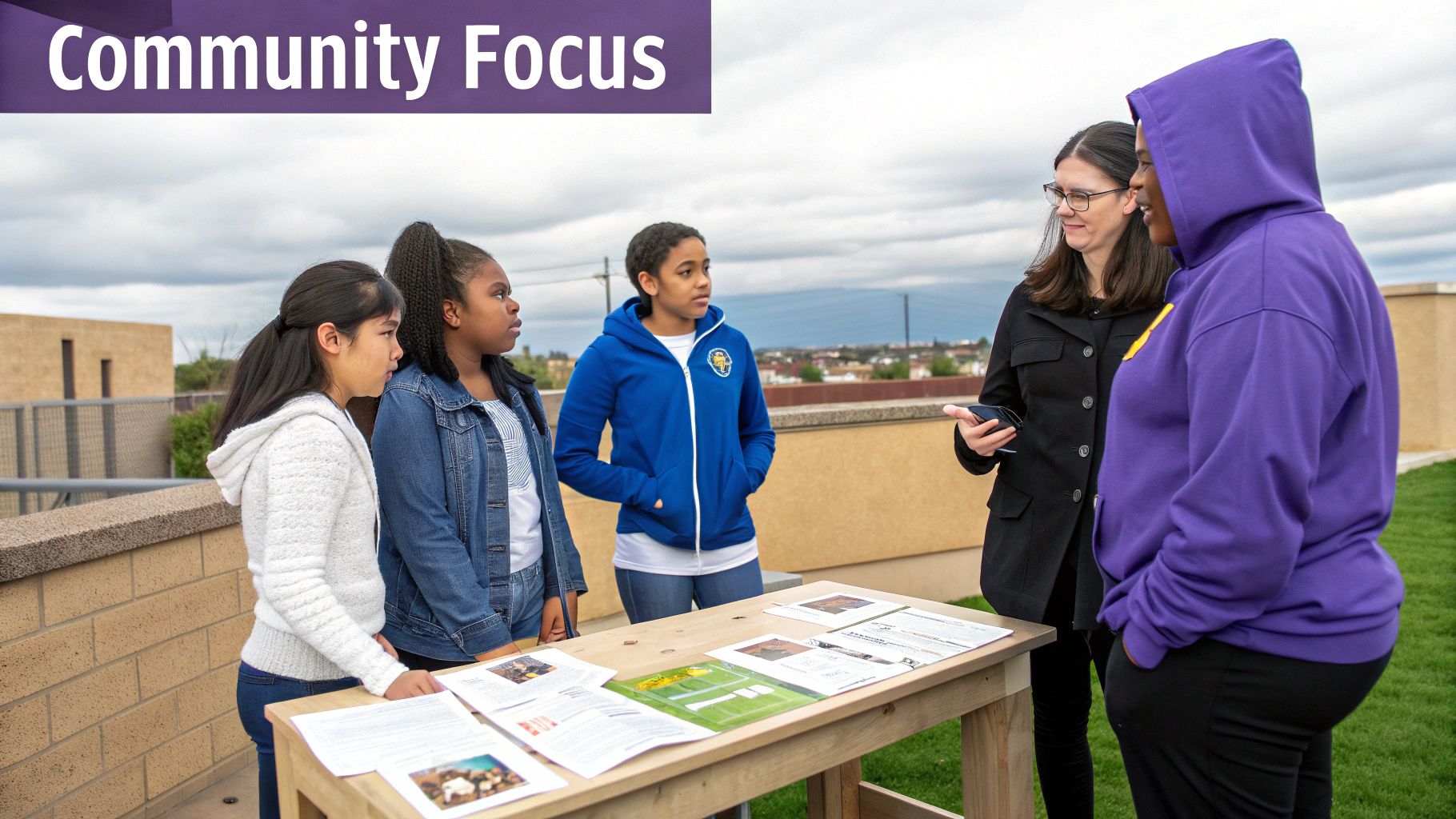
Effective college recruitment strategies must extend beyond broad digital campaigns to include genuine, on-the-ground engagement. Community-based recruitment is a targeted outreach effort that focuses on specific populations, such as underrepresented minorities, first-generation students, or those in particular geographic regions. This approach is built on creating authentic relationships with community leaders, organizations, and families, ensuring that recruitment is a two-way street of trust and support rather than a one-sided pitch. This strategy is about embedding your institution within the communities you wish to serve. It requires a deep understanding of cultural nuances and a commitment to addressing specific barriers to access, like financial aid complexities or a lack of college-going tradition. For example, the University of California system has developed comprehensive outreach programs that partner with K-12 schools in underserved areas, while Amherst College works closely with community-based organizations to identify and support promising students. These initiatives succeed by building a sustainable pipeline based on mutual respect and shared goals.
How to Implement This Strategy:
- Partner with Trusted Community Organizations: Collaborate with local high schools, churches, non-profits, and cultural centers that are already established pillars in the community. These partnerships provide credibility and a direct line of communication to prospective students and their families.
- Hire Representative Staff: Your admissions and outreach staff should reflect the diversity of the communities you are engaging. A representative team can build rapport more effectively and understands the unique challenges and aspirations of the students they serve.
- Provide Holistic Support: Go beyond recruitment by offering workshops on financial aid, application essays, and academic readiness. Addressing these practical barriers demonstrates a genuine commitment to student success, not just enrollment numbers. The Cal State system's focus on serving local communities exemplifies this supportive model.
- Use Culturally Responsive Communication: Tailor your messaging, materials, and outreach events to be culturally relevant and respectful. This shows that you value students' backgrounds and are prepared to support their unique identities on campus.
This approach is highly effective for diversifying your student body and increasing access for underserved populations. By investing in these communities, you not only attract talented students but also fulfill a critical social mission. Integrating these efforts into a broader framework is key, and you can delve deeper into how this fits with a comprehensive institutional plan by exploring strategic enrollment management.
8. Content Marketing and Thought Leadership
Beyond promotional materials, establishing your institution as a hub of expertise and innovation is a powerful long-term recruitment strategy. Content marketing and thought leadership involve creating and distributing valuable, relevant, and consistent content to attract and retain a clearly defined audience. This means moving past brochures and viewbooks to produce high-value resources like in-depth blog posts, academic research summaries, podcasts with distinguished faculty, and webinars on pressing global issues. The goal is to showcase the intellectual horsepower of your institution and provide genuine value to prospective students long before they apply. This approach positions your college or university not just as a place to earn a degree, but as a source of authoritative knowledge and a key player in important conversations. For example, MIT’s Technology Review and the University of Pennsylvania’s content from the Wharton School have become go-to resources in their fields, attracting a global audience of aspiring professionals and academics. By creating content that educates, inspires, and solves problems, you build credibility and attract students who are intellectually curious and aligned with your institution’s mission.
How to Implement This Strategy:
- Leverage Faculty Expertise: Your faculty are your greatest thought leadership assets. Collaborate with them to create content based on their research, such as articles, video interviews, or podcast episodes. This provides authentic and expert-driven material that is difficult to replicate.
- Focus on Niche Topics: Instead of broad subjects, create content that addresses specific interests relevant to your strongest programs. If you have a top-tier environmental science program, produce a content series on sustainable innovations or climate change solutions.
- Optimize for Search Engines (SEO): Create content around keywords and questions prospective students are searching for, such as "best colleges for data science" or "how to prepare for a pre-med major." This ensures your valuable resources are discoverable.
- Develop Content Hubs: Organize your content into dedicated resource centers or blogs on your website. Georgia Tech's "Research Horizons" is an excellent example, creating a central place for stories about innovation and discovery that reinforces its brand identity.
This is one of the most effective college recruitment strategies for attracting high-intent, best-fit students. It cultivates a reputation for excellence and intellectual rigor, drawing in applicants who are already engaged with your institution's core academic strengths and values.
9. Holistic Admissions and Storytelling
Moving beyond purely quantitative measures, a holistic admissions process is one of the most powerful college recruitment strategies for building a diverse and multifaceted student body. This approach evaluates applicants based on a wide range of factors beyond just GPA and standardized test scores. It empowers admissions teams to consider personal essays, letters of recommendation, extracurricular involvement, and unique life experiences, allowing them to see the whole person, not just a set of numbers. The core of this strategy is encouraging students to share their authentic stories and journeys. This method creates a more equitable and inclusive admissions landscape. It attracts talented, resilient, and creative students who might otherwise be overlooked by traditional, data-heavy evaluation models. Institutions like the University of Chicago and Bowdoin College have long championed test-optional or test-blind policies, paving the way for a more comprehensive review. The entire California State University system's move to eliminate standardized tests from admissions decisions further solidifies this as a mainstream and effective practice.
How to Implement This Strategy:
- Develop Clear Evaluation Rubrics: To ensure fairness and consistency, create detailed rubrics that define how non-academic factors like leadership, community service, resilience, and creative talents will be assessed. This helps quantify qualitative information and mitigates subjectivity.
- Train Staff on Bias Recognition: Equip your admissions counselors and readers with training on recognizing and mitigating unconscious bias. This is crucial for fairly evaluating applicants from diverse socioeconomic, cultural, and educational backgrounds.
- Guide Applicants in Storytelling: Don't assume applicants know how to tell their story effectively. Provide resources, workshops, and clear prompts on your application that encourage them to reflect on their experiences and articulate what makes them unique.
- Communicate the "Why" Transparently: Clearly articulate your institution’s commitment to holistic review on your website and in communications. Explain to prospective students, families, and high school counselors how this process benefits everyone by creating a more dynamic learning environment.
This strategy is highly effective because it signals that your institution values more than just academic performance. It attracts students who are looking for a community that appreciates their individual contributions and diverse perspectives. By focusing on storytelling, you not only recruit students but also begin building a meaningful relationship with them before they even enroll.
College Recruitment Strategies Comparison Matrix
| Strategy/Program | Implementation Complexity 🔄 | Resource Requirements ⚡ | Expected Outcomes 📊 | Ideal Use Cases 💡 | Key Advantages ⭐ |
|---|---|---|---|---|---|
| Social Media Engagement Strategy | Medium - ongoing content creation and monitoring | Moderate - social media tools, creative team | Increased real-time engagement; broad audience reach | Targeting high school students and parents via social platforms | Cost-effective; authentic peer communication; precise targeting |
| Data-Driven Personalization | High - technology integration and data analysis | High - CRM systems, skilled analysts | Higher conversion rates; measurable ROI; personalized outreach | Recruitment focused on individual student preferences and behaviors | Efficient resource use; identifies high-potential prospects |
| Virtual Reality Campus Tours | High - tech development and updates | High - VR production, equipment | Improved accessibility; consistent tour experience | Prospective students unable to visit campus physically | Eliminates geographic barriers; appeals to tech-savvy students |
| High School Partnership Programs | Medium to High - relationship building over time | Moderate - staff time, coordination | Early student connection; increased enrollment from partners | Institutions focusing on long-term regional recruitment | Builds trust; creates college readiness pathways |
| Influencer and Alumni Networks | Medium - managing relationships and content | Low to Moderate - coordination, alumni engagement | Expanded reach; emotional connections; cost-effective | Leveraging authentic voices in recruitment marketing | Authentic testimonials; broad network reach |
| Yield Protection and Demonstrated Interest Tracking | High - data tracking and behavioral modeling | Moderate to High - tracking systems, analytics | Improved yield predictability; optimized admissions offers | Selective institutions managing admission offers and waitlists | Identifies genuinely interested students; improves class size |
| Community-Based Recruitment | Medium to High - cultural competency and partnership building | Moderate - staff training, outreach efforts | Increased diversity and inclusion; stronger community trust | Targeting underrepresented and first-generation student groups | Builds authentic community connections; supports equity goals |
| Content Marketing and Thought Leadership | Medium - ongoing content creation and SEO expertise | Moderate - content creators, marketing tools | Enhanced reputation and credibility; organic reach | Institutions aiming to showcase expertise and attract broadly | Builds credibility; valuable content beyond recruitment |
| Holistic Admissions and Storytelling | High - complex review processes and training | Moderate - admissions staff training | More diverse applicant pool; inclusive campus environment | Schools seeking to broaden admission criteria and applicant diversity | Attracts diverse candidates; emphasizes individual potential |
Integrating Strategies for a Cohesive Student Journey
Navigating the competitive landscape of higher education requires more than just a collection of disconnected tactics. As we have explored, the most effective college recruitment strategies are not siloed initiatives but interconnected components of a single, unified engine. From cultivating vibrant social media communities and leveraging data for hyper-personalization to building authentic high school partnerships and harnessing the power of alumni networks, each strategy serves a unique purpose. Yet, their true power is only unlocked when they are woven together into a seamless and supportive student journey. Imagine the path of a prospective student. It doesn't begin with an application and end with an acceptance letter. It starts much earlier, perhaps with a compelling Instagram Reel from a current student, followed by an immersive VR campus tour they can experience from their living room. This initial engagement then leads to a personalized email, informed by their demonstrated interest, inviting them to a virtual Q&A with a professor from their desired department. This is not a series of random touchpoints; it is a carefully orchestrated narrative.
From Silos to Synergy: Building a Unified Funnel
The core takeaway from this extensive exploration is the critical need for integration. Your recruitment efforts should function like a well-oiled machine, where each part hands off seamlessly to the next, creating a frictionless and engaging experience for prospective students.
- Connect Digital with Real-World: Your dynamic content marketing and thought leadership pieces should drive traffic to targeted events, whether virtual or in-person. Data from community-based recruitment efforts can, in turn, inform the stories you tell in your digital campaigns, ensuring they resonate with specific demographics.
- Humanize with Technology: While data-driven personalization and yield protection analytics provide invaluable insights, they should be used to enhance, not replace, human connection. Use this data to empower your admissions counselors to have more meaningful, informed conversations. The goal is to make every interaction feel personal and empathetic.
- Amplify Authentic Voices: The stories gathered through holistic admissions and community outreach should become the lifeblood of your influencer and alumni network campaigns. Let the authentic experiences of your diverse student body and successful graduates be the proof points that validate your institution's value proposition.
Key Insight: A successful recruitment model is no longer a linear funnel but a dynamic ecosystem. In this ecosystem, every interaction, from a social media like to a campus visit, informs the next, creating a personalized pathway that guides students from initial awareness to enthusiastic enrollment.
Activating Your Strategy: The Path Forward
Mastering these integrated college recruitment strategies is not merely about hitting enrollment targets. It is about building a sustainable future for your institution by attracting students who are not just qualified but are genuinely the right fit. These are the students who will thrive academically, contribute to campus life, and become proud, engaged alumni.
Your immediate next step is to conduct an audit of your current recruitment efforts. Identify where the gaps and disconnects exist between your strategies. Are your social media efforts aligned with your email marketing? Do your virtual events lead to meaningful follow-up? By mapping the existing student journey, you can pinpoint opportunities to create a more cohesive and impactful experience.
Ultimately, the institutions that will succeed are those that move beyond isolated tactics and embrace a holistic, student-centric philosophy. By combining high-tech tools for efficiency and scale with high-touch strategies for authentic connection, you can build an enrollment funnel that is not only powerful but also profoundly human. This integrated approach ensures you are not just recruiting a class; you are building a community poised for success from day one through graduation and beyond.
Ready to transform your recruitment funnel from a series of disconnected touchpoints into a cohesive, motivational journey? Motimatic uses behavioral science and intelligent automation to deliver personalized nudges that guide students toward their goals. Discover how you can increase yield and improve retention by visiting Motimatic today.
See it on your own listOne list, one goal, and a randomized holdout to show the lift. Start a pilot