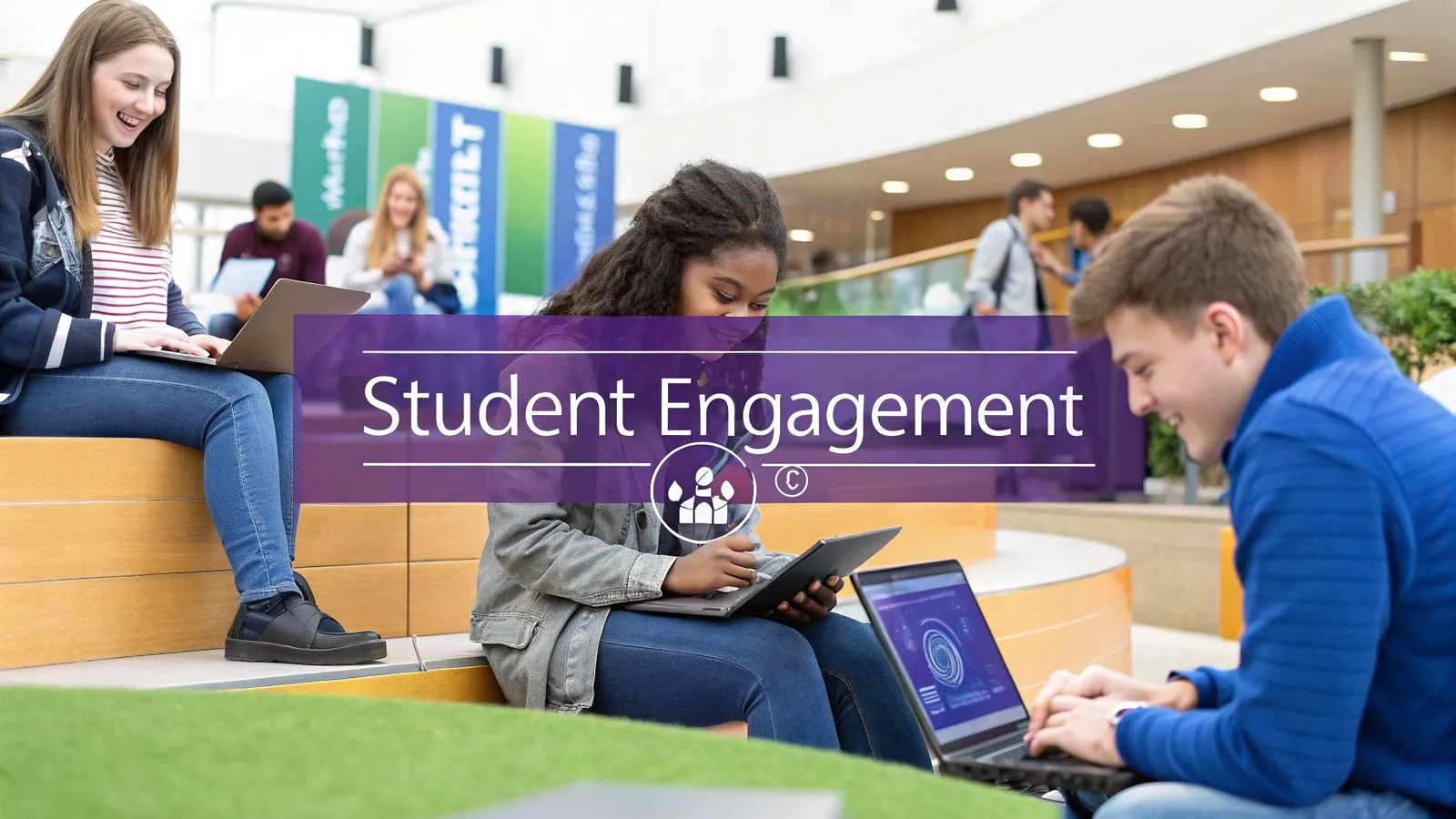
Let's be honest, we've all sat through lectures where information flows in only one direction: from the professor to a sea of passive students. A student engagement platform is designed to completely demolish that old model.
Think of it less as a piece of software and more as a digital ecosystem—a central hub where communication, course materials, and collaborative activities all come together. The entire point is to turn students from quiet listeners into active participants in their own education.
What Is a Student Engagement Platform?
Imagine that traditional lecture as a one-way street. A student engagement platform redesigns that street into a bustling, multi-lane roundabout. It creates countless new pathways for interaction, collaboration, and genuine connection—things that are incredibly difficult to manage in large classes or remote learning environments. This isn't meant to replace your Learning Management System (LMS), which is great for its core job: being the official record for grades and syllabi. Instead, a student engagement platform works alongside the LMS, focusing squarely on the experience of learning.
From Passive Learning to Active Participation
The fundamental job of a student engagement platform is to pull students into the learning process. It’s all about creating an environment where participation isn't just encouraged; it's easy and intuitive. This is done through a set of integrated tools designed to get students interacting with the content, their instructors, and—just as importantly—each other. Before we get into the nitty-gritty features, it helps to understand the core functions. This table breaks down what these platforms are built to do at a high level.
Core Functions of a Student Engagement Platform
| Core Function | Description | Primary Goal |
|---|---|---|
| Centralized Communication | Creates streamlined channels for announcements, discussions, and direct messaging. | Keep everyone connected and on the same page, reducing confusion. |
| Interactive Activities | Facilitates real-time polls, quizzes, and Q&A sessions during class time. | Gauge understanding in the moment and keep students focused. |
| Collaborative Workspaces | Provides shared spaces for group projects, file sharing, and progress tracking. | Make teamwork simpler and more effective, both in and out of the classroom. |
| Community Building | Fosters a sense of belonging through interest groups, event calendars, and social hubs. | Help students build relationships and feel like part of a larger community. |
Ultimately, these functions work together to foster a more dynamic and inclusive academic environment where every student has a voice.
A student engagement platform fundamentally changes the classroom dynamic. It empowers instructors to move beyond just lecturing and become true facilitators of an active, shared learning journey.
A Growing Market Driven by Real Results
The shift toward these platforms isn't just a trend; it's a movement backed by significant market growth and clear results. The global student engagement platform market is projected to grow from around $987.6 million in 2025 to a staggering $2.5 billion by 2033.
This explosive growth is fueled by a simple fact: colleges and universities are seeing firsthand how these tools help create a more personalized and active learning environment.
This infographic paints a clear picture of the impact these platforms can have on the metrics that matter most.
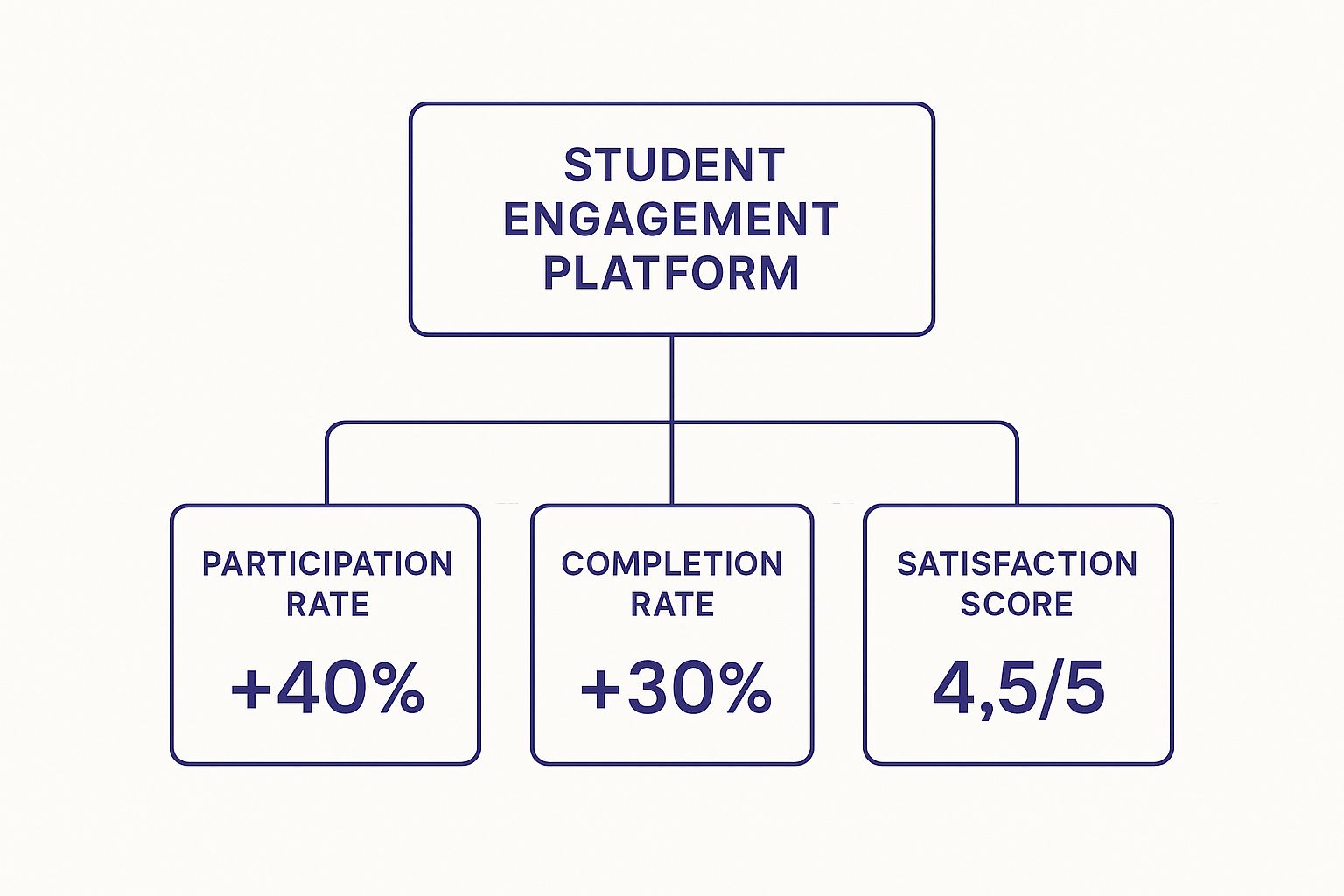
The data speaks for itself. Investing in engagement technology isn't just about modernizing the classroom; it's a strategic move that delivers measurable improvements in student participation, course completion, and overall satisfaction. When you get the learning environment right, you create a powerful engine for achieving your institution's most critical goals for retention and student success.
Key Features That Drive Student Interaction
Knowing what a student engagement platform is gets us to the starting line, but the real power is in the features. These tools are the engine that transforms a passive lecture into an active, two-way experience. They aren't just bells and whistles; they’re intentionally designed to give instructors new ways to connect and students new ways to participate.
Think about a massive biology lecture. Traditionally, the professor talks while students dutifully take notes. But with a student engagement platform, that same professor can pause halfway through and launch a real-time poll: "Which part of cellular respiration is tripping you up the most?" That immediate, anonymous feedback lets the instructor pivot on the spot, clearing up confusion before it snowballs.
That’s just one example. Let's break down the most impactful features that make this kind of interaction possible.
Real-Time Interaction and Feedback Tools
The heart of any good engagement platform is its ability to create a genuine conversation, even in a class of 300. It does this with tools that invite everyone into the discussion.
- Live Polls and Quizzes: These are quick, low-stakes ways to take the temperature of the room. An instructor can use them to check for understanding, kick off a debate, or just bring some energy back to a sleepy classroom.
- Interactive Q&A Sessions: Instead of a few brave hands shooting up, students can type out questions digitally. Others can upvote the questions they share, helping the professor see what’s most pressing. This is a game-changer for shy or hesitant students.
- Surveys and Feedback Forms: Gathering student feedback is no longer a once-a-semester chore. Instructors can deploy quick surveys to ask about pacing, content clarity, or even student well-being, getting data they can use to improve the course as it unfolds.
These tools turn the lecture hall from a broadcast studio into a dynamic forum. The instructor gets a constant pulse on the classroom, and students feel like they're actually being heard.
Fostering Collaboration and Community
Learning has always been a social act, but it can feel incredibly isolating—especially in large or online courses. A great engagement platform builds bridges between students, turning a roster of names into a network of collaborators. Imagine a lab group wrestling with a tough project. Instead of getting tangled in endless email chains and conflicting document versions, they can jump into a dedicated workspace right on the platform. Here, they can share files, divvy up tasks, and communicate in one central spot, making teamwork far more organized and less frustrating.
An engagement platform doesn't just connect a student to the course content; it connects them to a community. By facilitating teamwork and discussion, it helps build the peer relationships that are critical for academic persistence and success.
Dedicated discussion forums are also key. They move beyond simple Q&A to become lively spaces for debate, peer support, and deeper thinking. When used well, these forums become an extension of the classroom where learning continues long after the lecture is over.
Gamification and Motivational Elements
Motivation is the fuel for learning. While curiosity is the main driver, adding a layer of fun and encouragement through gamification can make a huge difference. When students feel more involved, their participation naturally follows. Gamification isn't about turning a syllabus into a video game. It's about applying proven, game-like mechanics to academic tasks in a thoughtful way.
- Points and Badges: Students might earn points for completing readings, contributing to a discussion, or helping a peer solve a problem. Digital badges can be awarded for milestones, like "Discussion Starter" or "Perfect Attendance."
- Leaderboards: A little friendly competition can be a powerful motivator. Leaderboards can track participation or quiz performance, encouraging consistent effort without being overly stressful.
These elements tap into our natural drive for achievement and recognition, making the learning process feel more rewarding. For a closer look at the psychology behind this, our guide on how to motivate students offers practical strategies that pair perfectly with these features.
Actionable Analytics and Reporting
Finally, the feature that ties it all together is the analytics dashboard. This isn't just about big-picture data for administrators; it's an incredibly powerful tool for instructors on the front lines. The platform gathers data on every interaction, painting a clear picture of student behavior. For instance, an instructor might see that a student's participation in online discussions has dropped by 50% over the past two weeks. That data point is an early warning signal, empowering the instructor to reach out and offer support long before that student disengages completely. This is what makes a student engagement platform a truly proactive tool for retention, not just an interactive one.
The Real-World Benefits for Higher Education
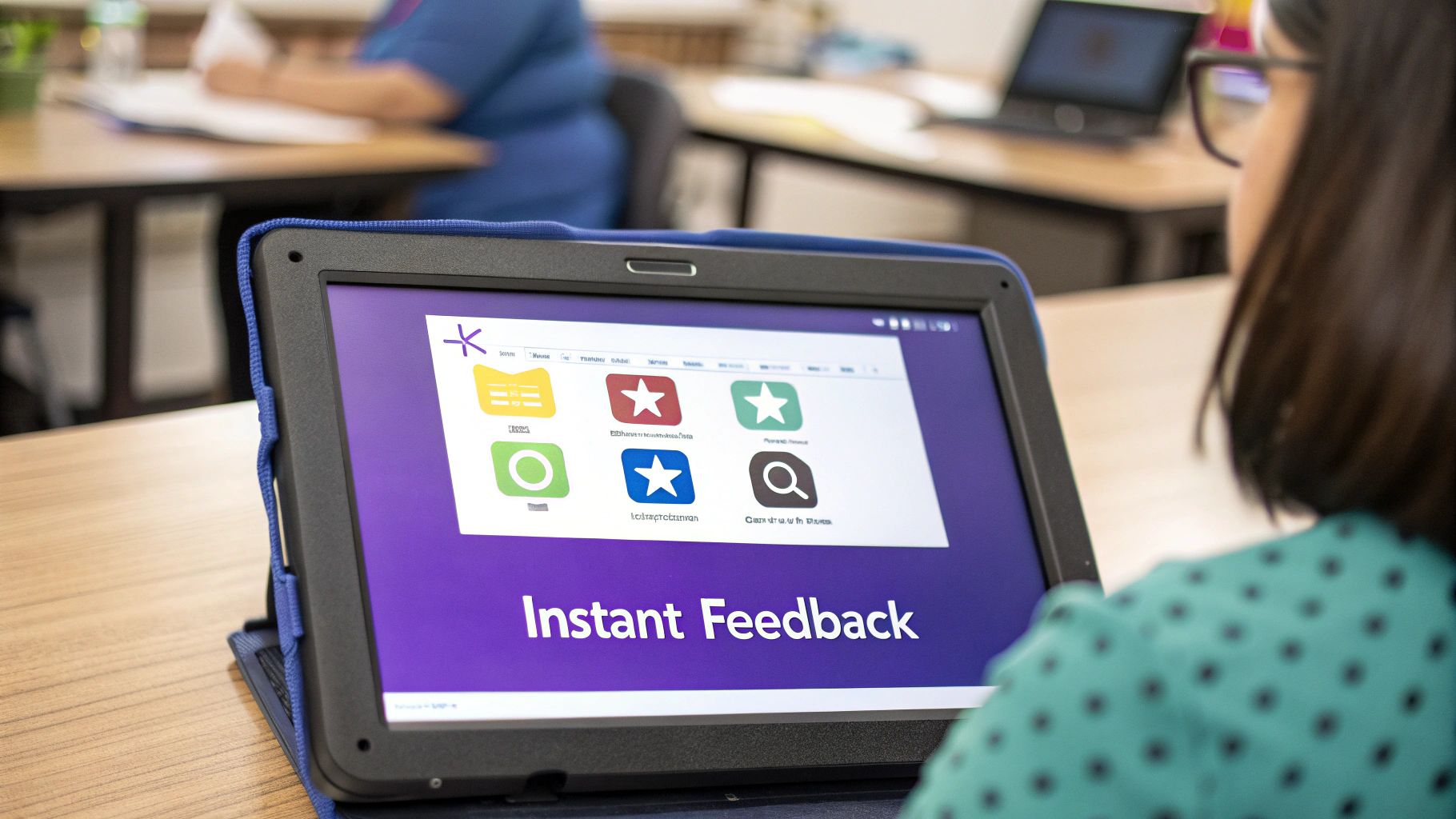
While the feature list of a student engagement platform can be impressive, the real magic happens when we look at the tangible impact on students, faculty, and the institution as a whole. These aren't just fancy add-ons. They're strategic tools that get to the heart of some of higher education's biggest challenges, from improving learning to boosting retention. The benefits start with the individual student and ripple outward, strengthening the entire university community. For students, it means a more connected and supportive journey. For faculty, it's about gaining deeper insight and cutting down on administrative busywork. And for the institution, it’s a powerful engine for hitting key strategic goals.
Improving the Student Experience
We’ve all heard about the isolation students can feel, especially in large lecture halls or fully online programs. A student engagement platform tackles this head-on by creating spaces for students to collaborate and making it easier to ask for help. It’s about building a real sense of community.
When students feel like they belong, they show up. They participate, push through tough assignments, and ultimately, succeed. A platform might help a first-year find a study group for that notoriously difficult chemistry class or connect a working parent with other non-traditional students who get it. That feeling of connection is a massive driver of both satisfaction and retention.
These platforms also put students back in the driver's seat of their own education. They can re-watch Q&A sessions, chime in on discussions whenever it suits them, and see their own progress through clear milestones. It’s a more personalized approach that gives them a feeling of control over their academic path.
Empowering Faculty with Actionable Insights
For instructors, the benefits go way beyond making a lecture more interactive. A good engagement platform is like having a real-time dashboard for your classroom, giving you a constant pulse on who understands the material and who is starting to drift away. This allows faculty to stop being reactive and start being proactive. Instead of waiting for the midterm to find out half the class is lost on a key concept, an instructor can use a quick poll to spot confusion in the moment. They can see which students have gone quiet in the online forums or who hasn't logged in to look at the course materials in a week.
The true power for faculty lies in turning all that data into action. A platform provides the early warning signs needed to step in and support a student before they fall behind, shifting the instructor's role from a simple lecturer to a proactive mentor.
This kind of early alert system is the bedrock of effective student success initiatives. By flagging at-risk behaviors, the platform empowers faculty and advisors to offer targeted help when it counts the most. To see how these data-driven interventions are put together, you can check out our guide on designing effective student success initiatives. This focused approach not only helps individual students but also frees up faculty to do what they do best: teach.
Driving Institutional Growth and Retention
At the institutional level, the benefits get even bigger, tying directly into top-line priorities like student retention and smart, data-informed decisions. Every student who feels supported and connected is one who is far more likely to sign up for the next semester. By improving the entire student experience, these platforms have a direct impact on the bottom line. Ultimately, a well-implemented platform creates a powerful, positive feedback loop:
- Students feel more engaged and supported, which leads to better grades and higher completion rates.
- Faculty have the tools they need to teach more effectively and catch struggling students early.
- The institution sees higher retention, improved student satisfaction, and a treasure trove of data to guide future strategy.
This is exactly why these platforms have shifted from a "nice-to-have" to a critical investment for any modern university serious about its long-term success.
A Strategic Guide to Platform Implementation
Rolling out a new student engagement platform isn't like a typical software update. It's more like launching a campus-wide community initiative. Success hinges on a thoughtful game plan—one that puts people first. Get it right, and the platform becomes a cornerstone of campus life. Get it wrong, and it just gathers digital dust.
The real work starts long before you even think about buying anything. It begins with a deep dive into your institution's specific needs. Think of it as drafting the blueprint before breaking ground. What are your biggest engagement roadblocks? Are you trying to energize massive lectures, foster community for online students, or get ahead of issues with at-risk populations?
To find the answers, you have to talk to the people on the ground. Sit down with faculty and ask about their teaching headaches. Poll students on what would make them feel more connected. Check in with IT to map the existing tech ecosystem. This legwork ensures you choose a platform that solves your actual problems, not just one that adds another icon to the student portal.
Build Your Implementation A-Team
No technology, no matter how great, succeeds on its own. It needs champions. That's why your first move is to assemble a cross-functional implementation team. This can't just be an IT project; it needs to be a campus project, with voices from every corner of the community that will touch the new platform. Your A-Team should include:
- Faculty Representatives: These are your advocates in the classroom. They understand the pedagogy and can inspire their peers to get on board.
- IT and LMS Admins: The technical experts who make sure the student engagement platform plays nicely with your existing systems, like your Learning Management System (LMS).
- Student Leaders: Getting students involved from day one is non-negotiable. They provide priceless feedback and help generate buzz among their peers.
- Advisors and Support Staff: Since these platforms generate data on student progress, you need the support staff at the table to ensure that information turns into meaningful action and interventions.
This is the group that will steer the ship—from picking a vendor to planning the rollout and deciding what success looks like.
Choose the Right Partner and Plan the Rollout
Once you have a clear picture of what you need, picking a vendor gets a whole lot easier. But don't just shop for features; look for a partner. The best vendors live and breathe higher education. They offer real support and training because they know their success is tied to yours. The killer question to ask? "How will you help us make sure our faculty and students actually use this?" After you’ve made your choice, resist the urge to go for a "big bang" campus-wide launch. A phased rollout is nearly always the smarter play.
- Start Small: Kick things off with a small, hand-picked group of enthusiastic faculty and their courses. This gives you a low-stakes environment to work out the kinks.
- Gather Feedback: Be relentless about collecting feedback from these early adopters. What's clicking? What’s clunky? Use their insights to fine-tune your training guides and support docs.
- Showcase Success Stories: Once you have some wins, shout them from the rooftops. When other professors see their colleagues saving time and watching their students light up, they'll be clamoring to get involved.
This methodical approach doesn't just prevent headaches; it builds momentum and turns your first users into your most powerful advocates.
You can have the best technology in the world, but implementation is a fundamentally human process. It all comes down to great training, clear communication, and a relentless focus on building user confidence.
Make Training and Onboarding a Priority
Even the world's most intuitive platform needs a solid onboarding plan. You can't just email out a login and hope for the best. Adoption lives or dies on how competent and supported you make your users feel from day one.
For faculty, training needs to be about pedagogy, not just point-and-click. Don't show them a feature; show them how a live poll can transform a sleepy lecture or how a collaborative workspace can finally make group projects less painful. Frame the tool as a solution to their everyday teaching challenges.
For students, onboarding should be fast, frictionless, and folded right into their routine. Think short video tutorials, quick in-app pop-ups, and clear instructions from their professors. The goal is for the platform to feel like a natural part of their classwork, not another box to check. By investing in this human-centered approach, you’re not just launching software—you’re setting the stage for real engagement and a genuine return on your investment.
How to Measure Platform ROI and Success

Investing in a student engagement platform is a significant move. Sooner or later, you're going to have to prove it was worth it. Thankfully, measuring its return on investment (ROI) isn't about guesswork; it's about telling a compelling story with both hard data and human experience. The trick is to connect the platform's usage directly to your institution's most important goals. Think of the platform as a new engine for your university. Your job is to show not just that the engine is running, but that it's actually moving the whole vehicle forward—improving retention, boosting course completion, and making students feel more connected. This means going way beyond simple login counts.
Tracking Quantitative Wins
The clearest path to proving value is through quantitative data. These are the hard numbers that leaders and stakeholders understand at a glance because they directly reflect the health of the institution. They offer concrete proof that your investment is making a measurable difference.
Before you go all-in, you need to establish a baseline. What were your retention rates last semester? What was the average pass rate in those big, foundational courses? Knowing where you started allows you to track progress over time and draw a straight line from platform adoption to positive outcomes.
Keep a close eye on improvements in these areas:
- Student Retention Rates: This is the big one. Track semester-to-semester and year-over-year persistence. A primary goal of engagement is keeping students enrolled and on track, so even a 1-2% increase represents a massive return.
- Course Completion and Pass Rates: Dig into the academic data for courses where the platform is heavily used. Are pass rates climbing? That’s a strong signal that the platform's tools are helping students grasp the material.
- Platform Adoption: Measure how many students and faculty are actually logging in, which features they use most, and how often they participate in activities like polls or discussions. High adoption is a fantastic leading indicator of future success.
Assessing Qualitative Success
Numbers are essential, but they don't tell the whole story. Qualitative success gets to the why behind the data. It answers the critical question: "Do our students and faculty actually find this thing useful and easy to navigate?" This is where you measure the human impact. To do this well, you need to hear directly from users. Learning effective strategies to increase survey response rates and overall engagement can make a huge difference in the quality of your feedback. Simple pulse surveys and feedback forms built right into the platform can give you a steady stream of these invaluable insights.
The ultimate sign of success is a cultural shift. When faculty start sharing best practices with each other on their own and students naturally turn to the platform as their central hub, you know the investment has truly taken root.
This is also where the platform's own analytics can shine. For instance, analyzing the sentiment in discussion forums can give you a real-time pulse on student morale or pinpoint common areas of confusion. Tracking the questions asked in a Q&A feature can help departments refine their curriculum. These insights prove the platform is more than just software—it's a strategic tool for institutional improvement.
Key Performance Indicators for Platform Success
To tie it all together, you need a clear framework for measurement. Tracking specific Key Performance Indicators (KPIs) across different departments will give you a holistic view of the platform's impact.
| Metric Category | Key Performance Indicator (KPI) | Data Source | Impact Area |
|---|---|---|---|
| Academic Performance | Change in course pass rates for high-usage courses | Student Information System (SIS) | Student Success |
| Student Retention | First-year, semester-to-semester persistence rate | Registrar's Office / SIS | Institutional Health |
| Platform Adoption | Weekly active users (students & faculty) | Platform Analytics | User Engagement |
| Student Support | Reduction in support tickets for common academic questions | IT Help Desk / Advising Office Records | Operational Efficiency |
| User Experience | Student/Faculty satisfaction scores (via built-in pulse surveys) | Platform Surveys | Qualitative Feedback |
| Engagement Depth | Average number of interactions per student per week (posts, replies) | Platform Analytics | Community Building |
By defining your KPIs upfront, you create a clear roadmap for what success looks like. This data not only justifies the initial investment but also builds a powerful case for continued support and expansion, ensuring the platform remains a cornerstone of your student success strategy for years to come.
The Future of Student Engagement Technology
Student engagement platforms are already powerful, but the technology isn't even close to finished evolving. What’s coming next is a blend of advanced technologies that will create educational experiences so personalized and immersive they feel like science fiction.
We're moving beyond tools that just track participation. The platforms of tomorrow will actively anticipate and shape the student journey from day one.
At the heart of this evolution is Artificial Intelligence (AI). Imagine a platform that doesn't just see a student is struggling with a concept, but actually understands why. It could then instantly serve up the perfect resource to get them unstuck—a specific video tutorial, a quick article, or a practice quiz. This isn't just a one-size-fits-all approach; it’s a truly individualized learning path for every single student.
New Dimensions of Learning
Another mind-bending frontier is the integration of Virtual and Augmented Reality (VR/AR). These technologies are poised to completely dissolve the physical walls of the classroom. A history student could literally walk the streets of ancient Rome. A medical student could practice a complex surgery in a completely risk-free simulation. This shift makes learning tangible and sticky. Instead of just reading about something, students get to experience it, leading to a much deeper and more lasting understanding.
The next generation of student engagement platforms will be defined by their ability to predict needs and personalize support. By using sophisticated analytics, they will empower institutions to intervene not just early, but preemptively.
Answering Your Key Questions
So, you're thinking about a student engagement platform. It's a smart move, but it also brings up some practical questions. This isn't just about cool features; it’s about finding the right fit for your campus, how it will actually work day-to-day, and where you'll see a real return. Let's dig into a few of the most common questions we hear. Getting these answers straight helps ensure you choose a tool that solves your real-world challenges, whether that’s bringing a massive lecture hall to life or building community for your online students.
How Is a Student Engagement Platform Different From an LMS?
This is probably the most frequent question, and the distinction is crucial.
Think of your Learning Management System (LMS) like the university's physical building—it's the official, structured space. It's where you post the syllabus, house course materials, and record grades. It’s the system of record.
A student engagement platform is the campus life director for that building. It doesn't replace the LMS; it makes what happens inside the building more dynamic and interactive. It's a system of action. Its job is to spark participation, build community, and create connections through tools like live polls, Q&As, and group challenges. It’s all about the experience of learning, not just the logistics.
What Is the Biggest Challenge in Platform Implementation?
It’s almost never the technology. The biggest hurdle is getting people on board—specifically, securing widespread faculty adoption. Most instructors have teaching methods they’ve spent years refining. The thought of adding yet another tool to their plate can feel overwhelming, especially if the value isn't immediately clear.
You can have the best platform in the world, but if you don't have a smart change management strategy, it will collect digital dust. Success comes down to great training, clear communication, and getting a few faculty champions to lead the way.
The key is to position the platform not as more work, but as a tool that solves common teaching frustrations and even saves time in the long run.
Do These Platforms Work for Online and In-Person Classes?
Yes, absolutely. In fact, their flexibility across different formats is one of their biggest advantages. They create a single, consistent layer of interaction that bridges the gap between the physical and digital classroom, unifying the student experience.
- For in-person classes, they can turn a passive, 200-person lecture into an active conversation. Think live polls, upvoted Q&As, and getting instant feedback without anyone having to raise a hand.
- For online and hybrid courses, these platforms are the connective tissue. They help build the sense of community and peer-to-peer connection that often gets lost when students aren't physically together.
- For every class, they provide a central spot for collaboration and discussion that keeps the learning going long after the scheduled lecture has ended.
At Motimatic, we believe that the right message at the right time can change a student's trajectory. Our platform uses behavioral science and targeted outreach to motivate students at every stage of their journey, boosting retention and enrollment. See how Motimatic can help you guide more students to success.
See it on your own listOne list, one goal, and a randomized holdout to show the lift. Start a pilot