Student success programs are the connective tissue that holds a student’s entire college experience together. They are the deliberate, coordinated systems colleges build to help students not just survive, but truly thrive—academically, personally, and professionally.
This represents a massive philosophical shift. We've moved beyond simply offering resources and hoping students find them. Instead, we're actively guiding students from their first day on campus to the moment they walk across the graduation stage, with a laser focus on retention, completion, and overall well-being.
What Exactly Are Student Success Programs?
Let's cut through the higher-ed jargon. Think of a student success program as the dedicated support crew a college builds around every single student. It’s the difference between handing someone a map and wishing them luck, versus giving them a personal guide for their entire journey. These programs have grown far beyond the old model of just tutoring centers and academic advising offices. Today’s best initiatives are holistic ecosystems designed to address the full spectrum of challenges a student might face, from academic roadblocks and financial stress to mental wellness and career readiness.
A Shift from Reactive to Proactive Support
The real game-changer here is the move from a reactive, one-size-fits-all model to something much smarter and more personal. Instead of waiting for a student to fail a class or admit they're struggling, these programs use data and timely outreach to step in before a small problem becomes a crisis. This proactive approach is what makes it possible to help every student succeed, not just those who were already destined to.
The goal is no longer just about access to education, but about ensuring successful outcomes. It redefines institutional prestige based on how many students are welcomed in and served well, rather than how many are kept out.
This change is a direct response to the real-world needs of today's students. We now know that academic talent is just one piece of the puzzle. To truly help someone achieve their goals, you have to understand and support the whole student—a concept that gets to the heart of the science behind student outcomes.
Why the Focus Is Intensifying
The need for robust student support has never been clearer. Higher education leaders are doubling down on student success programs because the data shows persistent learning challenges and stubborn equity gaps. This has been accelerated by the move toward new, competency-based learning models that are designed to prepare students for a world that demands critical thinking and adaptability.
At their core, these programs share a handful of powerful, interconnected missions.
The table below breaks down the fundamental goals that define modern student success initiatives, moving beyond just academics to a more holistic view of the student journey.
Core Mission of Student Success Programs
| Core Goal | Description |
|---|---|
| Boost Retention | Keep students enrolled and moving forward on their degree path. |
| Improve Completion | Ensure more students cross the finish line and earn their credential. |
| Enhance Experience | Foster a powerful sense of community and belonging on campus. |
| Promote Equity | Close achievement gaps for underrepresented and first-generation students. |
| Prepare for Post-Graduation | Equip students with the skills and network needed for a strong career start. |
By weaving these goals together, student success programs create an environment where learners feel supported, engaged, and empowered to reach their absolute full potential.
Why These Programs Are No Longer Optional
Thinking of student success programs as just another line item or a "nice-to-have" add-on is a critical mistake in today's higher education landscape. They aren't a feature. They are the bedrock of a healthy, thriving institution.
For students, the impact is life-changing. We see it every day. Effective support directly translates to higher completion rates, a deeper sense of belonging on campus, and far less stress. But the return for institutions is just as powerful—it shows up in better retention, a stronger reputation, and alumni who stay connected long after graduation.
The Business Case for Student Support
Investing in student support isn't just an expense; it's one of the smartest financial moves a college or university can make. Why? Because a successful student becomes a graduating student. And a graduating student becomes a proud, contributing alum. Every single student you keep from dropping out is a direct win for your bottom line.
Think about the ripple effect. Just a small bump in your first-to-second-year persistence rate can mean millions of dollars in tuition revenue. Suddenly, student success programs don't look like a cost center anymore. They look like an engine for institutional growth.
On top of that, these programs are a massive differentiator in a crowded market. When prospective students and their families see a real, organized commitment to outcomes, it sends a powerful message. It tells them your institution invests in its people—a compelling reason to choose you over another school.
The old metrics of prestige are fading. It’s no longer about how many students you can turn away at the gates. It’s about how well you serve every student you welcome in, guiding them toward a valuable credential and a better future.
This shift means that programs designed to support every single learner, especially those from historically underserved backgrounds, are absolutely essential for building a modern, respected brand.
Key Benefits Driving Adoption
So why is everyone from community colleges to flagship universities doubling down on their success strategies? The reasons touch every part of the institutional mission. Here are the big drivers making these programs non-negotiable:
- Improved Retention and Completion: This is the most obvious win. It’s about plugging the "leaky bucket" and keeping students enrolled and on a clear path to graduation.
- Enhanced Institutional Reputation: Word gets around. Colleges known for outstanding student support attract better-fit applicants and top-tier faculty. Nothing beats the marketing power of a happy, successful graduate.
- Closing Equity Gaps: Well-designed programs give targeted support to first-generation, low-income, and minority students. This is how we close stubborn achievement gaps and create real social mobility.
- Stronger Alumni Networks: Students who feel genuinely supported are far more likely to become engaged and generous alumni. This creates a powerful cycle of giving back that helps the next generation of students.
At the end of the day, the argument is simple. Institutions that prioritize and invest in robust student success programs are building a more resilient, reputable, and impactful future—for themselves and for every student they serve.
The Building Blocks of a Great Program
So, what really makes a student success program work? It’s not about just having a bunch of different services available on campus. It's about designing a single, connected system where every part works in concert to give students both a safety net and a launchpad.
Think about it like building a house. You don't just dump a pile of bricks, wood, and wiring on a lot and hope it turns into a home. You need a solid foundation, strong walls, and a roof that doesn't leak. The same idea applies here. A great program is built from distinct, essential components that are designed to work together.
Let's break down the core pieces that form the blueprint for a program that actually makes a difference.
1. Foundational Academic and Onboarding Support
This is where the student journey truly begins, and it's your first, best chance to make a lasting impression. Those first few weeks are critical. A core part of any strong program involves creating effective onboarding strategies that set students on the right path from day one. This is much more than a single orientation day. It’s a structured welcome that makes students feel like they belong right away. It also includes proactive academic advising—the kind that uses data to spot potential roadblocks before they become real problems, giving every student a clear, personalized map to their degree.
The goal is to shift from just making resources available to actively guiding students. Instead of saying, “The advising office is over there,” the program reaches out to make sure they’re on track.
This foundational layer is all about setting the right tone. It tells every student, loud and clear, that the institution is invested in their success from the moment they arrive.
2. Mentorship and Community Initiatives
No student should ever feel like just a number. That’s why building a true sense of community is one of the most powerful things student success programs can do. This often starts with structured mentorship, pairing new students with experienced peers or faculty who can offer guidance, support, and a friendly ear.
Meaningful mentorship can demystify the college experience, which is especially critical for first-generation students who may not have a family network to turn to for advice. It builds a sense of belonging—a factor that research consistently links to higher persistence and graduation rates.
Beyond one-on-one mentorship, successful programs often include:
- Learning Communities: Grouping students by academic interest into shared classes to spark collaboration and peer support.
- Affinity Groups: Creating dedicated spaces for students from specific backgrounds (like veterans, commuters, or international students) to connect over shared experiences.
- Campus Events: Organizing activities that aren't just for fun but are intentionally designed to forge social connections and strengthen the campus community.
3. Integrated Career and Wellness Services
A student's well-being and their future career aren't separate from their academic life—they're deeply connected. The best student success programs get this, weaving career development and wellness support directly into the student experience from the very beginning.
This means career services isn't a place students only visit a month before graduation. Instead, career exploration, help finding internships, and resume workshops are introduced early and reinforced often. In the same way, mental and physical health support has to be accessible, visible, and free of stigma. After all, students can't learn if they're struggling.
The image below shows how all these integrated efforts work together to drive the outcomes every institution is aiming for.
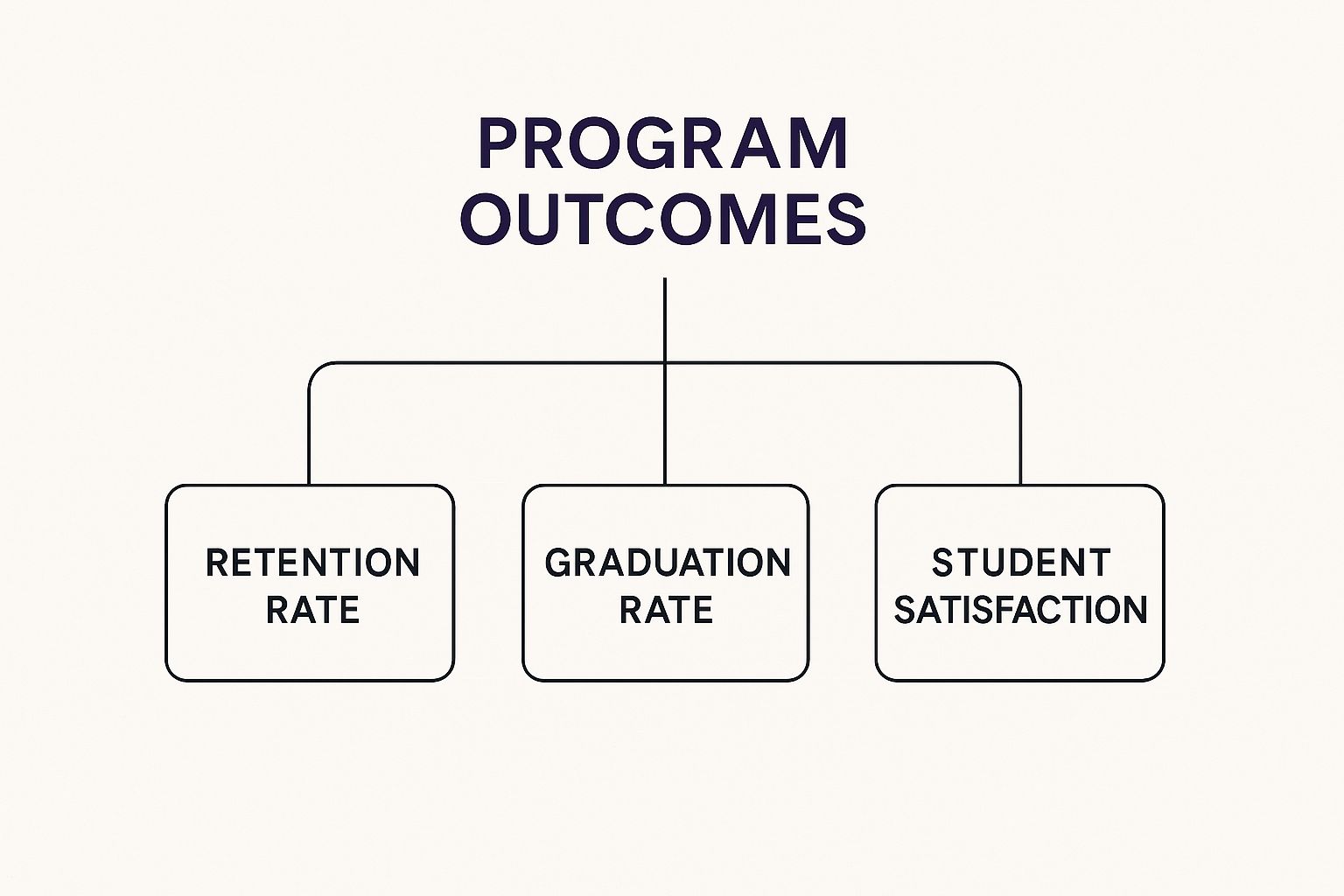
As the hierarchy makes clear, better retention, higher graduation rates, and greater student satisfaction are the direct results of a well-supported student journey. By focusing on these core building blocks, you can create a program that doesn't just solve problems but actively builds a supportive, successful, and fulfilling environment for every single student.
How to Actually Measure Your Impact
So, your student success programs are up and running. But how do you prove they're working? It’s not enough to just point at graduation rates. To show real value, you have to measure what truly matters, digging deeper than surface-level stats to tell the whole story of the student journey.
Effective measurement is really about building a compelling case with data. You're showing everyone—from administrators to funders—that the investment in student support is paying off. This means tracking a smart mix of metrics that show where you've been and, more importantly, predict where you're going.
Leading Versus Lagging Indicators
First things first, let's talk about the two kinds of metrics you need. Think of it like managing your health. Your cholesterol level is a leading indicator—it helps predict your future risk of heart problems. A heart attack, on the other hand, is a lagging indicator—it tells you something has already gone wrong.
- Lagging Indicators: These are the classic outcomes we all know, like graduation and retention rates. They’re absolutely essential for proving long-term success, but they only reflect past events.
- Leading Indicators: These are the game-changers. They’re the real-time, actionable data points that predict future outcomes. Think advising session attendance, engagement with campus tech, or participation in tutoring.
By tracking leading indicators, you can intervene before a student veers off course. For instance, if you notice a drop in first-year students attending tutoring (a leading indicator), you can act now instead of waiting for next semester’s retention rate (a lagging indicator) to confirm there was a problem. You can explore more of these forward-thinking approaches in our guide to https://motimatic.com/student-success-strategies/.
The most powerful measurement frameworks blend both types of indicators. This creates a complete picture, allowing you to prove past results with lagging metrics while using leading metrics to steer your program toward even better future outcomes.
This approach turns your data from a simple report card into a strategic tool for constant improvement.
Key Performance Indicators to Track
Beyond the basics, a solid measurement plan for student success needs a diverse set of KPIs. This makes sure you’re capturing the full impact of your work, from academic progress to students' personal sense of well-being.
A big piece of this puzzle is knowing how to effectively measure student engagement, as it’s often one of the strongest predictors of whether a student will stay enrolled.
Here are some essential metrics to get you started:
- First-Year Retention Rates: This is the big one. It tells you how well you’re welcoming new students and setting them up for a strong start.
- Student Engagement Scores: Are students participating in high-impact activities like internships, research, or campus events? This data provides a crucial pulse check.
- Course Completion Rates: Keep a close eye on success rates in historically tough "gateway" courses. This helps you pinpoint exactly where students need more academic support.
- Post-Graduation Outcomes: Go beyond just employment rates. Look at salary data, grad school acceptance rates, and alumni satisfaction to understand the long-term return on their education.
- Sense of Belonging: Use quick, regular pulse surveys to ask students how connected and supported they feel. A high sense of belonging is a well-documented driver of persistence.
Inspiring Examples of Programs That Work

Frameworks and theories are a great starting point, but the true magic of student success programs is seeing them in action. When you see how other colleges have solved real-world problems, it offers a powerful, concrete roadmap for what’s possible on your own campus.
These stories aren't just about the features they rolled out. They’re about digging into the unique challenges an institution faced, the smart solutions they designed, and the incredible results they measured.
It’s about seeing how a large public university used data to support first-gen students or how a community college built transfer pathways so seamless they were practically guaranteed. These examples aren't just inspiring—they're a blueprint.
Georgia State University's Predictive Analytics Model
Georgia State University (GSU) was struggling with summer melt and retention. This was a particularly sharp problem for their large population of Pell Grant recipients and first-generation students. They knew the old way of offering reactive support just wasn’t cutting it to close the equity gaps.
So, they became a trailblazer in predictive analytics. GSU built a system that tracks 800 different risk factors for every undergraduate, all in real time. The system isn't just looking for big problems; it flags students showing the earliest signs of trouble, like a lower-than-expected grade on a single exam in a critical course.
The second a flag goes up, an advisor gets an alert and reaches out, often within 48 hours. This proactive nudge helps students get back on track before a small stumble becomes a major derailment. The impact has been nothing short of transformative.
By blending data-driven insights with a very human, personal touch, GSU has systematically torn down the barriers that were holding students back. They’ve proven that an institution's commitment can fundamentally change a student's entire academic journey.
It’s a masterclass in how technology and a human-centered approach can create real equity. This kind of targeted outreach is a cornerstone of boosting university student retention.
The ASAP Program at the City University of New York
Community college students often juggle a dizzying array of obstacles, from financial pressures to the labyrinth of transfer requirements. The City University of New York (CUNY) saw this and created its Accelerated Study in Associate Programs (ASAP) to tackle these issues with a holistic, wraparound model. ASAP isn't a single service—it's an entire ecosystem of support designed to work in concert. Students who join the program get a powerful suite of benefits.
- Financial Support: Tuition waivers cover any gaps left by financial aid. The program also provides free textbooks and public transit passes, removing common day-to-day cost barriers.
- Structured Pathways: Students are placed in block-scheduled courses with clear degree maps. This takes the anxiety and guesswork out of registration, keeping them on the fastest path to graduation.
- Dedicated Advising: ASAP students benefit from a much lower advisor-to-student ratio. This ensures they get the frequent, personalized guidance they need to stay on track.
- Career Development: From day one, career support is woven into the experience, helping students see the direct line between their studies and their future goals.
The evidence for this approach is overwhelming. An independent study found that ASAP students were nearly twice as likely to graduate within three years as their peers. It has since become a celebrated national model, proving how comprehensive student success programs can deliver truly life-changing outcomes, especially for students from low-income backgrounds.
How to Build Your Program and Prepare for the Future
Getting a real student success program off the ground doesn’t mean you have to tear down your existing structures and start from scratch. It really begins with a shift in mindset—viewing student support not as a checklist of siloed services, but as the central philosophy that guides everything your institution does. Whether you're fine-tuning what you already have or building something new, the most critical first step is simply to listen. Get on the ground with surveys, town halls, and focus groups to find out what hurdles your students are actually facing. Is it financial anxiety? A missing sense of community? Vague career paths? Your program has to be designed to solve the real problems students are up against day-to-day.
Taking Actionable First Steps
Once you have a clear picture of the needs, you can start building your framework. My advice is always to start small. Focus on a few high-impact areas where you can score some quick wins and build the momentum you'll need for the long haul. Here are a few practical places to start:
- Create a Cross-Functional Team: Break down those invisible walls between advising, financial aid, career services, and student life. When these teams talk to each other, you create a seamless support network instead of a bureaucratic maze.
- Launch a Pilot Mentorship Program: Try pairing a small group of new students with faculty members or even just upper-year peers. It's a powerful way to build an immediate sense of community and give students a trusted person to turn to for guidance.
- Develop Clear Degree Maps: Work with your academic departments to create simple, visual roadmaps for every single major. A tool this simple can be a game-changer, taking the mystery out of registration and keeping students on the fastest, cheapest path to their degree.
The most powerful student success programs are built on a foundation of empathy. They don't just offer resources; they actively seek to understand and remove the specific barriers preventing students from achieving their full potential.
Looking Ahead at Emerging Trends
The future of student success is getting more personal, more predictive, and much more focused on career outcomes. As you build out your program, it's smart to keep an eye on a couple of major developments that are changing the game.
First is the rise of AI for proactive outreach. New tools can analyze student engagement data—like how often they log into the LMS or attend class—to flag individuals who might be struggling long before they fall behind. This allows for timely, personalized interventions. To make this work, your outreach has to be on point, and an AI social media content generator tailored for educational initiatives can be a huge help in getting the right message out efficiently.
The second big trend is the deeper integration of career-ready skills directly into the curriculum. This is about moving beyond the standalone career center and weaving practical skills like project management, data analysis, and professional communication into core academic courses. This approach makes sure every student graduates not just with a diploma, but with a portfolio of skills that employers are actually looking for.
Ultimately, student success isn't just a program—it's a culture. It's an institution-wide commitment to putting the student's journey at the absolute center of every decision you make. By taking these first steps and keeping an eye on what's next, you can build a system that truly empowers every single learner to thrive.
Frequently Asked Questions
https://www.youtube.com/embed/i3wMvOgNjKM
As more and more institutions shift their focus toward boosting student outcomes, the practical side of building effective support systems comes with a lot of questions. Let’s clear up a few of the most common ones.
How Are These Programs Different from Traditional Tutoring?
Traditional tutoring is reactive. A student starts struggling in a specific class, they seek help for that one subject, and the interaction usually ends when the immediate problem is solved. It's an absolutely essential service, but it’s only one piece of a much bigger puzzle. Student success programs, on the other hand, are proactive and holistic. They don’t wait for a student to hit a wall. Instead, they use data to spot early warning signs and offer a whole ecosystem of support—from mentorship and financial aid guidance to career advising and wellness resources.
Think of it this way: tutoring is like calling a tow truck for a flat tire. A student success program is like having a full vehicle inspection, a reliable GPS, and a driving coach to make sure the entire journey is smooth and successful.
It’s about addressing the root causes of why students struggle, not just patching up the symptoms.
How Can Smaller Institutions Start with Limited Resources?
You don’t need a massive budget or a huge team to make a real difference. The trick is to start small, focus on a single high-impact area, and build momentum from there. First, identify the single biggest barrier your students are facing. Is it persistence through the first year? Is it passing a notoriously difficult gateway math course? Once you have a clear target, you can channel your resources into solving that one problem really well.
- Launch a peer mentorship program. This is a classic low-cost, high-impact strategy. Connecting new students with upper-level peers builds community and offers guidance that often feels more relatable than advice from faculty or staff.
- Create crystal-clear degree roadmaps. You’d be surprised how many students get derailed by simple confusion. Mapping out a semester-by-semester plan for every major can dramatically reduce wasted credits and keep students on the fastest path to graduation.
- Establish a cross-departmental "success team." Getting folks from advising, financial aid, and student life in the same room to talk about at-risk students costs nothing but time. It creates a unified support network that prevents students from getting bounced between offices.
What Role Does Technology Play in Scaling Support?
Technology is the great multiplier for student success. It’s what allows an institution to provide personalized support at a scale that would be completely impossible with manual effort alone.
For example, platforms can automatically monitor student engagement and trigger a timely, encouraging message when someone shows signs of pulling back. This kind of automated outreach helps ensure no one falls through the cracks.
Just as importantly, it frees up your advisors and staff to dedicate their valuable time to the students who truly need intensive, one-on-one intervention. The right tech makes proactive support efficient, consistent, and incredibly effective.
Ready to guide every student on their path to success? Motimatic uses behavioral science and intelligent automation to deliver personalized support that boosts retention and completion. See how our platform can help you reach every student where they are.
See it on your own listOne list, one goal, and a randomized holdout to show the lift. Start a pilot