Why Schools Must Go Digital to Survive the Enrollment Crisis
Digital marketing for schools has become essential for survival in today's competitive educational landscape. Modern families expect Amazon-level convenience when researching schools - fast websites, instant information, and seamless experiences across all devices. Top Digital Marketing Strategies for Schools:
- Website optimization - Mobile-first design with 2-second load times
- Local SEO - Dominate "best school in [area]" searches
- Social media engagement - Student-generated content and community building
- Email automation - Nurture prospects from inquiry to enrollment
- Paid advertising - Targeted campaigns with geofencing and retargeting
- Content marketing - Virtual tours, blogs, and alumni success stories
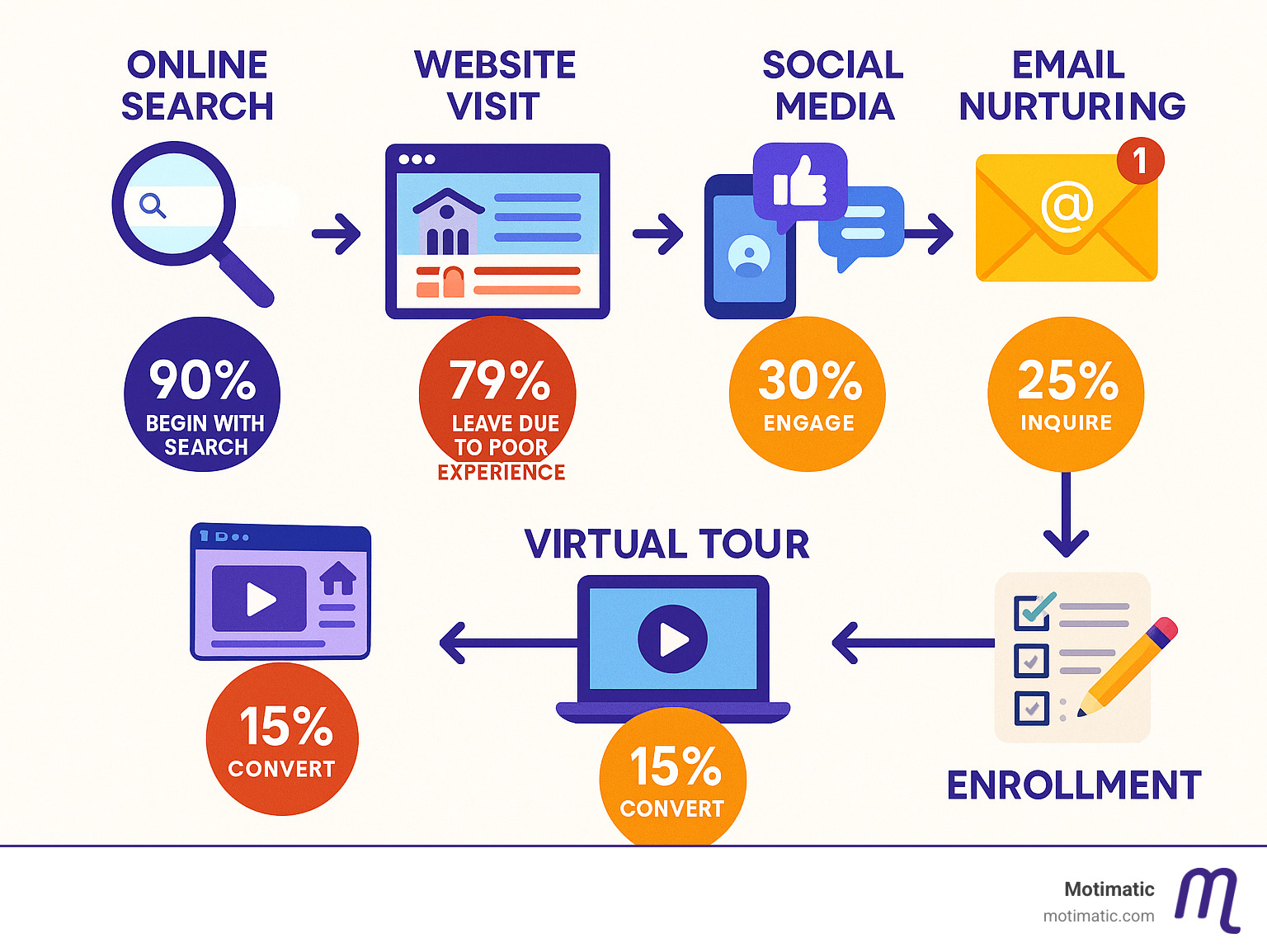
The numbers tell the story: 90% of all online experiences begin with search, and 79% of users will abandon a site they don't like to find another option. Schools that ignore digital marketing risk becoming invisible to the families they need to reach.
The stakes have never been higher. Parents now carry "liquid expectations" - if they can order groceries with one click, they expect the same ease when researching schools. A slow, outdated website doesn't just frustrate visitors - it makes them question your educational quality.
The modern enrollment journey looks nothing like it did five years ago. Families research online first, compare options through social media, and make decisions based on digital experiences before ever stepping foot on campus.
1. Why Digital Marketing for Schools Matters Today
The change in how families research and choose schools has been revolutionary. Traditional marketing methods are becoming obsolete, replaced by digital-first approaches that meet families where they spend their time.
Consider this: 94% of first impressions are design-related, and 52% of users say a bad mobile experience makes them less likely to engage with a school. Mobile users are 5 times more likely to abandon a task if a site isn't optimized for mobile devices.
The rise of AI chatbots in education research is particularly telling. Our research shows that 60% of students now use AI chatbots to research colleges, up from 49% just last year. For college exploration specifically, chatbot usage has nearly doubled from 17% to 32%. This trend is rapidly trickling down to K-12 education.
Virtual tours have become table stakes, not luxury features. When geographical barriers prevent families from visiting campuses, virtual experiences become the primary way parents form emotional connections with schools. Some of our clients have increased new site visitors by 21% and collective conversions by 296%.
Shifting Admissions Funnel & "Liquid Expectations"
The traditional admissions funnel has been completely disrupted. Parents no longer follow a linear path from awareness to enrollment. Instead, they jump between digital touchpoints, expecting instant access to information and seamless experiences.
Digital marketing for schools must account for these "liquid expectations" - the phenomenon where families carry over their experience standards from consumer brands like Amazon and Netflix. If parents can stream a movie in seconds, they expect similar convenience when researching schools.
This mobile-first reality means your digital presence must be optimized for micro-moments. When a parent searches "best elementary school near me" at 11 PM, your school needs to be ready with fast-loading pages, clear information, and easy next steps.
Core Goals of Digital Marketing for Schools
Effective digital marketing for schools serves four primary objectives:
Enrollment Growth: The obvious goal, but one that requires sophisticated nurturing strategies. Families spend most of their time in the familiarity and consideration stages, making this where your marketing efforts should concentrate.
Reputation Building: Online reviews carry enormous weight. 90% of consumers read online reviews before visiting a business, and 84% trust online reviews as much as personal recommendations.
Community Engagement: Digital marketing isn't just about attracting new families - it's about building a community of advocates. Current families, alumni, and staff become your most powerful marketing assets.
Inclusivity and Accessibility: Modern digital marketing must ensure all families can access and engage with your content, regardless of their technical abilities or disabilities.
2. Build a Conversion-Ready School Website
Your website is your digital front door, and first impressions matter more than ever. With 40% of visitors leaving if a site takes more than three seconds to load, and 47% expecting load times of two seconds or less, website performance directly impacts enrollment.
Responsive design isn't optional. We've seen schools lose potential families simply because their inquiry forms don't work properly on mobile devices. When mobile traffic dominates, a mobile-first approach becomes critical for success.
Page speed optimization should be your first priority. Google's algorithm heavily weights site speed in search rankings. Simple changes like optimizing images and leveraging browser caching can dramatically improve load times.
ADA accessibility compliance protects your school legally while ensuring all families can access your content. This includes proper heading structures, alt text for images, keyboard navigation support, and sufficient color contrast.
UX Best Practices That Keep Parents On-Site
Navigation simplicity can make or break the user experience. Parents should be able to find key information - admissions requirements, tuition costs, academic programs - within two clicks. Conduct user testing with actual parents to identify navigation pain points.
Hero videos on your homepage create emotional connections faster than text alone. A well-crafted 90-second video can deliver the same persuasive experience as an in-person tour.
Trust badges and social proof elements build credibility immediately. Display accreditations, awards, and testimonials prominently. Integration with platforms like GreatSchools.org reviews can provide third-party validation that parents trust.
Online reviews deserve special attention. With 65% of people viewing online search as the most trusted source of information about schools, managing your review presence across Google, Facebook, and education-specific platforms becomes crucial.
Turning Clicks Into Inquiries
Forms optimization requires careful attention to behavioral psychology. Long forms intimidate users, but you need enough information to qualify leads effectively. Start with essential fields only - name, email, phone, and child's grade level - then gather additional information through follow-up communications.
Behavioral nudges can significantly improve conversion rates. Simple techniques like social proof ("Join 500+ families who've already registered"), urgency ("Limited spots available"), and clear value propositions ("Get your free campus tour") can increase form completions by 20-30%.
For schools looking to dive deeper into lead generation strategies, our comprehensive guide on Higher Education Lead Generation provides advanced tactics for converting website visitors into enrolled students.
3. Get Found: SEO & Local Search Domination
Search engine optimization for schools requires understanding how families actually search for educational options. Our research reveals that 1,830,000 people worldwide search for phrases beginning with "best school in" each year, with 40,500 of those searches occurring in Australia alone.
Keyword research should focus on both broad and specific terms. While "private school" might have high search volume, "best elementary school in [your city]" often converts better because it indicates higher intent. Long-tail keywords like "Montessori school with after-school care" capture families with specific needs.
On-page SEO fundamentals remain crucial. Each page should target specific keywords in title tags, meta descriptions, and header structures. However, avoid keyword stuffing - Google's algorithms now prioritize content that naturally addresses user intent over pages that mechanically repeat keywords.
Google Business Profile optimization is non-negotiable for local schools. Complete profiles with accurate hours, photos, and regular updates appear more frequently in local search results. Encourage satisfied families to leave reviews, as these directly impact local search rankings.
Review schema markup helps your testimonials appear in search results with star ratings, increasing click-through rates. This technical SEO element makes your school stand out in search results and builds trust before visitors even reach your website.
Technical & Content SEO Checklist
Site speed optimization affects both user experience and search rankings. Google's Core Web Vitals now factor into search algorithm decisions, making technical performance a ranking factor. Focus on optimizing images, minimizing JavaScript, and leveraging content delivery networks.
Structured data markup helps search engines understand your content better. For schools, this includes marking up events, faculty information, and program details. This can lead to rich snippets in search results, improving visibility and click-through rates.
Topic clusters and internal linking create content authority. Instead of creating isolated blog posts, develop comprehensive content hubs around topics like "choosing the right elementary school" or "preparing for high school admission." Link related content together to demonstrate expertise.
Backlink building for schools often involves community partnerships. Local business partnerships, education associations, and parent organizations can provide valuable link opportunities. Guest posting on education blogs and participating in community events also generate quality backlinks.
Local Reputation Signals That Drive Tours
NAP consistency (Name, Address, Phone) across all online platforms signals legitimacy to search engines. Inconsistent information confuses both search algorithms and potential families. Audit your listings across Google, Facebook, Yelp, and education-specific directories regularly.
Neighborhood-specific keywords help capture families searching in specific areas. Instead of just targeting "private school," optimize for "private school in [neighborhood name]" or "elementary school near [local landmark]." This geographic specificity often leads to higher-quality leads.
Parent reviews on multiple platforms strengthen your local search presence. While Google reviews are most important for SEO, reviews on Facebook, GreatSchools.org, and Niche.com provide additional trust signals. Respond to all reviews professionally, especially negative ones.
Location-based advertising through Google Ads and Facebook allows precise geographic targeting. You can create campaigns that only show to families within your enrollment zone, maximizing budget efficiency while reaching the most relevant prospects.
For schools ready to implement comprehensive enrollment strategies, our guide on Enrollment Marketing Strategies provides detailed frameworks for integrating SEO with broader marketing efforts.
4. Engage & Nurture: Social Media, Email, and Content

Social media has evolved from a nice-to-have to an essential touchpoint in the enrollment journey. However, successful school social media requires understanding that different platforms serve different purposes and audiences.
Student-generated content provides authenticity that professional marketing can't match. When current students share day-in-the-life videos or highlight their favorite teachers, prospective families see genuine experiences rather than polished advertisements.
Email automation workflows nurture prospects through the complex decision-making process. Unlike retail purchases, choosing a school involves multiple family members, extended research periods, and emotional considerations. Automated email sequences can provide relevant information at each stage while maintaining personal connection.
Blog content that addresses parent concerns builds trust and authority. Topics like "How to prepare your child for kindergarten" or "Understanding different teaching methodologies" demonstrate expertise while providing genuine value.
Omnichannel personalization ensures consistent messaging across all touchpoints. When a family visits your website, receives your emails, and sees your social media content, the experience should feel cohesive and custom to their specific interests.
Understanding behavioral psychology helps optimize every interaction. Our research on What is a Behavioral Nudge? explains how small changes in messaging and timing can significantly impact enrollment decisions.
Social Platforms That Win With Families
Facebook remains the primary platform for parent engagement, particularly for event promotion and community building. Facebook Events can drive significant attendance to open houses and information sessions.
Instagram Reels and Stories provide perfect formats for showcasing campus life and student achievements. Short-form video content performs exceptionally well, especially when it features authentic student experiences.
TikTok is increasingly important for reaching Generation Alpha and their millennial parents. Creative schools are finding success with educational content, behind-the-scenes videos, and trend-based content that showcases school culture.
YouTube serves as a searchable repository for longer-form content. Virtual tours, faculty interviews, and student testimonials perform well on this platform. YouTube videos also appear in Google search results, providing additional visibility.
LinkedIn proves valuable for engaging alumni networks and building professional connections. Alumni success stories shared on LinkedIn can demonstrate your school's long-term value while encouraging referrals.
Smart Email & SMS Workflows
Segmentation allows personalized communication based on family characteristics and interests. Families interested in your arts program should receive different content than those focused on athletics or academics.
Drip series guide prospects through the enrollment process systematically. A well-designed sequence might include welcome messages, program information, testimonials, tour invitations, and application reminders.
Event reminders via email and SMS significantly improve attendance rates. We typically recommend a sequence: initial invitation, reminder one week before, and final reminder the day before events.
Micro-moments messaging capitalizes on immediate needs. When a parent downloads your admissions guide, an immediate follow-up email with next steps maintains momentum.
Content That Converts Skeptics Into Advocates
Digital viewbooks provide interactive experiences that static PDFs can't match. Interactive elements like embedded videos, clickable program descriptions, and virtual tour integration create engaging experiences.
Podcasts featuring faculty, parents, and students offer intimate glimpses into school culture. These long-form conversations allow deeper storytelling than social media posts.
Webinars and virtual information sessions expanded dramatically during COVID-19 and remain popular. These events allow real-time interaction with school leadership while accommodating families who can't attend in-person events.
Student blogs provide peer-to-peer perspectives that resonate with prospective families. Current students writing about their experiences create authentic content that marketing departments can't replicate.
Alumni stories demonstrate long-term value and outcomes. When former students share how their education influenced their careers, it addresses parents' ultimate concerns about their investment.
Virtual tours have become essential, not optional. High-quality virtual experiences allow families to explore campuses remotely while providing consistent experiences regardless of when families visit your website.
5. Amplify With Paid Ads & Retargeting
Paid advertising accelerates results when organic efforts need time to build momentum. However, school advertising requires understanding unique audience behaviors and decision-making processes that differ significantly from consumer marketing.
Addressable advertising and geofencing allow hyper-local targeting that makes perfect sense for schools. You can target specific neighborhoods, apartment complexes, or even individual households within your enrollment zone. This precision maximizes budget efficiency while reaching the most relevant prospects.
Google Ads capture families actively searching for school options. When someone searches "best private school near me," your ad can appear immediately. However, success requires careful keyword selection, compelling ad copy, and optimized landing pages that match search intent.
Facebook lookalike audiences help you reach families similar to your current students. By analyzing the characteristics of enrolled families, Facebook can identify and target similar prospects in your area. This approach often yields higher-quality leads than broad demographic targeting.
Connected TV (CTV) advertising reaches families in relaxed home environments through streaming platforms. High-quality video content showcasing your school can appear during family viewing time, creating emotional connections in comfortable settings.
Programmatic advertising automates ad buying across multiple platforms, allowing sophisticated targeting and real-time optimization. This approach works particularly well for schools with larger marketing budgets and complex audience segments.
Lifecycle retargeting re-engages visitors based on their previous interactions with your website. Someone who visited your tuition page might see ads highlighting financial aid options, while visitors to your athletics page might see sports-focused content.
Crafting Creative That Resonates
Value proposition clarity becomes crucial in paid advertising where you have seconds to capture attention. Your unique benefits must be immediately apparent - whether that's small class sizes, innovative programs, or exceptional outcomes.
Storytelling through video advertising creates emotional connections that static ads can't achieve. A 30-second video showing a student's growth throughout the year can be more persuasive than any list of academic achievements.
A/B testing different creative elements helps optimize performance over time. Test different headlines, images, calls-to-action, and even ad formats to identify what resonates most with your audience. Small improvements in click-through rates can significantly impact overall campaign performance.
Seasonal messaging aligns with enrollment cycles and family decision-making patterns. Back-to-school periods, application deadlines, and summer planning seasons all present opportunities for timely, relevant messaging that matches family priorities.
Measuring ROI & Optimizing Spend
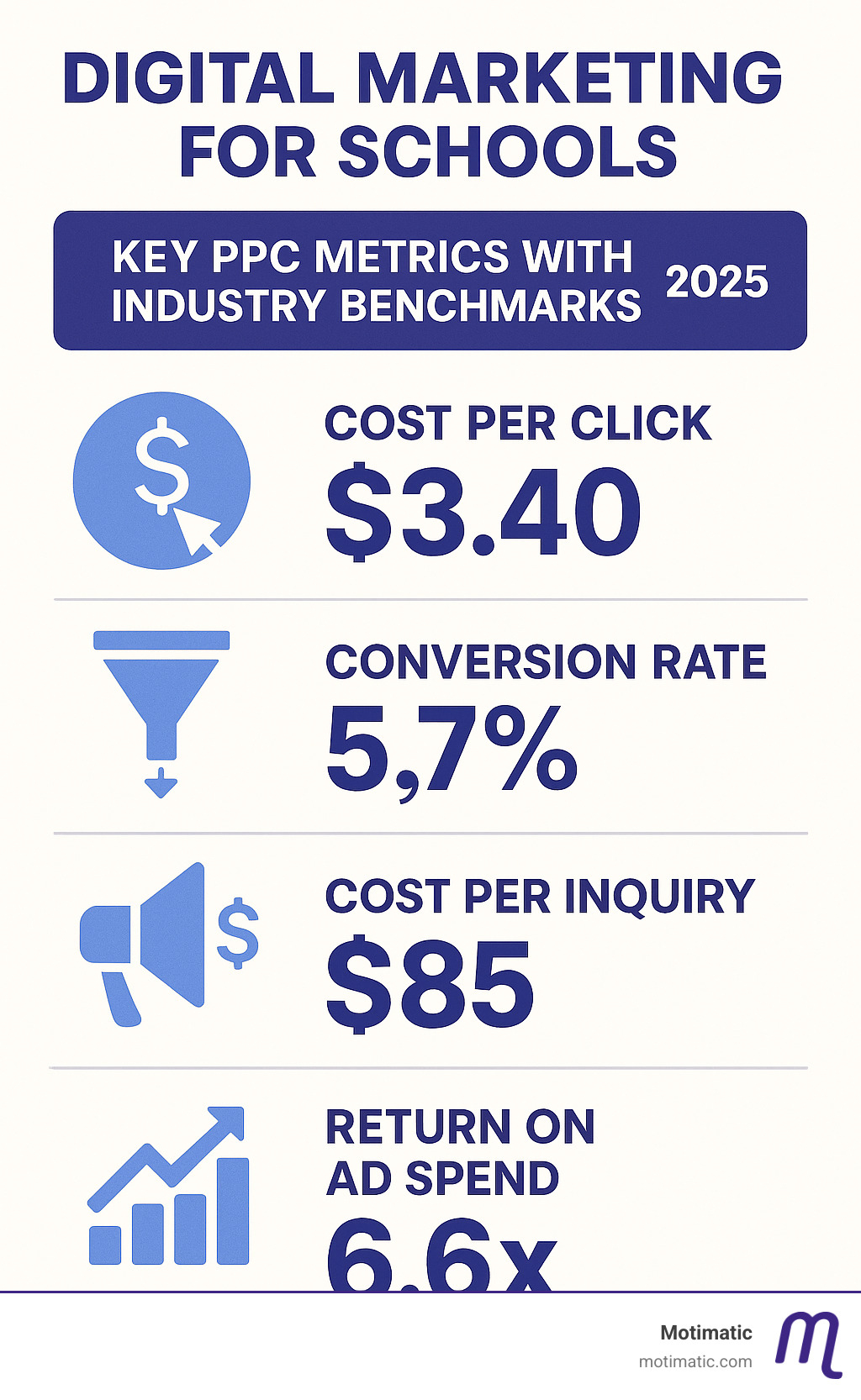
Cost per inquiry provides a more meaningful metric than cost per click for schools. While clicks indicate interest, inquiries represent genuine prospects who've taken action. Track this metric across all channels to identify your most effective advertising investments.
Attribution modeling helps understand the complete customer journey. Families rarely enroll after seeing a single ad - they typically interact with multiple touchpoints before making decisions. Understanding this journey helps optimize budget allocation across channels.
Real-time dashboards allow quick campaign adjustments. When an ad set performs exceptionally well, you can increase budget immediately. Conversely, underperforming campaigns can be paused or modified before wasting significant budget.
Performance optimization should be ongoing, not quarterly. Weekly reviews of key metrics, monthly strategy adjustments, and quarterly comprehensive analyses ensure campaigns remain effective as market conditions change.
For schools ready to implement comprehensive digital marketing strategies, our guide on Higher Education Digital Marketing provides detailed frameworks for integrating paid advertising with organic efforts.
6. Measure, Optimize, Repeat
Data-driven enrollment marketing requires sophisticated measurement approaches that go beyond simple website traffic or social media followers. Schools need to track metrics that directly correlate with enrollment outcomes while maintaining privacy and compliance standards.
GA4 events tracking allows detailed analysis of user behavior throughout the enrollment journey. Set up events for key actions like brochure downloads, tour requests, application starts, and information session registrations. This granular data reveals where prospects drop off and which content drives action.
Micro-conversions often predict enrollment better than macro-conversions. A family that downloads multiple resources, attends a virtual tour, and subscribes to your newsletter shows higher intent than someone who only completes an initial inquiry form. Track these smaller actions to identify your most qualified prospects.
KPI benchmarks should reflect your school's unique goals and market position. While industry averages provide context, your specific enrollment targets, budget constraints, and competitive landscape require customized success metrics.
The cyclical framework of "Measure, Optimize, Campaign, Repeat" ensures continuous improvement. This approach, proven effective across hundreds of school marketing campaigns, prevents stagnation while building on successful strategies.
Accessibility audits should be conducted regularly to ensure all families can engage with your digital content. This includes testing screen reader compatibility, keyboard navigation, and mobile accessibility across all devices and platforms.
Building a Culture of Data-Driven Enrollment
Cross-team buy-in ensures marketing insights inform broader institutional decisions. When admissions, marketing, and leadership teams collaborate using shared data, schools can make more informed strategic decisions about programs, pricing, and positioning.
Clear OKRs (Objectives and Key Results) align all team members around specific, measurable goals. Rather than vague objectives like "increase awareness," effective OKRs might specify "increase qualified inquiries by 25% while maintaining cost per inquiry below $150."
Agile marketing sprints allow rapid testing and iteration. Instead of planning annual campaigns, schools can implement monthly or quarterly sprints that test new approaches, measure results, and adjust strategies based on real performance data.
Iterative testing builds institutional knowledge over time. Each campaign provides insights that inform future efforts, creating a compound effect where marketing effectiveness improves continuously.
Frequently Asked Questions about Digital Marketing for Schools
Why is "digital marketing for schools" critical after COVID-19?
The pandemic accelerated digital adoption among families and students, making online research and virtual engagement the norm rather than the exception. Schools that hadn't invested in digital marketing found themselves invisible to families who had shifted their research behavior online.
Additionally, economic uncertainty has made families more selective about educational investments. Digital marketing for schools allows institutions to demonstrate value, showcase outcomes, and build trust through multiple touchpoints before families make enrollment decisions.
The rise of remote learning also changed family expectations about technology integration. Parents now expect schools to demonstrate digital sophistication not just in marketing, but as an indicator of overall educational quality and preparedness.
Which channels deliver the fastest enrollment lift?
Google Ads typically provide the fastest results because they capture families actively searching for school options. When someone searches "private school near me," they're already in the market and ready to take action.
However, the most sustainable results come from integrated approaches. Schools that combine SEO, social media, email marketing, and paid advertising see 2-3x better enrollment outcomes than those relying on single channels.
Local SEO often provides the best long-term ROI because it builds lasting visibility for high-intent searches. Once your school ranks well for "best elementary school in [your city]," that visibility continues generating leads without ongoing advertising costs.
How can schools personalize campaigns for Gen Alpha without privacy risks?
Focus on behavioral triggers rather than personal data collection. When someone visits your athletics page multiple times, show them sports-related content. When they download your academic program guide, follow up with curriculum information.
Use first-party data collected through your website and email subscriptions rather than third-party tracking. This approach provides personalization while maintaining privacy compliance and building trust with families.
Implement progressive profiling in your email campaigns. Start with basic information and gradually request additional details as families engage more deeply with your content. This approach feels natural rather than intrusive.
Conclusion
Digital marketing for schools isn't just about attracting more families - it's about building sustainable enrollment growth through authentic relationships and valuable experiences. The schools that thrive in the coming years will be those that accept data-driven strategies while maintaining the human connections that make education meaningful.
The success loop we've outlined - from website optimization through measurement and iteration - creates compound benefits over time. Each campaign provides insights that inform future efforts, building institutional knowledge and marketing effectiveness simultaneously.
Inclusive messaging and accessible design aren't just compliance requirements - they're competitive advantages. Schools that welcome all families through their digital presence build stronger, more diverse communities that benefit everyone.
Strategic enrollment management requires integrating digital marketing with broader institutional goals. When marketing insights inform program development, pricing strategies, and campus planning, schools create alignment between their digital presence and their educational mission.
At Motimatic, we've seen how science-backed digital marketing transforms enrollment outcomes. Our programmatic advertising and behavioral science-driven messaging help schools engage families more effectively while reducing administrative workload.
The next steps are clear: audit your current digital presence, identify the biggest opportunities for improvement, and implement systematic testing and optimization processes. The schools that act now will have significant advantages over those that wait.
For institutions ready to implement comprehensive enrollment strategies, our guide on Strategic Enrollment Management provides detailed frameworks for integrating digital marketing with broader institutional planning.
Remember: in today's digital-first world, your school's online presence isn't just marketing - it's often the first and most important impression you make on prospective families. Make it count.
See it on your own listOne list, one goal, and a randomized holdout to show the lift. Start a pilot