The higher education landscape is shifting at an unprecedented pace. Evolving student expectations, demographic changes, and fierce competition demand more than just traditional recruitment tactics. Today's prospective students are digital natives, discerning consumers, and value-driven individuals seeking personalized engagement and authentic connections. Simply broadcasting your institution's message is no longer effective; you must build relationships. This comprehensive guide moves beyond generic advice to provide a deep dive into 10 powerful, evidence-backed student recruitment strategies designed for the modern era.
We will explore how to leverage behavioral science, data analytics, and personalized communication to not only reach but resonate with the next generation of learners. From harnessing the power of predictive modeling to activating your alumni network, each strategy is presented with actionable steps, real-world examples, and key metrics to help you build a resilient, effective, and data-informed recruitment engine. To truly modernize your recruitment efforts and stay competitive, it's essential to investigate how leveraging advanced technologies, such as dedicated recruitment automation tools, can streamline these complex processes and amplify your impact. Prepare to transform your approach and drive meaningful enrollment growth in 2025 and beyond.
1. Strategy 1: Hyper-Personalized Digital Marketing & Social Engagement
Generic, broadcast-style marketing is no longer effective in a saturated digital landscape. This first of our student recruitment strategies emphasizes using data to create highly personalized experiences across multiple platforms. It's about moving beyond simply having a social media presence to architecting a digital ecosystem where every touchpoint, from an ad to a program page, feels like a one-on-one conversation with a prospective student. This approach leverages data analytics to understand applicant behavior, interests, and pain points. By segmenting your audience based on criteria like academic interest, geographic location, or engagement history, you can deliver content that resonates on a personal level, significantly increasing its impact.
How to Implement This Strategy
- Data-Driven Segmentation: Use your CRM and analytics tools to create detailed audience segments. Go beyond "prospective undergraduates" to segments like "out-of-state students interested in STEM" or "local applicants exploring arts programs."
- Platform-Specific Content: Tailor your messaging for each platform. Create short, engaging videos for TikTok and Instagram Reels showcasing campus life, while using LinkedIn to highlight career outcomes and faculty expertise for graduate or professional programs.
- Dynamic Ad Campaigns: Implement retargeting campaigns that show specific program information to users who have previously visited those pages on your website. This keeps your institution top-of-mind with relevant, helpful content.
- SEO-Optimized Program Pages: Ensure every academic program page is optimized for search engines with keywords students actually use, such as "best environmental science bachelor's degree" or "online MBA no GMAT."
Key Insight: The goal is to make every digital interaction feel less like an advertisement and more like a helpful guide. When a student feels understood, they are more likely to see your institution as their future home.
A prime example is Arizona State University's use of TikTok, where they create content that mirrors popular trends while authentically showcasing student life, reaching millions of Gen Z prospects. Similarly, Northeastern University's focus on SEO for its program pages led to a substantial increase in qualified organic traffic. For a deeper exploration of digital marketing tactics, you can learn more about effective enrollment marketing strategies on motimatic.com/. This method is foundational for modern recruitment, building a strong, engaged pipeline from initial interest to application.
2. Campus Ambassador and Student Referral Programs
Prospective students trust their peers more than any other source. This second of our student recruitment strategies capitalizes on that trust by empowering your current students to become authentic brand advocates. It formalizes word-of-mouth marketing, turning genuine student enthusiasm into a structured, scalable recruitment channel that builds powerful personal connections. This approach leverages the authentic voices and lived experiences of your enrolled students to attract and convert prospects. By creating a formal ambassador or referral program, you can guide these peer-to-peer interactions, ensuring they align with institutional goals while maintaining the organic, trustworthy nature that makes them so effective.
How to Implement This Strategy
- Diverse and Strategic Selection: Actively recruit ambassadors who represent a wide array of backgrounds, academic programs, and extracurricular interests. A diverse team ensures that more prospective students can see themselves reflected in your student body.
- Structured Training Programs: Develop comprehensive training that covers key institutional talking points, communication best practices, and ethical recruitment guidelines. This equips ambassadors to answer tough questions accurately and professionally.
- Clear Guidelines with Authentic Freedom: Provide a framework and key messages but avoid overly restrictive scripts. The power of an ambassador lies in their genuine personality and personal stories, so allow them the freedom to express themselves authentically.
- Incentivize and Reward Participation: Implement a fair system of compensation or rewards. This can include stipends, tuition credits, professional development opportunities, or performance-based bonuses for referrals that lead to applications or enrollments.
Key Insight: The most compelling recruitment message often comes from someone who has already walked the path. A student's unscripted story about their favorite class or how they found their community is more persuasive than the most polished marketing brochure.
Excellent examples include Texas A&M University's Aggie Ambassador Network, which successfully reaches international markets through peer connections, and Babson College's use of student entrepreneur ambassadors to showcase its unique business programs. This peer-to-peer strategy humanizes your institution, building a foundation of trust that is critical for converting interest into enrollment.
3. Strategic High School Partnerships
Effective student recruitment strategies extend beyond marketing campaigns to cultivate deep, long-term relationships where they matter most: in high schools. This strategy focuses on building structured, collaborative partnerships that create a seamless and supportive pathway from secondary education directly to your institution. It’s about transforming the traditional, transactional recruiter visit into a sustained, mutually beneficial alliance. This approach involves creating formal agreements and programs that embed your university within the high school ecosystem. By offering tangible value to students, counselors, and teachers long before the application season begins, you establish trust and position your institution as a natural next step. These partnerships create a predictable and qualified applicant pipeline, reducing recruitment uncertainty and improving yield.
How to Implement This Strategy
- Formalize Pathway Programs: Establish clear agreements like guaranteed admission for students who meet specific criteria or dual enrollment programs where high schoolers can earn college credit. This provides a clear, attainable goal for students to work toward.
- Empower High School Counselors: Go beyond a simple campus visit. Offer professional development workshops, exclusive counselor-focused events, and a dedicated contact person within your admissions office. When counselors are well-informed and feel valued, they become powerful advocates.
- Co-Create Mutually Beneficial Programs: Work with high school administrators to develop programs that serve their needs. This could include summer bridge programs for first-generation students, on-campus workshops for specific subjects, or providing university faculty as guest lecturers.
- Establish Consistent Communication: Create a regular communication plan that includes newsletters for counselors, dedicated portals with updated admissions information, and joint planning meetings with partner school leadership to review goals and outcomes.
Key Insight: The goal is to make your institution a visible and integrated part of the high school experience, not just a destination. When students and counselors see you as a partner in their success, the choice to apply and enroll becomes a logical and comfortable one.
A strong example is Georgia State University's partnership with Atlanta Public Schools, which provides early exposure and support to create a direct pipeline to college. Similarly, Northern Arizona University's 2NAU pathway program provides tailored admission support for students from community colleges and partner high schools. This approach is one of the most effective student recruitment strategies for building a reliable, long-term enrollment base from key feeder schools.
4. Personalized Communication and CRM Systems
In an era where students expect tailored engagement, one of the most powerful student recruitment strategies is the implementation of a robust Customer Relationship Management (CRM) system. This approach moves beyond mass email blasts to a sophisticated, data-driven methodology that tracks, analyzes, and personalizes every interaction. A CRM allows you to create a holistic view of each prospective student, enabling communications that are relevant, timely, and impactful throughout their decision-making journey. This strategy hinges on using technology to manage and nurture relationships at scale. By centralizing data from inquiries, campus visits, and digital interactions, institutions can segment audiences with precision and automate communications that feel personal. This creates a seamless and supportive experience, guiding students from initial curiosity to enrollment.
How to Implement This Strategy
- Centralize and Clean Your Data: Begin by establishing a single source of truth for all prospective student data. Implement rigorous data collection and hygiene processes to ensure the information in your CRM, whether it's Slate, Salesforce, or another platform, is accurate and comprehensive.
- Segment Audiences Meaningfully: Move beyond basic demographics. Create dynamic segments based on behaviors (e.g., attended a virtual open house), academic interests (e.g., downloaded a brochure for the engineering program), or position in the funnel (e.g., started but did not complete an application).
- Balance Automation with Personal Touch: Use the CRM to automate key communications like event reminders or application deadline alerts. However, empower your admissions counselors to use the rich data for high-impact personal outreach, such as a phone call or a personalized video message. To truly maximize the efficiency of this balance, explore practical CRM workflow examples that show how to structure these powerful sequences.
- Test and Optimize Sequences: Don't set your communication plans and forget them. A/B test email subject lines, call-to-action buttons, and the timing of your messages. Use the analytics within your CRM to continuously refine your outreach for better open rates, click-through rates, and conversion.
Key Insight: The ultimate goal of a CRM-driven strategy is to make each student feel seen and valued. When communication is personalized to their specific interests and needs, it transforms the recruitment process from a transaction into a relationship.
This infographic illustrates a fundamental CRM workflow that turns raw data into meaningful engagement.
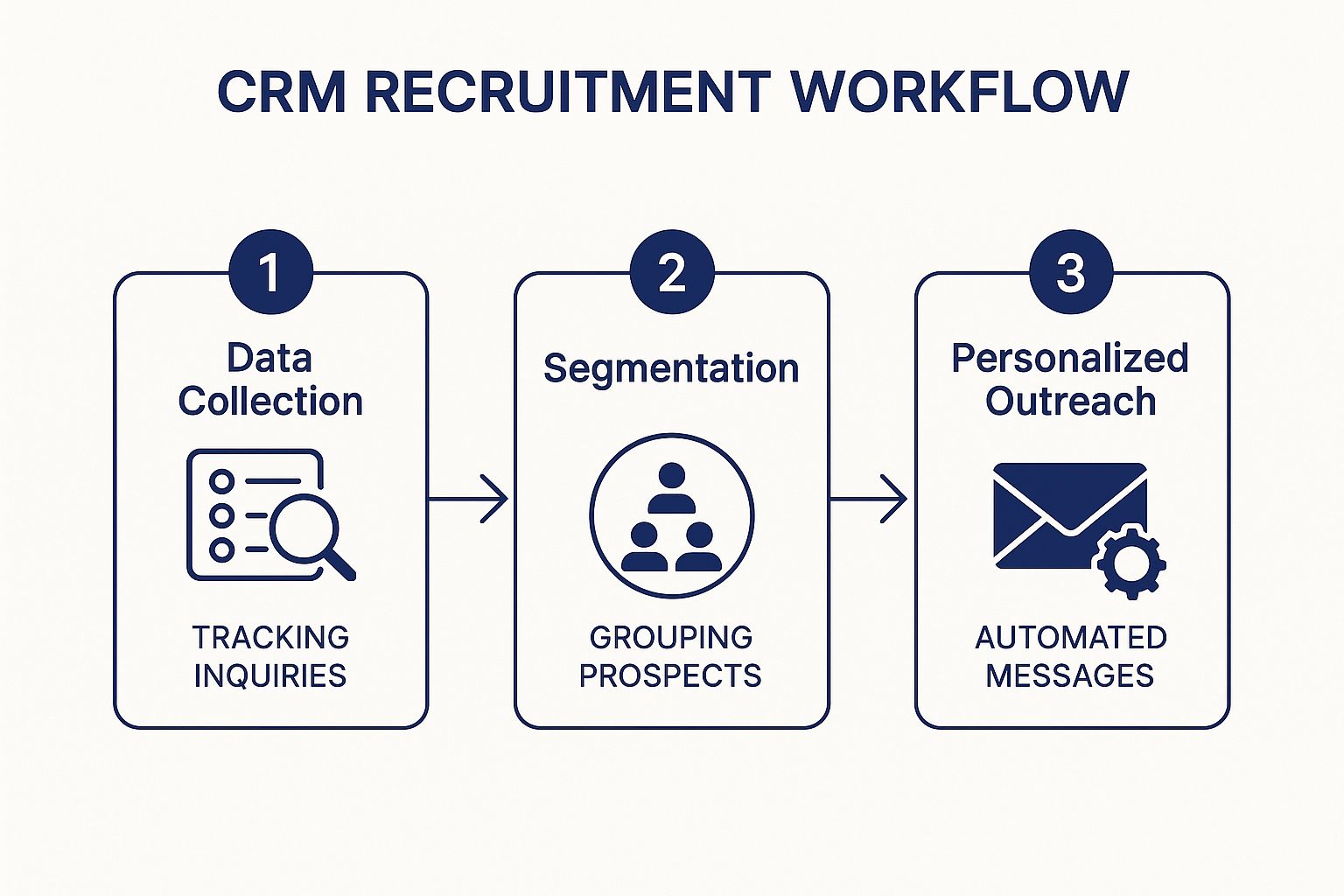
Following this flow ensures that every piece of data collected is strategically used to deliver a tailored message. To learn more about how this integrates into a wider institutional plan, you can explore the principles of strategic enrollment management on motimatic.com/. By mastering this process, your institution can build stronger connections and significantly improve enrollment outcomes.
5. Virtual and Hybrid Recruitment Events
The limitations of traditional, in-person events are clear: they are costly, geographically restrictive, and time-intensive for both staff and prospective students. This fifth of our student recruitment strategies embraces a hybrid model, leveraging digital technology to create accessible, engaging, and scalable recruitment experiences. This approach, born from necessity during the pandemic, has now become a permanent fixture for its power to expand an institution's reach far beyond its physical location.
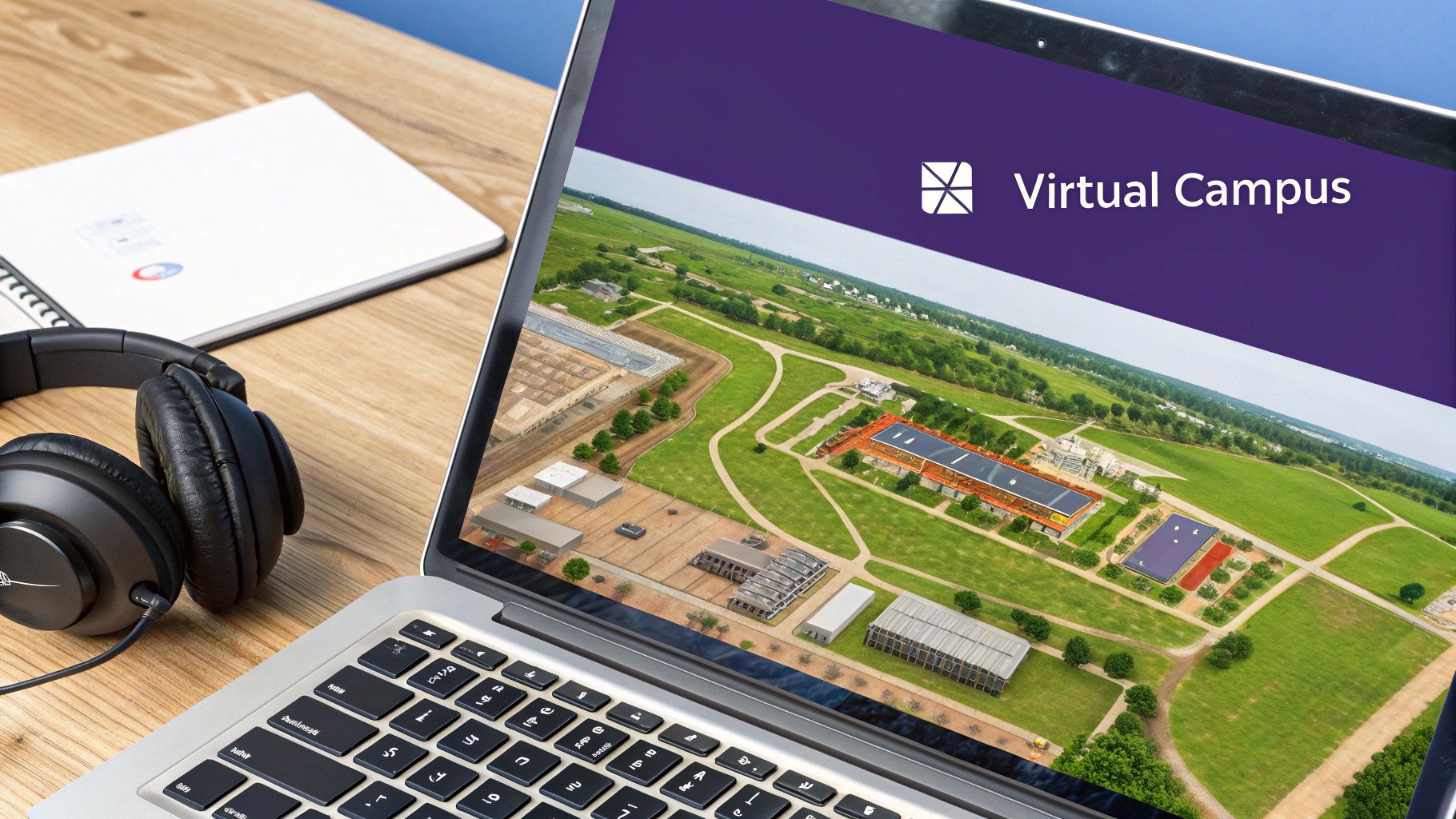
This strategy blends the immediacy of in-person interactions with the accessibility of virtual platforms. It allows students from anywhere in the world to experience campus life, interact with faculty, and get their questions answered without the barrier of travel. The result is a more inclusive and efficient recruitment pipeline that can attract a wider, more diverse applicant pool.
How to Implement This Strategy
- Invest in Quality Production: High-quality audio and video are non-negotiable. Poor production values can make your institution seem unprofessional. Use stable cameras, clear microphones, and good lighting for all virtual components.
- Design for the Medium: Keep virtual sessions shorter and more dynamic than their in-person counterparts. A 30-minute focused virtual information session is more effective than a two-hour live-streamed lecture.
- Maximize Interactivity: Use features native to your chosen platform to keep attendees engaged. Incorporate live polls to gauge interest, facilitate moderated Q&A sessions, and use breakout rooms for small group discussions with current students or specific department faculty.
- Offer Seamless Technical Support: Have a dedicated team member ready to troubleshoot technical issues. Provide clear instructions and alternative access methods, like a dial-in option, for those with limited internet bandwidth.
https://www.youtube.com/embed/x2Rjsc3r9uM
Key Insight: The goal isn't to replace in-person events but to augment them. A hybrid model allows you to offer the best of both worlds, creating multiple entry points for students to connect with your institution on their own terms.
Leading institutions have demonstrated the power of this approach. For example, New York University (NYU) attracts a global audience with immersive virtual reality campus tours, offering an unparalleled sense of place to international prospects. This modern take on student recruitment strategies is essential for building a broad, engaged, and diverse applicant pipeline.
6. Scholarship and Financial Aid Optimization
For a significant number of prospective students, the decision of where to enroll hinges almost entirely on affordability. This sixth of our student recruitment strategies moves financial aid from a back-office function to a frontline recruitment tool. It involves strategically designing, packaging, and communicating scholarships and aid to directly influence enrollment decisions and attract a high-quality, diverse student body. This strategy recognizes that financial aid is not just about meeting need; it is about demonstrating value and commitment. By optimizing aid packages and clearly communicating financial benefits, institutions can overcome cost barriers, compete more effectively for top talent, and shape their incoming class to meet institutional goals. It's a data-informed approach to financial incentives.
How to Implement This Strategy
- Predictive Aid Modeling: Use historical data and predictive analytics to model how different financial aid packages will affect the enrollment probability of specific student segments. This allows for the strategic allocation of funds to maximize yield.
- Early and Transparent Communication: Don't wait for the FAFSA. Communicate potential merit scholarships and provide net price estimates early in the recruitment funnel. Proactive communication builds trust and keeps your institution in the running.
- Segmented Scholarship Offerings: Develop a portfolio of scholarships that appeal to different audiences, such as automatic merit scholarships for high-achieving applicants (like the University of Alabama's model) or targeted aid for specific programs or demographics.
- Simplify the Message: Transform complex financial aid letters into clear, easy-to-understand value propositions. Train admissions and financial aid staff to confidently explain packages, focusing on the net cost and long-term investment.
Key Insight: The most effective financial aid strategy is one where students feel personally invested in and valued by the institution before they even apply. It's about shifting the conversation from "Can I afford this?" to "How can they help me afford this?"
Prominent examples include Princeton University's pioneering no-loan policies and Vanderbilt University's Opportunity Vanderbilt program, both of which have significantly increased socioeconomic diversity. By treating financial aid as a core component of your recruitment efforts, you directly address the primary concern for many families. This approach is a cornerstone of modern enrollment, and you can learn more about its role in broader enrollment management strategies at motimatic.com/. This method is critical for institutions aiming to be both competitive and accessible.
7. Alumni Network Engagement
Your alumni are your institution's most powerful and authentic storytellers. This student recruitment strategy mobilizes your graduates, transforming their loyalty and professional success into a formidable recruitment asset. By engaging your alumni network, you extend your institution's reach and credibility into markets worldwide, leveraging their geographic distribution and real-world experiences to connect with prospective students on a deeply personal level. This approach capitalizes on the trust that applicants place in the unfiltered experiences of those who have walked the same path. Alumni can provide firsthand accounts of campus life, academic rigor, and career outcomes, offering a level of authenticity that traditional marketing materials cannot replicate. Their success serves as a tangible testament to the value of the education you provide.
How to Implement This Strategy
- Create Structured Volunteer Programs: Don't just ask for help; build a formal program. Establish clear roles, expectations, and resources for alumni who want to assist with college fairs, applicant interviews, or hosting local recruitment events.
- Provide Regular Training and Updates: Equip your alumni ambassadors with the latest information about new programs, campus developments, and key institutional talking points. Consistent communication ensures they represent your university accurately and effectively.
- Leverage Technology for Coordination: Use a dedicated portal or CRM module to manage alumni volunteer activities, track their engagement, and facilitate communication between them and your admissions team. This streamlines logistics and maximizes their impact.
- Focus on Key Markets: Strategically deploy alumni resources in high-priority geographic regions or within specific professional industries. If you're targeting finance students in New York City, your alumni working on Wall Street are your best ambassadors.
Key Insight: The most compelling endorsement for your institution comes from those who have successfully navigated its halls and leveraged their degree for career success. Their stories are not just marketing; they are proof of concept.
Prestigious institutions have long mastered this. Harvard University’s global network of Schools and Scholarships Committees interviews applicants worldwide. Similarly, Penn State's Alumni Association organizes recruitment events in major metropolitan areas, allowing prospects to connect directly with successful graduates. MIT's Educational Council utilizes alumni to provide crucial international recruitment support, making this one of the most effective and scalable student recruitment strategies for building a diverse, global class.
8. Data Analytics and Predictive Modeling
Shifting from intuition-based to evidence-based decision-making is a hallmark of modern student recruitment strategies. This approach involves the systematic use of data analysis, statistical modeling, and machine learning techniques to identify, predict, and optimize enrollment outcomes. It transforms raw data into a strategic asset, allowing institutions to allocate resources more effectively and proactively address challenges before they impact enrollment. This strategy moves beyond simple reporting to uncover deep patterns in applicant behavior. By analyzing historical data, institutions can build predictive models that forecast which inquiries are most likely to apply, which applicants will enroll, and which students are at risk of "summer melt." This foresight enables highly targeted interventions that significantly improve yield and efficiency.
How to Implement This Strategy
- Establish a Clean Data Foundation: The accuracy of any model depends on the quality of its input. Start by consolidating and cleaning data from your CRM, SIS, and other sources to create a single, reliable dataset for analysis.
- Focus on Actionable Insights: Develop models that answer specific, critical questions. For example, create a model to score applicant likelihood to enroll, allowing your team to prioritize follow-up with high-potential, on-the-fence candidates.
- Combine Quantitative and Qualitative Data: Enhance statistical models with qualitative insights from surveys, focus groups, and counselor feedback. This adds crucial context to the numbers, explaining the "why" behind student decisions.
- Invest in Training and Tools: Equip your team with the skills and platforms needed to interpret and act on analytics. This could involve professional development or partnering with specialized firms like HelioCampus or Othot.
Key Insight: Predictive analytics isn't about replacing the human element of recruitment; it's about empowering your team with data-driven intelligence to make smarter, more impactful decisions.
A powerful example is Georgia State University, which famously used predictive analytics to identify and support at-risk students, dramatically reducing summer melt and boosting retention rates. Similarly, Purdue University employs a data-driven approach to optimize its scholarship allocation, ensuring financial aid is distributed in a way that maximizes enrollment impact. By leveraging data, these institutions are not just reacting to trends, they are shaping them.
9. International Recruitment and Global Partnerships
Expanding recruitment efforts beyond domestic borders is a powerful strategy for diversifying your student body, enhancing your institution's global reputation, and creating a richer academic environment. This approach involves more than just translating marketing materials; it requires building a robust infrastructure for attracting and supporting students from international markets. Success hinges on forming strategic global partnerships, understanding complex visa regulations, and appreciating cultural nuances. These student recruitment strategies focus on creating sustainable pipelines through relationships with overseas institutions, reputable recruitment agents, and international educational organizations. By establishing a strong global presence, institutions can attract talented students who might otherwise be unreachable, fostering a campus community with a truly worldwide perspective.
How to Implement This Strategy
- Build a Network of Global Partners: Develop formal partnerships with high schools, universities, and government scholarship programs in key target countries. These relationships provide a direct and trusted channel to qualified applicants.
- Leverage Reputable Agent Networks: In many regions, educational agents are a primary source of information for students. Vet and partner with established agents who can represent your institution accurately and ethically.
- Invest in Cultural Competency: Ensure your recruitment and admissions staff receive training on the cultural, educational, and social norms of your target markets. This understanding is critical for effective communication and relationship-building.
- Provide Comprehensive Support: International student success depends on strong support systems. Offer dedicated resources for visa processing, pre-arrival orientation, housing, and cultural integration to ensure a smooth transition.
Key Insight: International recruitment is not a transactional process. It's about building long-term, mutually beneficial relationships that demonstrate a genuine commitment to global education and student success.
A leading example is New York University's global campus network, which includes degree-granting campuses in Abu Dhabi and Shanghai, creating an unparalleled international footprint. Similarly, the University of California system leverages its worldwide reputation through extensive global partnerships that facilitate student and faculty exchange, joint research, and a steady flow of international applicants. These initiatives show that a deep, strategic investment in global outreach is one of the most effective student recruitment strategies for long-term growth.
10. Content Marketing and Thought Leadership
Selling a program is no longer enough; institutions must sell their expertise and vision. This entry in our list of student recruitment strategies moves beyond promotional materials to establish your university as an intellectual hub. It's a long-game approach focused on creating and distributing valuable, relevant, and consistent content to attract a clearly defined audience, building trust and credibility long before they ever consider applying. This strategy positions your institution as a definitive authority in key academic fields. By sharing faculty research, student innovations, and insightful analysis on industry trends, you provide tangible value to prospective students, parents, and counselors. This showcases the depth of your academic community and aligns your brand with expertise, making your institution a more compelling choice.
How to Implement This Strategy
- Leverage Faculty Expertise: Your faculty members are your greatest intellectual asset. Create blog posts, white papers, or video series where they dissect complex topics in their fields, making high-level research accessible and engaging for a broader audience.
- Create Journey-Specific Content: Develop content tailored to each stage of the funnel. For early-stage awareness, create high-level articles like "What Can You Do With a Degree in Psychology?" For consideration-stage prospects, offer downloadable guides like "A Student's Guide to Choosing a Capstone Project."
- Establish a Content Hub: Centralize your thought leadership on a branded platform, like a blog or a digital journal. The University of Pennsylvania's Knowledge at Wharton is a prime example, offering business insights that attract a global audience of future leaders.
- Optimize for Search and Social: Ensure all content is SEO-optimized to capture organic traffic from students researching academic topics. To build trust and position your institution as a thought leader, it is crucial to master an effective social media content strategy that disseminates this valuable content to a wider audience.
Key Insight: Thought leadership transforms your recruitment narrative from "Come study with us" to "Come learn from the experts who are shaping the future." This deepens brand equity and attracts students who are intellectually curious and aligned with your institution's mission.
Consider how MIT's Technology Review functions not just as a publication but as a powerful recruitment tool that demonstrates the institution's central role in technological innovation. Similarly, the Stanford Graduate School of Business's library of case studies showcases its real-world impact. This strategy builds a powerful, long-term recruitment asset that draws in best-fit students organically.
Student Recruitment Strategies Comparison Table
| Strategy | Implementation Complexity 🔄 | Resource Requirements ⚡ | Expected Outcomes 📊 | Ideal Use Cases 💡 | Key Advantages ⭐ |
|---|---|---|---|---|---|
| Digital Marketing and Social Media Engagement | Medium to High: constant content creation, analytics | Moderate: skilled staff, software tools | Increased engagement, measurable ROI, broad reach | Reaching diverse demographics, real-time international recruitment | Cost-effective, targeted, 24/7 accessibility |
| Campus Ambassador and Student Referral Programs | Medium: coordination, training, ongoing management | Low to Moderate: incentives, management | Higher trust recruitment, extended networks | Peer-driven recruitment, community building | High credibility, cost-effective, authentic voices |
| Strategic High School Partnerships | High: relationship building, agreements, coordination | Moderate: staff time, partnership management | Predictable enrollment pipeline, early talent ID | Long-term recruitment pipelines, dual enrollment programs | Builds strong relationships, cost-effective |
| Personalized Communication and CRM Systems | High: technology setup, data integration, training | High: CRM platforms, technical expertise | Improved conversion, scalable personalized outreach | Large applicant pools, data-driven recruitment | Highly targeted, efficient resource use, comprehensive tracking |
| Virtual and Hybrid Recruitment Events | Medium: tech setup, event coordination | Moderate: event platforms, AV equipment | Removal of geographic barriers, increased accessibility | Reaching remote/international students, flexible engagement | Cost savings, environmental benefits, wider reach |
| Scholarship and Financial Aid Optimization | High: financial strategy, compliance management | High: financial resources, staff expertise | Improved yield, enrollment of high-achievers | Addressing financial barriers, yield improvement | Direct enrollment impact, competitive advantage |
| Alumni Network Engagement | Medium: volunteer coordination, event management | Low to Moderate: volunteer support systems | Expanded recruitment reach, authentic testimonials | Leveraging alumni for recruitment and mentorship | Cost-effective, credible, strengthens alumni relations |
| Data Analytics and Predictive Modeling | High: advanced analytics, data quality control | High: technology investment, expertise | Data-driven decisions, optimized recruitment efforts | Optimizing recruitment strategies through data | Competitive edge, early student intervention |
| International Recruitment and Global Partnerships | High: complex regulations, cultural considerations | High: travel, specialized support | Diversified student body, increased international revenue | Recruiting international students, global branding | Revenue growth, cultural enrichment |
| Content Marketing and Thought Leadership | Medium to High: content creation, editorial oversight | Moderate: content teams, SEO tools | Long-term credibility and organic traffic | Building brand trust and expertise, SEO-driven recruitment | Cost-effective, builds thought leadership |
Integrating Your Strategies for a Future-Proof Enrollment Plan
We have explored a comprehensive suite of ten powerful student recruitment strategies, from leveraging data analytics and predictive modeling to fostering strategic high school partnerships and engaging your alumni network. Each tactic, whether it's optimizing your financial aid packages or creating compelling content marketing, represents a critical lever you can pull to influence enrollment outcomes. However, the most profound and sustainable success doesn't come from mastering these strategies in isolation. It emerges from weaving them together into a unified, synergistic, and intelligent enrollment ecosystem. The modern recruitment landscape is far too complex for a one-size-fits-all approach or a single 'magic bullet' solution. The true power lies in integration. Think of it as a finely tuned engine where each component enhances the performance of the others.
The key takeaway is this: Your recruitment efforts should function as an interconnected system, not a collection of standalone campaigns. A siloed approach is no longer viable in a world where prospective students expect a seamless and personalized journey.
From Individual Tactics to a Cohesive System
Consider the powerful connections that form when you integrate these student recruitment strategies. Your CRM, rich with data from personalized communications, becomes the brain of your operation. It should directly inform the audience segmentation for your digital marketing campaigns on social media, ensuring the right message reaches the right student at the right time. The thought leadership content you create shouldn't just live on a blog; it should be the fuel for your other initiatives.
- Equip your campus ambassadors and alumni volunteers with your latest articles and research to share within their networks.
- Feature your top-performing content in your email nurture sequences to keep prospective students engaged.
- Use it as a cornerstone for discussions during your virtual and hybrid recruitment events, positioning your institution as an authority in key fields.
Similarly, insights gleaned from your international recruitment efforts can reveal new markets or highlight program features that resonate globally, which can then be incorporated into your broader marketing messages. The data analytics you employ shouldn't just predict who is likely to apply; it should also help you understand which financial aid offerings are most effective at converting admitted students into enrolled ones.
Actionable Next Steps: Building Your Integrated Plan
Moving from theory to practice requires a deliberate and strategic approach. Here are your immediate next steps to begin building a more integrated recruitment model:
- Conduct a Strategy Audit: Gather your teams, from admissions and marketing to financial aid and alumni relations. Map out your current activities for each of the ten strategies discussed. Identify areas of overlap, disconnect, and opportunity. Where are you duplicating efforts? Where are the communication breakdowns?
- Prioritize Integration Points: You don't need to connect everything at once. Identify 2-3 high-impact integration points to focus on first. A great starting point is linking your CRM data more effectively with your digital advertising or using your content marketing to empower your student ambassador program.
- Establish Cross-Functional Goals: Set shared key performance indicators (KPIs) that require collaboration between departments. For instance, a shared goal could be to increase the application-to-enrollment conversion rate for students who attended a virtual event and received a personalized financial aid follow-up.
- Embrace Agility and Iteration: The most effective student recruitment strategies are not static; they are dynamic and responsive. Treat your plan as a living document. Continuously test new messaging, measure the results, and refine your approach based on what the data tells you. What works for Gen Z today might need adjustment for Gen Alpha tomorrow.
By embracing this integrated, data-informed, and deeply human-centric methodology, you are not just working to meet this year's enrollment targets. You are building a resilient, adaptable, and future-proof recruitment engine that can sustain your institution's growth and vitality for years to come. The goal is to create a journey so personalized and compelling that the right students don't just find you, they feel they belong with you.
As you focus on personalizing the student journey, consider how to maintain that connection post-enrollment to boost retention. Motimatic specializes in driving student success and persistence through personalized, motivational messaging that complements your recruitment efforts. Discover how our automated, research-backed nudges can help ensure the students you worked so hard to recruit will thrive and graduate at Motimatic.
See it on your own listOne list, one goal, and a randomized holdout to show the lift. Start a pilot